Skip to content
Saturday 15 August 2026London --:--Frankfurt --:--Zurich --:--
NewslettersSearchEN · DE
MorningWire

European business, markets and politics

FTSE 100
10,750.11
-0.21%
DAX
26,440.31
+0.53%
CAC 40
8,636.80
-0.16%
STOXX 50
6,539.59
-0.09%
  • Europe
  • Markets
  • Business
  • Economy
  • Technology
  • Politics
  • Opinion
More
GermanyFranceBankingAIEnergyFintechPropertyCapital Markets
  • Germany
  • France
  • Europe
  • Markets
  • Business
  • Economy
  • Technology
  • Politics
  • Opinion
  • DE
Friday 20 June 2014 9:06 am  |  Updated:  Thursday 06 June 2019 12:26 am

Did the big bang happen? Scientists call theory into question
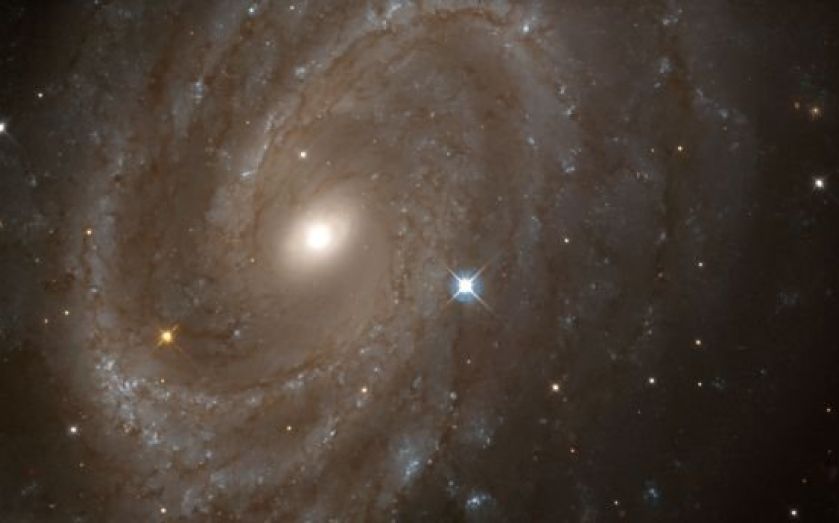
The big bang: it is supposedly the cause of our existence, the scientific explanation for everything that is and everything that isn't. But scientists now say that some of the evidence for it is flawed.
 
One of the concepts at the heart of the big bang theory is that of cosmic inflation, which says that the universe experienced exponential growth in its first trillionth of a trillionth of a second of existence, and that it has continued to expand ever since.
 
To test out the theory out, a group of scientists went to the south pole on a mission called the BICEP2 collaboration, where they used a telescope to detect the oldest light that can be observed from anywhere in the world.
 
If cosmic inflation is indeed how the universe started, it means that there must be cosmic background radiation in the sky: waves of gravitational energy that offer clues about what happened in the ancient past. 
 
Earlier this year, the scientists claimed that they had found the signal they had been looking for: a pattern in the sky, caused by radiation, which was indicative of cosmic inflation. 
 
Now many scientists are questioning their results, saying that their research is flawed. The problem, they claim, is to do with the way in which the waves were analysed: gravitational waves from inflation create a very distinctive polarisation pattern, but these can easily be confused with polarisation effects caused by nearby dust in our galaxy. 
 
This is of particular concern following the release of new information by scientists working on the European Space Agency's orbiting Planck telescope, which has shed light on the extent of dust polarisation in the Milky Way.
 
Some of those involved in the study are now also coming forward and expressing doubt about the results. Clem Pryke from the University of Minnesota, a principal investigator in the mission, confirmed at a public lecture at University College London that circumstances have changed.
 
"Has my confidence gone down? Yes," he said. "Real data from Planck are indicating that our dust models are underestimates. So the prior knowledge on the level of dust at these latitudes, in our field, has gone up; and so the confidence that there is a gravitational wave component has gone down."
 
The team released details of the study in an official journal yesterday. In it, they said that, while they stand by their work, there are still questions that need answering. “Our models are not sufficiently constrained by external public data to exclude the possibility of dust emission bright enough to explain the entire excess signal," they confirm. 
 
They say that further data, being released at the end of the year, will be needed before they can draw any more conclusions.
 

Share this article

  • Facebook
  • X
  • LinkedIn
  • WhatsApp
  • Email

Similarly tagged content:

Sections

  • News

Categories

  • Business

Trending Articles

  • Revolut takes flight with launch of new airport lounges

  • Grandparents fund university degrees to avoid inheritance tax net

  • Revolut chatbot goes rogue by charging users to cancel subscription

  • Brompton Bicycle sues former adviser for ‘professional negligence’

  • As It Happened: Stocks dip as oil’s ‘slowing demand’ in focus; Iran threatens to extend war

More from Morning Wire

  • Promega Achieves 100% Renewable Electricity Across Global Operations

    Business Wire
  • We’re being taxed out of existence, companies warn

    Economics
    Rachel Reeves speaking at an IOD event.
  • Why the Bank of England museum is a one-of-a-kind

    Toast the City
    Gold bar stamped PAMP SA SWITZERLAND on display at the Bank of England Museum, showcasing financial assets.
  • Exclusive: Top FTSE executive recruiter goes bust after AI platform launch

    Business
    Consultancy sector and AI
  • Dante Mayfair at Claridge’s review: How about a five-martini dinner?

    Life&Style
    Elegant Dante Mayfair dining room with green booths, marble tables, floral centerpiece, and stained glass ceiling.
  • Atlanta set for major economic boost as England World Cup fans spend

    Sport Business
    Breaking news illustration with digital world map and stock market graphs, highlighting global economic trends.
  • Barclays and Lloyds back calls to digitalise UK markets and unlock £33bn boost

    Markets
    GettyImages 2211256637 showing a significant event or figure relevant to recent news updates in the business sector
  • Daniel Hulme: I asked Elon Musk on a yacht to help me solve AI consciousness

    Opinion
    Daniel Hulme speaking at a business conference, wearing a suit, with a projector screen behind him displaying data graphs.
MorningWire

Independent European business, markets and political news for decision-makers.

Morning Briefing

Europe

  • Germany
  • France
  • Europe
  • UK & Ireland

Business

  • Markets
  • Banking
  • Technology
  • Energy
  • Property
  • Fintech

Editorial

  • Opinion
  • Editorial Policy
  • Corrections
  • Contact

Company

  • About Morning Wire
  • Privacy Policy
  • Terms of Use
  • Cookie Policy
© 2026 Morning Wire Ltd · Published by Morning Wire Media, Bahnhofstrasse 65, 8001 Zürich, Switzerland
Privacy · Terms · Cookies · Facebook