Skip to content
Friday 14 August 2026London --:--Frankfurt --:--Zurich --:--
NewslettersSearchEN · DE
MorningWire

European business, markets and politics

FTSE 100
10,750.11
-0.21%
DAX
26,440.31
+0.53%
CAC 40
8,636.80
-0.16%
STOXX 50
6,539.59
-0.09%
  • Europe
  • Markets
  • Business
  • Economy
  • Technology
  • Politics
  • Opinion
More
GermanyFranceBankingAIEnergyFintechPropertyCapital Markets
  • Germany
  • France
  • Europe
  • Markets
  • Business
  • Economy
  • Technology
  • Politics
  • Opinion
  • DE
Thursday 26 June 2014 11:15 am  |  Updated:  Thursday 06 June 2019 11:26 pm

When was London last not No1 for average loan-to-income lending? Less than 20 years ago

By: Billy Ehrenberg

Add as a preferred source on Google

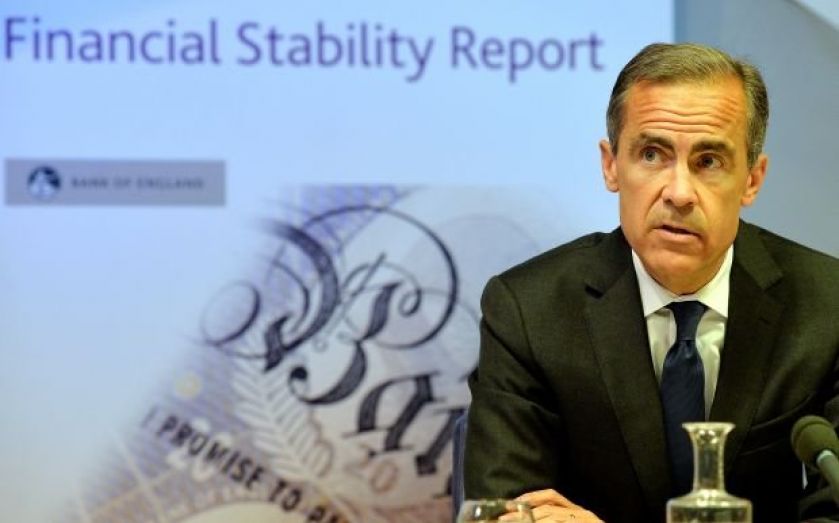
As many people were expecting, the Bank of England (BoE) has moved to control mortgage lending, restricting to 15 per cent the proportion of mortgages that can exceed a loan-to-income ratio (LTI) of 4.5.

A look at recent data from the Council of Mortgage Lenders (CML) however shows that nowhere in the UK has ever approached that ratio.

The closest the UK has ever been to this cap was in the first quarter of this year (the most recent quarter for which CML provides data), when the average ratio across the UK as a whole stood at 3.23.

In that quarter Greater London saw loans climb to a median LTI ratio of 3.72. You have to look back to 2001 to find a quarter where the median ratio in Greater London was nearly a whole point down, at 2.77. 

LOAN TO INCOME RATIO BY REGION

(Source: CML data)

So what is the Bank controlling against? Paul Smee, director general of the CML, says that the BoE controls "are acts of future-proofing the market, not stamping on current practices." Staff at Threadneedle Street don't see current current mortgage markets as an imminent threat to stability, but want to act pre-emptively.

Smee suggests that the tools introduce today could stop a "creep towards higher indebtedness", rather than trying to tackle any irresponsible lending. But today's changes won't fix a longer-term problem. There still exists a very present gulf between supply and demand. Those that want houses are still finding that there are not enough available. 

The BoE may partly be looking to future-proof the market because ratios have been climbing consistently, with London usually leading the rise. The chart includes London and those areas that have at some time or another had the highest LTI ratio in the UK.

london mortgage rates

(Source: CML data)

The current upward trend is most likely a result of a rapid rise in house prices which has not been offset by a similar rise in wages. Since 1998 house prices have gone up by 158 per cent, while earnings growth hasn't kept up.

While it is possible that changing consumer preferences have moved towards spending more on housing, fueling larger ratios, this seems unlikely. Recent data shows the percentage of homeowners in the UK has actually been falling, albeit by a small amount. 

Historically London has usually been on top, and although various regions have periodically unseated the capital, at no point since 1979 (when the data set begins) has London been out of the top spot for more than a year.

The last year that another region had a higher LTI ratio was in the second quarter of 1995, when the south east had a median ratio that was 0.01 higher. In 1993 the south west was 0.02 higher during the third quarter.

Share this article

  • Facebook
  • X
  • LinkedIn
  • WhatsApp
  • Email

Similarly tagged content:

Sections

  • News

Categories

  • Business

Trending Articles

  • Revolut takes flight with launch of new airport lounges

  • Grandparents fund university degrees to avoid inheritance tax net

  • Brompton Bicycle sues former adviser for ‘professional negligence’

  • Revolut chatbot goes rogue by charging users to cancel subscription

  • It’s not just Jason Arday, most of sociology is a scam

More from Morning Wire

  • Metro Bank profit jumps as it bucks branch closure trend

    Banking
    Metro Bank logo on a blue sign above a modern building entrance with reflective windows
  • IGI Reports Second Quarter and First Six Months of 2026 Unaudited Financial Results and Declares Ordinary Common Share Dividend

    Business Wire
  • Everest Reports Second Quarter 2026 Results

    Business Wire
  • Allianz Delivers Record Result and Is Well on Track to Achieve Its Targets

    Business Wire
  • Kolibri Global Energy Inc. Announces Another Record for Its Highest Quarterly Revenue of $22.5 Million With a 46% Production Increase and a 197% Net Income Increase for the Second Quarter of 2026

    Business Wire
  • Natwest hikes targets again after jump in profit

    Banking
    NatWest sign on a dark pillar with vertical slats, set against a blurred background of a modern office building
  • Mortgage approvals inch up yet gains to be ‘retracted’

    Property
    Bank of England headquarters in 2025, showcasing modern architecture and iconic London skyline in the background.
  • Does the real economy care that much about AI?

    AI
    Tesco store exterior with festive decorations, highlighting its 10-year UK market share high and Q3 sales performance.
MorningWire

Independent European business, markets and political news for decision-makers.

Morning Briefing

Europe

  • Germany
  • France
  • Europe
  • UK & Ireland

Business

  • Markets
  • Banking
  • Technology
  • Energy
  • Property
  • Fintech

Editorial

  • Opinion
  • Editorial Policy
  • Corrections
  • Contact

Company

  • About Morning Wire
  • Privacy Policy
  • Terms of Use
  • Cookie Policy
© 2026 Morning Wire Ltd · Published by Morning Wire Media, Bahnhofstrasse 65, 8001 Zürich, Switzerland
Privacy · Terms · Cookies · Facebook