Skip to content
Saturday 15 August 2026London --:--Frankfurt --:--Zurich --:--
NewslettersSearchEN · DE
MorningWire

European business, markets and politics

FTSE 100
10,750.11
-0.21%
DAX
26,440.31
+0.53%
CAC 40
8,636.80
-0.16%
STOXX 50
6,539.59
-0.09%
  • Europe
  • Markets
  • Business
  • Economy
  • Technology
  • Politics
  • Opinion
More
GermanyFranceBankingAIEnergyFintechPropertyCapital Markets
  • Germany
  • France
  • Europe
  • Markets
  • Business
  • Economy
  • Technology
  • Politics
  • Opinion
  • DE
Wednesday 16 July 2014 4:46 am  |  Updated:  Friday 07 June 2019 1:13 am

Real wages continue fall to dash hopes that cost of living crisis is easing

By: Nassos Stylianou

Add as a preferred source on Google

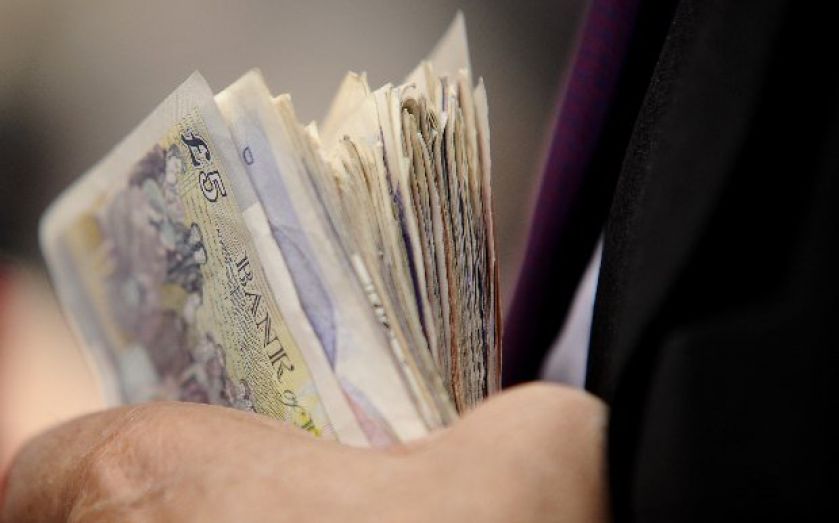
The recovery is still some way off reaching people's pockets, as earnings growth slowed to a meagre 0.3 per cent in the three months to May, according to the Office of National Statistics. 
 
Average earnings for the three months to May fell from a revised 0.8 per cent figure for April to its lowest level since May 2009, coming below consensus estimates of a lower dip to 0.5 per cent.
 
The 0.3 per cent figure is well  below May's inflation rate of 1.5 per cent, which shows that the cost of living crisis is not easing, with the trend of falling real wages continuing. 
 
According to the ONS, the figure was affected by a steep drop in bonuses compared to last year, when many employers delayed payments until April to take advantage of a cut in top-rate tax.

Excluding bonuses, average weekly earnings rose by just 0.7 per cent annually for the period in question, down from 0.9 per cent and the slowest rate since the statistics agency started measuring it in 2001, "reflecting low pay growth across a wide range of industrial sector".

This means that households continue to feel a squeeze in their purchasing power, as we have not recorded much real wage growth in the last few years – only a brief period of growth during 2010 and a small increase in March.

While a continued downward trend in the unemployment rate, which fell to 6.5 per cent in the three months to May, should signal a continued decline in spare capacity in the economy, average weekly earnings have failed to pick up. 

The significant dip in unemployment points to a swiftly improving labour market  and also maintains concerns over UK productivity. This, coupled with inflation increasing close to the Bank of England's two per cent target rate is "seemingly boosting the case for an early raising of interest rates" by the Bank of England, according to Howard Archer, chief UK economist at IHS Global Insight.

"But ongoing very low earnings growth suggests that there is still an appreciable amount of labour market slack with little pressure on inflation coming from pay," he adds.

This goes against the more optimistic expectations from earlier in the year when wages looked like beginning to pick up steam.

"While earnings growth still looks likely to trend gradually up over the coming months and inflation still looks likely to remain just under 2.0 per cent, it is taking longer for earnings growth to move above inflation than had seemed probable earlier in the year. This has to be a constraint on consumers’ ability and willingness to spend," added Archer

What could this mean for the possibility of a hike in interest rates before the end of 2014? 

Record low average earnings 0.3% – anyone still think BoE will put rates up this year? #gbp #squeeze

— Michael Hewson 🇬🇧 (@mhewson_MCH) July 16, 2014

Share this article

  • Facebook
  • X
  • LinkedIn
  • WhatsApp
  • Email

Similarly tagged content:

Sections

  • News

Categories

  • Business

Trending Articles

  • Revolut takes flight with launch of new airport lounges

  • Grandparents fund university degrees to avoid inheritance tax net

  • Revolut chatbot goes rogue by charging users to cancel subscription

  • Brompton Bicycle sues former adviser for ‘professional negligence’

  • As It Happened: Stocks dip as oil’s ‘slowing demand’ in focus; Iran threatens to extend war

More from Morning Wire

  • UK economy weathers Iran war shocks but slowdown incoming

    Economics
    Chancellor John Healey smiling, wearing a navy suit, white shirt, and red tie.
  • Oil prices return to crisis levels

    Markets
    Close-up of a petrol pump nozzle dispensing fuel at a gas station, highlighting rising fuel costs and economic impact.
  • ‘Cost of business crisis’ as government drives up overheads by 70 per cent in a decade

    Business
    Andy Burnham, Mayor of Greater Manchester, drinking a pint of beer in a busy pub setting
  • Tax bill and Middle East weigh on Heathrow despite record numbers

    Aviation
    Commercial airplane landing at Heathrow Airport, seen from behind, with a prominent Heathrow sign below.
  • Burnham promises to ‘build new economy’

    Politics
    Andy Burnham, Mayor of Greater Manchester, speaking at an event
  • Natwest hikes targets again after jump in profit

    Banking
    NatWest sign on a dark pillar with vertical slats, set against a blurred background of a modern office building
  • Will Burnham take the pressure off business? Don’t bank on it

    Politics
    Andy Burnham speaking passionately at a public event, wearing a suit, highlighting his role as a prominent political figure.
  • Andy Burnham’s technical education reforms are doomed to fail

    Opinion
    Andy Burnham, Mayor of Greater Manchester, in a high-vis vest at a technical education event.
MorningWire

Independent European business, markets and political news for decision-makers.

Morning Briefing

Europe

  • Germany
  • France
  • Europe
  • UK & Ireland

Business

  • Markets
  • Banking
  • Technology
  • Energy
  • Property
  • Fintech

Editorial

  • Opinion
  • Editorial Policy
  • Corrections
  • Contact

Company

  • About Morning Wire
  • Privacy Policy
  • Terms of Use
  • Cookie Policy
© 2026 Morning Wire Ltd · Published by Morning Wire Media, Bahnhofstrasse 65, 8001 Zürich, Switzerland
Privacy · Terms · Cookies · Facebook