Skip to content
Monday 17 August 2026London --:--Frankfurt --:--Zurich --:--
NewslettersSearchEN · DE · FR
MorningWire

European business, markets and politics

FTSE 100
10,720.30
-0.28%
DAX
26,338.61
-0.38%
CAC 40
8,579.60
-0.66%
STOXX 50
6,530.45
-0.14%
  • Europe
  • Markets
  • Business
  • Economy
  • Regulation
  • Politics
  • Opinion
More
GermanyFranceEU InstitutionsCompetitionPublic AffairsBankingTechnologyEnergy
  • Germany
  • France
  • Europe
  • Markets
  • Business
  • Economy
  • Regulation
  • Politics
  • Opinion
  • DE
Monday 21 July 2014 12:41 pm  |  Updated:  Friday 07 June 2019 1:27 am

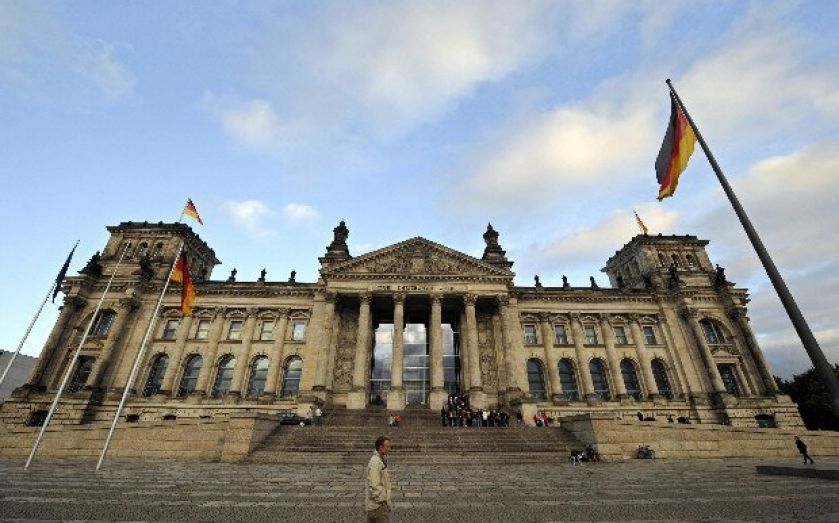
German economy expected to slow in second quarter as geopolitical tensions take their toll

By: Nassos Stylianou

Add as a preferred source on Google

Europe's economic motor is spluttering. 

Germany's economy was likely to have stagnated in the three months to June, according to the nation's central bank, as the EU's largest economy was weighed down by geopolitical tension and weak construction and industrial output. 

In its monthly bulletin, the Bundesbank said that the global uncertainty stoked by tensions in the Middle East and eastern Ukraine took its toll on the nation's economy. As well as geopolitical factors, calendar effects such as the mid-week public holidays that resulted in fewer days worked as employees combined them with holidays, dragged the German economy down in the second quarter. 

"Geopolitical tensions are reflected not only in weaker future indicator surveys, but also in ebbing demand for interim goods," the bank said. 

“Industry shifted into a lower gear,” continued the monthly report from the Frankfurt-based central bank. Industrial production posted its biggest fall in almost two years in May as factory orders were down 1.7 per cent.

The building sector also took a hit in the three months to June. According to the latest figures from the EU's statistics body, production in construction in Germany plunged by 4.9 per cent in May, with analysts suggesting that this could reflect the impact of the European mild winter, given that the figures are seasonally adjusted. 

The saving grace for the German economy was the services sector. 

“Considering that the service sector is likely continued to expand, the real, adjusted gross domestic product (in Germany) was likely unchanged from the first quarter,” the Bundesbank said.

The slew of weak data from across the Eurozone in the last few weeks has sparked concerns that the region's nascent economic recovery is faltering, as fears that the common currency area could contract in the second quarter are setting in.

Germany makes up for almost a third of the European Union's gross domestic product at about 30 per cent. The 0.8 per cent GDP growth it recorded in the first three months of the year, its strongest gain since 2011, nudged Eurozone growth up in the first quarter, growing a modest 0.2 per cent across its 18 member states. 

Second quarter German GDP data will be released by the country's Federal Statistics Office on August 14. The Bundesbank has forecast German economic growth of 1.9 per cent in 2014, up from a projection of 1.7 per cent it made at the end of last year. In March, the central bank announced that it expected growth in the three months to June to be considerably below that of the first quarter.


Share this article

  • Facebook
  • X
  • LinkedIn
  • WhatsApp
  • Email

Similarly tagged content:

Sections

  • News

Categories

  • Business

Trending Articles

  • Nanochon Receives Regulatory Approval from Panamá’s Ministry of Health to Initiate First-in-Human Clinical Study of Chondrograft™

  • Analysis: What would Todd Boehly and Mark Walter stake sales mean for Chelsea?

  • We take a food and drink Odyssey through the Square Mile

  • Paramount-Warner Bros deal faces ‘sufficient competition’, says CMA

  • Watchdog takes aim at lawyers blaming juniors for AI blunders

More from Morning Wire

  • JP Morgan bags record profit – but Dimon warns of risks shifting ‘below the surface’

    Banking
    GettyImages 1927388065 featuring a business meeting with diverse professionals discussing corporate strategies in a modern...
  • Tui hit by Middle East travel chaos and rising fuel costs

    Transport & Infrastructure
    TUI airline crew, pilots and flight attendants, smiling on aircraft stairs with the TUI tail logo in the background
  • IMF warns Bank of England against cutting interest rates

    Economics
    IMF Chief Kristalina Georgieva issues caution to Bank of England amid economic concerns
  • As it happened: FTSE 100 drops as Antofagasta prompts miner sell-off; oil prices cool

    FTSE 100 Live
    Glencore floated on the London Stock Exchange in 2011 and is one of the largest members of the FTSE 100.
  • House prices slump as Iran war and interest rates hit demand

    Property
    The price paid for first homes has surged 7.1 per cent in a year
  • Bank of England may set the stage for interest rate hikes this year

    Economics
    Bank of England recession warning
  • Iran war woes cause jump in London-listed profit warnings

    Economics
    GettyImages 2211256637 showing a significant event or figure relevant to recent news updates in the business sector
  • North Sea is not competitive, says BP boss days after exit

    Markets
    British Petroleum BP forecourt with fuel pumps and company signage visible in a business setting, highlighting energy serv...
MorningWire

Independent European business, markets and political news for decision-makers.

Morning Briefing

Europe

  • Germany
  • France
  • EU Institutions
  • Europe

Business

  • Markets
  • Business
  • Economy
  • Regulation
  • Competition
  • Public Affairs

Editorial

  • Opinion
  • Editorial Policy
  • Corrections
  • Contact

Company

  • About Morning Wire
  • Privacy Policy
  • Terms of Use
  • Cookie Policy
© 2026 Morning Wire Ltd · Published by Morning Wire Media, Bahnhofstrasse 65, 8001 Zürich, Switzerland
Privacy · Terms · Cookies · Facebook