Skip to content
Thursday 27 August 2026London --:--Frankfurt --:--Zurich --:--
NewslettersSearchEN · DE · FR
MorningWire

European business, markets and politics

FTSE 100
10,878.12
-0.07%
DAX
26,285.96
+0.08%
CAC 40
8,462.39
0.00%
STOXX 50
6,470.74
+0.23%
  • Europe
  • Markets
  • Business
  • Economy
  • Regulation
  • Politics
  • Opinion
More
GermanyFranceEU InstitutionsCompetitionPublic AffairsBankingTechnologyEnergy
  • Germany
  • France
  • Europe
  • Markets
  • Business
  • Economy
  • Regulation
  • Politics
  • Opinion
  • DE
Monday 10 November 2014 4:12 pm  |  Updated:  Friday 07 June 2019 4:20 pm

Creativity and optimism will help Britain cope with the robot onslaught

By: Stian Westlake

Add as a preferred source on Google

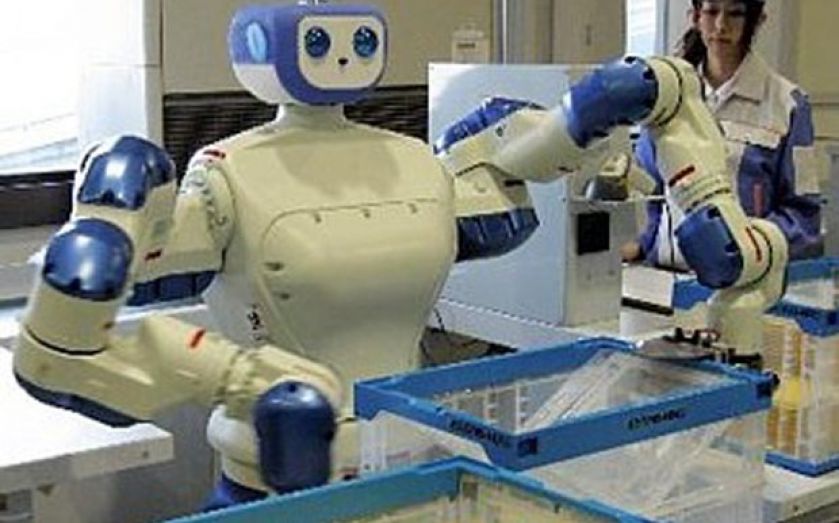
THE ROBOTS are coming, and they’re after your job. New research from Oxford University and Deloitte will be sure to send a shiver down the spine of British workers. It showed that up to 35 per cent of jobs in the UK could be destroyed by automation and computerisation. Deloitte argued that this would cause widespread unemployment and a widening gap between rich and poor.

It’s certainly true that technology is advancing in leaps and bounds. Computers are proving that they can do many tasks we once thought were the preserve of flesh-and-blood people, from processing insurance claims to diagnosing disease to driving cars.

But before we panic, it’s worth looking at the facts. It turns out that the UK may be better positioned to weather the robot revolution than most other countries. Indeed, our biggest problem may not be the coming of the robots, but the fact they are not coming quickly enough.

New research by Nesta and Oxford’s Michael Osborne and Carl Frey showed that the UK is unusually rich in the kind of high-creativity jobs that are hardest to replace by robots. For decades, pundits have lamented the UK’s reliance on seemingly frothy sectors like the media, design and business services, and looked with envy at Germany’s mighty manufacturers. It turns out that this British disease may actually be an advantage in an age of automation. The research found that 24 per cent of British jobs were creative, higher even than the US, and that 86 per cent of workers in these industries were at little or no risk of being put out of work by technology. It would be wrong to say there’s no risk, but the UK is better positioned than many other countries.

Paradoxically, the UK’s problem may actually be that automation doesn’t arrive quickly enough. For all the legitimate problems that robots cause when they destroy jobs, they will increase productivity and make the country as a whole richer. If other countries automate and we don’t, our productivity will lag, and although employment may remain high, wages and profits will fall. There are signs that this is happening already in the UK’s underwhelming recovery. The UK economy has been good at creating jobs, but productivity and wage growth have been feeble since 2008. Low wages, of course, reduce the incentive to invest in robots – why buy a robot if human workers are cheaper?

If we care about productivity and our long-term prosperity in a robot future, the UK needs to make the most of its strengths and address its weaknesses. We need to create the right conditions for our creative and business services sectors to thrive and export to the world. And we need to give entrepreneurs and companies the freedom, and the finance they need, to invest in the new business models that will make the most of the astounding possibilities that new technologies offer us. If we can make this a reality, we can approach the robot revolution not without concern but at least with a sober optimism.

Share this article

  • Facebook
  • X
  • LinkedIn
  • WhatsApp
  • Email

Similarly tagged content:

Sections

  • Opinion

Categories

  • Opinion

Related Topics

  • Artificial intelligence (AI) and robots

Trending Articles

  • Pensioners to hand over bank statements in government benefits crackdown

  • Andy Burnham hints at tax rises in Autumn Budget

  • Budget 2026: Which taxes will Burnham and Healey hike?

  • Brewdog founder James Watt hits out at ‘total silence’ over new venture

  • Economists urge Bank of England to halt bond sales as borrowing costs climb

More from Morning Wire

  • Deloitte snaps up construction cost boutique to target infrastructure boom

    Big Four
    Illuminated white Deloitte logo sign with a green dot, mounted on a dark background, reflecting in a window.
  • Trump’s tough stance on DEI costs Big Four giant Deloitte millions

    Big Four
    Deloitte building exterior at dusk with illuminated offices and company logo visible
  • Inside Paul Pogba’s Saudi camel racing club Al Haboob

    Sport Business
    Two racing camels with robotic jockeys and numbers on their sides run on a dirt track.
  • Private equity-backed advisory firm acquires specialist music boutique

    Advisory
    Nowadays, headliners are less of a major part of the festival experience
  • The best weapon against AI slop is a good lunch

    Opinion
    Pub in Leadenhall Market, London
  • KPMG seeks financial support from parent group in wake of audit scandal

    Big Four
    KPMG Australia office building exterior with modern glass architecture and corporate signage in a bustling business district.
  • Historic French Luxury Leather Goods House Moreau Paris Sold to Leading Manufacturer

    Business Wire
  • Pre-season tours: Inside the economics of football’s summer money-spinners

    Sport Business
    Enthusiastic football fans, some in Chelsea and AC Milan jerseys, smiling and making peace signs at an event.
MorningWire

Independent European business, markets and political news for decision-makers.

Morning Briefing

Europe

  • Germany
  • France
  • EU Institutions
  • Europe

Business

  • Markets
  • Business
  • Economy
  • Regulation
  • Competition
  • Public Affairs

Editorial

  • Opinion
  • Editorial Policy
  • Corrections
  • Contact

Company

  • About Morning Wire
  • Privacy Policy
  • Terms of Use
  • Cookie Policy
© 2026 Morning Wire Ltd · Published by Morning Wire Media, Bahnhofstrasse 65, 8001 Zürich, Switzerland
Privacy · Terms · Cookies · Facebook