Skip to content
Wednesday 19 August 2026London --:--Frankfurt --:--Zurich --:--
NewslettersSearchEN · DE · FR
MorningWire

European business, markets and politics

FTSE 100
10,743.35
+0.14%
DAX
26,091.33
-0.14%
CAC 40
8,501.91
-0.09%
STOXX 50
6,444.46
-0.37%
  • Europe
  • Markets
  • Business
  • Economy
  • Regulation
  • Politics
  • Opinion
More
GermanyFranceEU InstitutionsCompetitionPublic AffairsBankingTechnologyEnergy
  • Germany
  • France
  • Europe
  • Markets
  • Business
  • Economy
  • Regulation
  • Politics
  • Opinion
  • DE
Wednesday 17 December 2014 5:10 am

Russia, Tesco and Alex Salmond feature in the seven biggest losers of 2014

By: Joe Hall

Add as a preferred source on Google

It’s Christmas. The time of year when we’re all supposed to be a little more caring, charitable and considerate of those not feeling so swell.
 
But for every champagne toast to success, there is regret at the bottom of a bottle. So summon some of that Christmas spirit for this sorry lot, the seven biggest losers of 2014.  

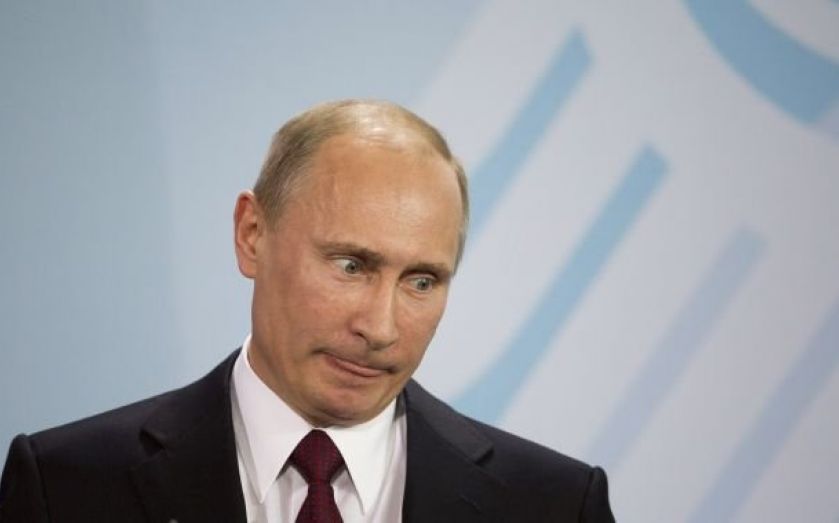
1. Russia


Oil prices do not paint a pretty picture for Putin (Source: Getty)

 
There’s a little more time for things to pick up before Russia celebrates Christmas (the Russian Orthodox Church observes the event on 7 January). But barring a Christmas miracle, things are still likely to look pretty grim for the Russian economy, which has taken a battering in 2014. A confluence of factors, including tumbling oil prices worldwide, rising inflation and economic sanctions that came out of the Ukraine crisis have contributed to its slide toward contraction. 
 
After the rouble tumbled 11 per cent on Tuesday, Russia seems to be spiralling towards a full-blown financial crisis in 2015. Deputy governor of the central bank Sergey Shvestov said: “I couldn’t imagine even a year ago that such a thing would happen – even in my worst nightmares.”
 
The brent crude benchmark oil price fell below $60 for the first time in five-and-a-half years this week. With oil and gas making up around 75 per cent of Russia's total exports, the rouble will continue to suffer unless prices pick up quickly.
 
Since March a series of economic sanctions from Nato countries have been placed on Russian state finance, energy and arms firms. State banks and oil firms such as Rosneft  are now excluded from raising long-term loans in the EU. 
 
Still, none of this was apparently enough to stop Russian president Vladimir Putin being voted Russia's "man of the year" for the 15th time in a row this week.

2. Tesco

Perhaps the most high-profile loser on the FTSE 100 this year, Tesco’s share price has plummeted nearly 50 per cent. Only one other company – Tullow Oil – has fallen more sharply this year.
 
It’s been hard to keep up with the continuing crisis at the beleaguered supermarket. There have been four profit warnings, a cut in credit rating, the suspension of senior staff and Gazprom, of course, the revelation of a £263m profit overstatement that sent its share price tumbling in September.


3. Quindell

If you thought the fall in Tesco's share price looks steep, consider what happened to insurance outsourcer Quindell. Less a slide, more a vertical drop off a cliff: Quindell's shares have fallen 89 per cent since the beginning of the year.
 
Since April, when mysterious US short seller Gotham City Research published a paper harshly criticising its model and accusing it of having "magical… paper profits", the company's stock has been subject to something of a fire sale. A series of figures have cut their losses and jumped ship, including former directors Rob Terry and Steve Scott and the company's broker Canaccord Genuity. Investor Fidelty has cut its stake in the company by half.

4. Alex Salmond


Alex Salmond concedes defeat in the independence referendum. (Source: Getty)

It was a narrow loss, but a loss all the same for Alex Salmond and the SNP in September’s Scottish Independence referendum.
 
Despite favourable polls that triggered Westminster’s big hitters into a last-gasp plea for votes for the union, a majority vote for independence couldn’t be reached. A distraught Salmond promptly handed in his resignation as First Minister of Scotland, and admitted independence for Scotland may not be seen “perhaps for a lifetime”. 
 
Yet Salmond has not given up the fight just yet. The politician, dubbed a “paranoid loser” by a former BBC chairman, will stand for a seat in UK parliament at next year’s general election in order to push through further powers for devolution.

5. Jonathan Burrows

Jonathan Burrows, the man dubbed the City's "artful ticket dodger", has not enjoyed a good year. Officially the biggest fare dodger in history after avoiding a mammoth £43,000 of travel costs on his commute from Stonegate to Cannon Street, the former Blackrock director was forced to resign from his £1m a year role and this week was banned from working in the city by the Financial Conduct Authority.

6. Sony 

After falling to victim to one of the biggest cyber hacks of all time, 2015 can't come soon enough for Sony's Hollywood division, Sony Pictures Entertainment.

Yet that will not necessarily spell the end for a the company who have been battered and bruised by the image-damaging and profit-hitting hack. Sensitive corporate information, employee's personal details, private email exchanges and even entire films have all been made public by the shadowy hackers.

Sony's share price has fallen in recent weeks, while the company has cancelled showings of new release The Interview after the hackers made an insidious threat to stage terror attacks at screenings of the film starring James Franco and Seth Rogen.

What's more, all of this follows what had already been a tough year for the tech giant. The company issued a profit warning issued by the company in September after being hit with a 180bn yen impairment charge for its mobile division.

This year marks the first time Sony will not be paying end-of-year dividend to shareholders.


Heavy security was present at the premiere for The Interview in Los Angeles (Source: Getty)

7. Co-Op

This week's news that the Co-operative failed the Bank of England's (BoE) new stress test is (probably) the final blow in a year that has been full of big hits on the beleaguered bank.

In April the crystal meth scandal which engulfed the bank finally came to an end after former chairman Paul Flowers was charged with possession of class A and class C drugs.

Seven banks were tested by the prudential regulation authority (PRA) to see how they would handle a financial meltdown, and only the Co-op came up short. In its defence,  the Co-op argued it has begun to turn a corner this year, yet it is still not expected to make a profit until 2016. For the first half of 2014 it reported a £76m pre-tax loss.

Share this article

  • Facebook
  • X
  • LinkedIn
  • WhatsApp
  • Email

Similarly tagged content:

Sections

  • News

Categories

  • Business

Related Topics

  • Review of the year 2014

Trending Articles

  • Jobless Banquet: Youth unemployment surge ‘sends Neets to KFC’

  • As it happened: FTSE 100 drops as oil prices rise after Trump makes Hormuz threat

  • US bond market jitters spark UK economy recession warning

  • Amanda Blanc has worked her magic at Aviva

  • City law firm sues prominent Emirati business family

More from Morning Wire

  • Ex-UK minister Robertson rubbishes Ukrainian claims he aided Russia’s Olympic return

    Sport Business
    Sir Hugh Robertson, British Olympic Association, wearing a poppy and name tag, at an event
  • Italy Pirlo hire off after Russian betting firm links revealed

    Sport Business
    Andrea Pirlo, former Italian footballer, waving to the crowd in a brown tweed coat.
  • Donald Trump is creeping towards a shrewd sanctions policy

    Opinion
    Donald Trump holding a red TRUMP 2028 hat, wearing a tuxedo with an American flag in the background
  • Devolution will create losers too

    Opinion
    Andy Burnham discussing Manchesters Bee Network public transport initiative at a city council event.
  • Russians are poised to compete at the LA 2028 Games as IOC lifts ban

    Sport Business
    Getty Images logo displayed on a computer screen in a dimly lit room, emphasizing its prominence in digital media.
  • We should all get behind this wealth tax

    Opinion
    LONDON, ENGLAND - JUNE 01: A general view of a house along Kensington Palace Gardens, which has been named as Britain's most expensive street on June 1, 2011 in London, England. Many of the mansions are occupied by billionaire businessmen, embassies and ambassadorial residences. (Photo by Oli Scarff/Getty Images)
  • Michael Dell, Lord Johnson and the ‘gun to the head’ meeting that ended a £15bn AI project

    Tech
    Dell Technologies CEO Michael Dell and Johnson discussing AI pathfinder with data center in background
  • Inside the London workshop that made Hundred, FA Cup and World Cup trophies

    Sport Business
    Thomas Lyte designer polishing intricate gold ceremonial helmet detail with a rotary tool.
MorningWire

Independent European business, markets and political news for decision-makers.

Morning Briefing

Europe

  • Germany
  • France
  • EU Institutions
  • Europe

Business

  • Markets
  • Business
  • Economy
  • Regulation
  • Competition
  • Public Affairs

Editorial

  • Opinion
  • Editorial Policy
  • Corrections
  • Contact

Company

  • About Morning Wire
  • Privacy Policy
  • Terms of Use
  • Cookie Policy
© 2026 Morning Wire Ltd · Published by Morning Wire Media, Bahnhofstrasse 65, 8001 Zürich, Switzerland
Privacy · Terms · Cookies · Facebook