Skip to content
Tuesday 18 August 2026London --:--Frankfurt --:--Zurich --:--
NewslettersSearchEN · DE · FR
MorningWire

European business, markets and politics

FTSE 100
10,720.30
-0.28%
DAX
26,338.61
-0.38%
CAC 40
8,579.60
0.00%
STOXX 50
6,530.45
-0.14%
  • Europe
  • Markets
  • Business
  • Economy
  • Regulation
  • Politics
  • Opinion
More
GermanyFranceEU InstitutionsCompetitionPublic AffairsBankingTechnologyEnergy
  • Germany
  • France
  • Europe
  • Markets
  • Business
  • Economy
  • Regulation
  • Politics
  • Opinion
  • DE
Tuesday 03 February 2015 8:21 pm

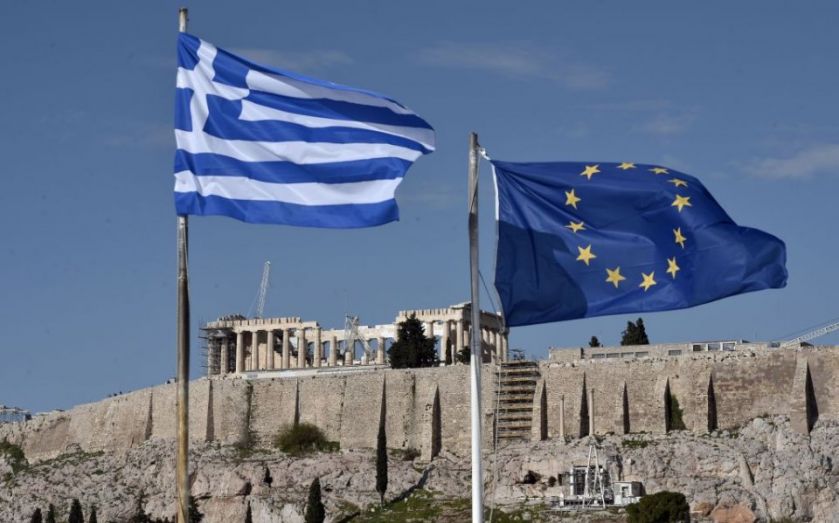
Can game theory save the Greeks from euro oblivion? Don’t count on it

By: Express KCS

Add as a preferred source on Google

Game theory is a big topic in academic economics. Indeed, it is scarcely possible to graduate from a good university without exposure to its abstruse logic. So perhaps the Greek government, replete with economists, is using game theory to plan its tactics for the coming negotiations with its creditors. Or is Chancellor Merkel herself being briefed with calculations carried out deep in a hidden bunker stuffed with game theorists?

The subject was invented in the 1940s by John von Neumann, one of the greatest polymaths of the entire twentieth century. He made major contributions to the development of both the computer and the atomic bomb. But it is for his game theory that economists remember him. It appears to offer a rational, calculable way of dealing with uncertainty.
 
Shortly after the Second World War, and once the Soviet Union had acquired nuclear weapons, the US military poured huge resources into the topic, using some of the best minds in the country. Both the Americans and the Russians could be assumed to be rational in the sense of preferring to avoid a nuclear exchange. But lacking certainty about the strategy of the opponent, might the best action be to launch a pre-emptive strike? This is the whole essence of game theory. In the jargon, you either play a co-operative strategy or you defect. In other words, you either live with the nuclear stand-off or you get your retaliation in first.
 
To co-operate or to defect, that is the question. The game being played in the current Greek tragedy is a multiplayer one, but the principle is the same. The Greek government hints at a willingness to defect by cosying up to Putin’s Russia, scaring the Nato establishment. From Greece’s perspective, statements from hardliners in, for example, the European Central Bank (ECB) are equivalent to a policy of defection being played against them. No concessions, according to this strategy.
 
The fundamental insight of game theory does tell us something about the world. Cartels, for example, are difficult to sustain. Although members benefit from keeping prices up by playing a co-operative strategy, there is the constant temptation for individuals to defect, to believe that they can steal an advantage by going it alone. Even Opec has not been immune from this pressure.
 
Beyond this important general contribution, however, game theory does not offer much help in many practical situations. There are now literally tens of thousands of dense mathematical academic papers which try and obtain the optimal strategy. Even the brief bits of English in these articles would be incomprehensible to non-specialists. But the final answer has not yet been found.
 
Perhaps the biggest weakness is that game theory requires clear and distinct rules of the game. In the current euro crisis, however, it is not even clear that the players are in the same game. For the Greeks, it is a one-off. They want to change policy in their own country. For the ECB, IMF, and Germany, if they co-operate in this, they are worried about the next game in the sequence against Spain, Italy or whoever. Politics is a better guide than economics.
 
Paul Ormerod is an economist at Volterra Partners, a visiting professor at the UCL Centre for Decision Making Uncertainty, and author of Why Most Things Fail: Evolution, Extinction and Economics.
 

Share this article

  • Facebook
  • X
  • LinkedIn
  • WhatsApp
  • Email

Similarly tagged content:

Sections

  • Opinion

Categories

  • Opinion

Related Topics

  • Greek debt crisis

Trending Articles

  • As it happened: FTSE 100 drops as oil prices rise after Trump makes Hormuz threat

  • US bond market jitters spark UK economy recession warning

  • Is the Zeekr 9X Super Hybrid the new luxury SUV to beat?

  • Grandparents fund university degrees to avoid inheritance tax net

  • Aldi boss wades into supermarket ‘price-gouging’ row

More from Morning Wire

  • Will the Nations Championship financially underdeliver for in-need Fiji?

    Sport Business
    Getty Images logo displayed prominently on a digital screen, symbolizing the brands visual content prowess and media prese...
  • Atlanta set for major economic boost as England World Cup fans spend

    Sport Business
    Breaking news illustration with digital world map and stock market graphs, highlighting global economic trends.
  • Burnham’s cheerfulness could turn the economy around

    Opinion
    Andy Burnham laughing outdoors in a candid moment, May 2026, capturing a lighthearted political event atmosphere.
  • Miami heat: Why climate could be key in 40C England v Norway World Cup quarter-final

    Sport Business
    Business professionals discussing strategies in a modern office setting with charts and graphs on a large screen in the ba...
  • I’m 60, please don’t give me a Freedom Pass

    Opinion
    Close-up of a blue Oyster card against a white background, highlighting its role in public transportation payment systems.
  • We should all get behind this wealth tax

    Opinion
    LONDON, ENGLAND - JUNE 01: A general view of a house along Kensington Palace Gardens, which has been named as Britain's most expensive street on June 1, 2011 in London, England. Many of the mansions are occupied by billionaire businessmen, embassies and ambassadorial residences. (Photo by Oli Scarff/Getty Images)
  • The 2026 World Cup had its flaws, yes, but it was a resounding success for Fifa

    Sport Business
    Getty Images logo on a digital display, symbolizing stock photography for news and business publications
  • How can wealthy Scots save £46,000 on income tax? Commute from England

    Tax
    Baillie Gifford runs three of the trusts targeted by Saba Capital.
MorningWire

Independent European business, markets and political news for decision-makers.

Morning Briefing

Europe

  • Germany
  • France
  • EU Institutions
  • Europe

Business

  • Markets
  • Business
  • Economy
  • Regulation
  • Competition
  • Public Affairs

Editorial

  • Opinion
  • Editorial Policy
  • Corrections
  • Contact

Company

  • About Morning Wire
  • Privacy Policy
  • Terms of Use
  • Cookie Policy
© 2026 Morning Wire Ltd · Published by Morning Wire Media, Bahnhofstrasse 65, 8001 Zürich, Switzerland
Privacy · Terms · Cookies · Facebook