Skip to content
Wednesday 12 August 2026London --:--Frankfurt --:--Zurich --:--
NewslettersSearchEN · DE
MorningWire

European business, markets and politics

FTSE 100
10,815.47
-0.26%
DAX
26,337.82
-0.20%
CAC 40
8,662.55
-0.60%
STOXX 50
6,529.69
-0.33%
  • Europe
  • Markets
  • Business
  • Economy
  • Technology
  • Politics
  • Opinion
More
GermanyFranceBankingAIEnergyFintechPropertyCapital Markets
  • Germany
  • France
  • Europe
  • Markets
  • Business
  • Economy
  • Technology
  • Politics
  • Opinion
  • DE
Thursday 04 June 2015 8:55 pm

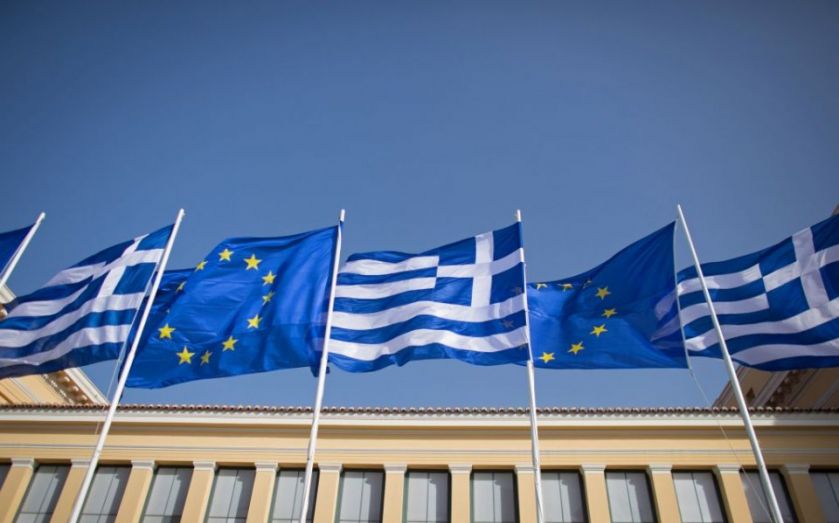
As the Greek saga continues, can only fiscal integration secure the Eurozone’s future?

By: Express KCS

Add as a preferred source on Google

Lydia Prieg, a PhD student at the University of Cambridge, says Yes

Greater fiscal union is the only sustainable solution for the Eurozone. Without coordinated redistribution, some countries are enjoying artificially low exchange and interest rates. This boosts exports and growth. Other countries have inappropriately high exchange and interest rates, which hinder exports and growth.

In the build-up to the crisis, German banks were also lending money to the Greeks, and these funds were often used to buy German exports. Germany has thus profited for years from lower rates without having to compensate the weaker economies that struggle at such levels.

We must stop blaming southern countries for irresponsible lending and structural problems within the bloc. The US is an example of a coordinated union where states still predominantly set their own tax policies. The Eurozone must strategically redistribute some tax proceeds between countries, or disband the monetary union. Anything else is just kicking the can down the road.

Christian Schulz, senior economist at Berenberg, says No

Classic elements of fiscal union such as common debt issuance, debt mutualisation or even unconditional fiscal transfers from rich countries to the poor would be dangerous for the Eurozone. The spreads between the borrowing costs of the most vulnerable and the most stable member states are important incentives for fiscal discipline and wider structural reform efforts. Where such spreads are absent or where tax revenues are transferred unconditionally, as in Germany’s inter-state fiscal equilibrating system, economic imbalances tend to be aggravated – not resolved over time.

In Bremen, a net recipient of aid from rich Bavaria and others for decades, Germany has its own little Greece: reform-resistant with sluggish growth and enormous public debt. Germany sets some good examples for the Eurozone, but fiscal union is not one of them. At the margin, the Eurozone could review its fiscal rules, clarifying special circumstances and tightening penalties.

Share this article

  • Facebook
  • X
  • LinkedIn
  • WhatsApp
  • Email

Similarly tagged content:

Sections

  • Opinion

Categories

  • Opinion

Related Topics

  • Eurozone
  • Greek debt crisis

Trending Articles

  • Five-star Mayfair hotel hit with HMRC winding-up petition

  • Nottingham Forest owner Marinakis sues Crystal Palace for defamation

  • Back to basics: Sainsbury’s gradual retreat from the British high street

  • Hargreaves Lansdown orders staff back to office

  • As it happened: Intel, Arm shares slide; Oil climbs higher

More from Morning Wire

  • Singapore on Thames or the Sick Man of Europe?: The Economics of Brexit Ten Years from the Referendum 

    Opinion
    UK-EU Brexit negotiations meeting with officials discussing trade agreements and policy impacts in a formal conference room
  • Will Britain follow Japan’s great growth gamble?

    Opinion
    Japan Prime Minister Sanae Takaichi speaking at a press conference, highlighting her leadership and political agenda
  • Logitech Announces Q1 Fiscal Year 2027 Results

    Business Wire
  • HSBC kicks off $1bn share buyback after profit smashes forecast

    Banking
    HSBC's stock has taken a hit due to the huge tariffs slapped on Asian countries.
  • Mortgage approvals inch up yet gains to be ‘retracted’

    Property
    Bank of England headquarters in 2025, showcasing modern architecture and iconic London skyline in the background.
  • UK borrowing costs soar as Iran ceasefire collapses

    Markets
    Rising borrowing costs depicted amid escalating tensions following the Iran war, illustrating economic impact on global ma...
  • Metro Bank profit jumps as it bucks branch closure trend

    Banking
    Metro Bank logo on a blue sign above a modern building entrance with reflective windows
  • Bank of England warns Burnham of UK economy’s ‘big issue’

    Economics
    Bank of England Governor Andrew Bailey said the future of interest rates was "more uncertain".
MorningWire

Independent European business, markets and political news for decision-makers.

Morning Briefing

Europe

  • Germany
  • France
  • Europe
  • UK & Ireland

Business

  • Markets
  • Banking
  • Technology
  • Energy
  • Property
  • Fintech

Editorial

  • Opinion
  • Editorial Policy
  • Corrections
  • Contact

Company

  • About Morning Wire
  • Privacy Policy
  • Terms of Use
  • Cookie Policy
© 2026 Morning Wire Ltd · Published by Morning Wire Media, Bahnhofstrasse 65, 8001 Zürich, Switzerland
Privacy · Terms · Cookies · Facebook