Fund fees in pounds and pence: How the upcoming regime of clear investment pricing will work

Fees for investment funds will soon be displayed in pounds and pence, under new rules coming into force next year. Annabelle Williams gets the lowdown from the Investment Association on how it will work.
MAKING CHARGES CLEAR
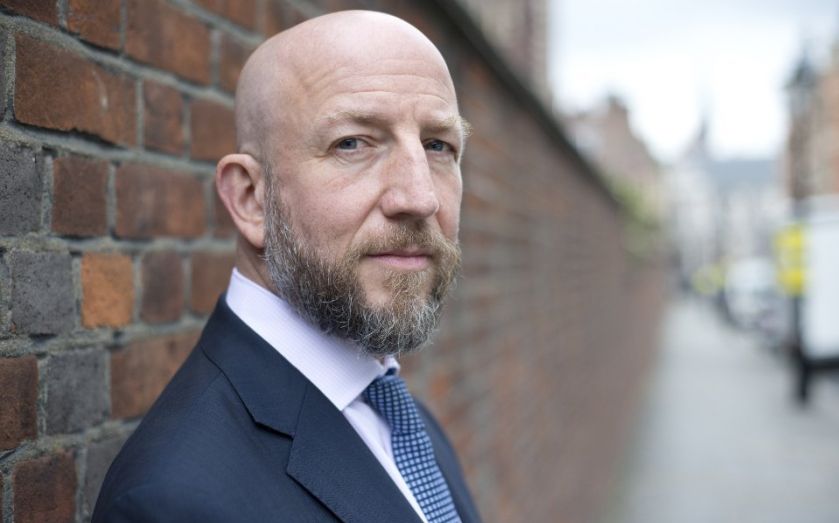
You won’t have heard of Daniel Godfrey, but he leads the Investment Association, a body which has been lobbying to make fund managers disclose investment fees in pounds and pence, rather than with a series of percentages.
Last spring, regulators agreed that this should be mandatory. So from January 2016, anyone will be able to download an investment fund’s annual report, turn to the back pages and see how much the manager has spent that year in running the fund, and how the outgoings relate to performance – all in simple figures.
“You should be able to say ‘I have achieved a return of 17p per unit in the fund, and to get that I have spent 4p per unit’,” Godfrey explains. “The objective… is to give an investor the performance they have achieved and the costs they have incurred in achieving that.”
Investment funds are divided into “units” or increments, which represent little portions of the fund that individual investors own. For example, a fund may have 1m units, and when a saver puts in £1,000, he or she then owns 100 of those units. Being able to see how many pennies of your investment have been eaten up in charges should be much simpler – and it will be visible as one total figure rather than the existing list of percentages investors have to contend with.
The details will be there for anyone to see, albeit listed at the back of a lengthy document. It’s not perfect, but Godfrey foresees consumer groups and journalists digging into the figures to publish rankings and comparison charts.
This is undoubtedly a victory in the long march towards clear and fair investment fees, but there are a few other areas where fund charges are confusing. We asked Godfrey for the full story.
Why are fund charges displayed in percentages in the first place? Isn’t that confusing?
Percentages are something fund groups have to show under European regulations called Mifid. A lot of people can’t get their heads around percentages, but it does make fund prices easier to compare.
Some fund managers charge a “performance fee” where, in addition to the usual management charges, they take, say, 20 per cent of any investment returns above a set level. Is that fair, when investors are already paying the manager to make good returns?
I think performance fees are okay. Although I have to admit I have been up and down and back again on them over the years. You could say, on the one hand, does it make a fund manager work harder? Well I expect a fund manager to work hard regardless of a performance fee. Having said that, investors get that, if someone makes them a lot of money, they don’t mind that they get some of the money. There is a value in performance fees, of aligning the interests of the manager with the investor.
What do you think of "no win, no fee" funds, where investors don’t pay any fund charges unless the manager generates a return above a pre-set benchmark?
Their success will be up to the consumer. But we have had similar things in the past that just did not work.
Over the years there have been scandals, with dodgy investment funds and products being mis-sold by advisers. Can the industry ever be completely free of rogues?
It is important to learn from everything that does go wrong. I’m sure the industry is stronger and regulation is stronger as a result, but we can never be entirely safe from adviser events [such as mis-selling funds or poor advice].
Why is investment so important?
The fact that as people we can all expect to be around on this planet for longer than our parents’ generation, and the fact that the state cannot afford to provide for us. State support is increasingly going to be a last ditch safety measure.