Skip to content
Monday 24 August 2026London --:--Frankfurt --:--Zurich --:--
NewslettersSearchEN · DE · FR
MorningWire

European business, markets and politics

FTSE 100
10,816.56
+0.64%
DAX
26,136.56
+0.59%
CAC 40
8,484.43
0.00%
STOXX 50
6,462.22
+0.63%
  • Europe
  • Markets
  • Business
  • Economy
  • Regulation
  • Politics
  • Opinion
More
GermanyFranceEU InstitutionsCompetitionPublic AffairsBankingTechnologyEnergy
  • Germany
  • France
  • Europe
  • Markets
  • Business
  • Economy
  • Regulation
  • Politics
  • Opinion
  • DE
Tuesday 10 November 2015 2:27 pm

Black Friday UK 2015: Asda might be right to scale back its bargains on 27 November – but shoppers will still expect the deals
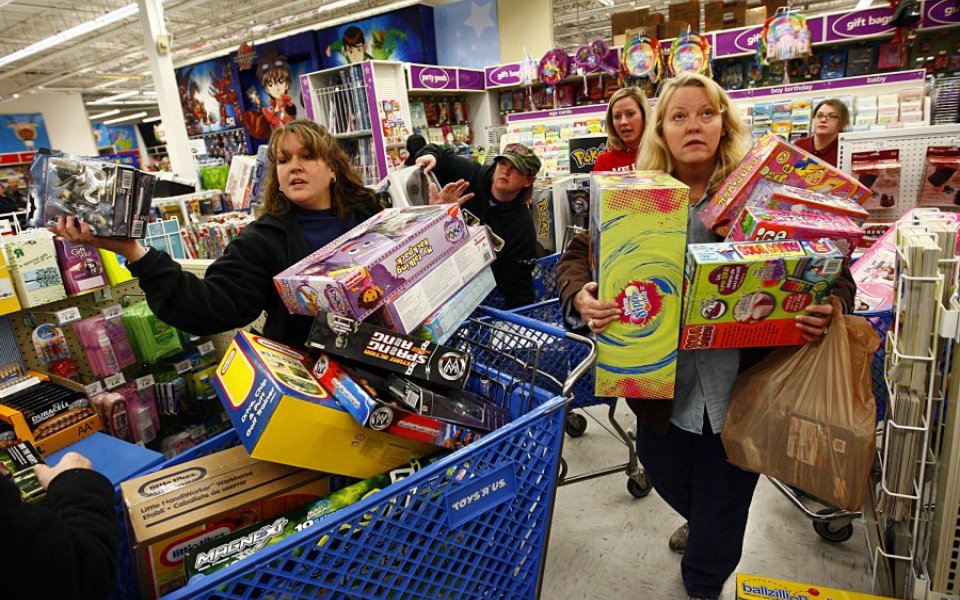
Last year Black Friday broke the internet.

Well, not quite; but it did break the websites of many UK retailers which struggled to cope with demand. In stores the occasion created Walking Dead type scenes, with hoards of shoppers frantically clawing for the best bargains.

Given that these are sure signs that the event – which retailers themselves unnaturally imported into the UK from the US – successfully captured the imaginations and wallets of consumers, it might seem strange that some, including Asda, are now downplaying the occasion.

It is true that Black Friday 2014 was a stellar event for retail with some £1.32bn being spent. However, as our recent research for Webloyalty reveals, most of those sales were not new demand, they were simply purchases that were moved from other points in time.

Indeed, 42.1 per cent of consumers said that last year they used Black Friday to buy items sooner than they usually would have, while 27.8 per cent said that the purchases they made on the day were ones they had delayed.

When those doing a bit of both are de-duplicated from the numbers, that’s 61.2 per cent of shoppers who say the things they bought on Black Friday were things they would have bought anyway.

Although it would be wrong to say that Black Friday created no new demand, its biggest impact was to distribute existing demand differently. Retailers saw this in their results, with even strong players like John Lewis suffering from a much more subdued level of demand than normal in the run up to Christmas.

Black Friday did more than just affect the pattern of trade. It had two adverse effects.

First, it meant many retailers were selling higher volumes of stock at a discount, something that negatively affected margins and ultimately profits. 

Second, it concertinaed a large volume of trade into a very short space of time. That put supply chains, customer service functions, logistics, IT, and every other aspect of the retail operation under intense pressure – with a resultant uplift in costs as retailers scrambled to cope.

Against this backdrop it is hardly surprising that retailers now want to scale back. Their execution of this year’s event, will be more conservative and more focused.

This likely means a more protracted, less intense period of selling with a more limited selection of promotions spread across a week or more.

That said, according to the Webloyalty research, more people intend to shop the event this year than last, and their expectation of a discount is greater.

Having let it out, retailers will now struggle to put the Black Friday genie back in its lamp.

Share this article

  • Facebook
  • X
  • LinkedIn
  • WhatsApp
  • Email

Similarly tagged content:

Sections

  • News

Categories

  • Business

Trending Articles

  • Can debt-ridden Morrisons become a Big Four supermarket again?

  • Ratcliffe’s Ineos saves Runcorn plant

  • Mike Ashley’s Frasers offers to pay personal shoppers in Harvey Nichols takeover

  • Burnham predicted to raise taxes for ‘fundamental’ cost of living support

  • Amazon says it buys books in bulk to ‘improve products’

More from Morning Wire

  • Could a ‘land blocking’ rule change spell danger for Aldi and Lidl?

    Retail
    Lidl supermarket sign with blue, yellow, and red logo against a clear blue sky
  • Supermarkets ‘actively shielding’ shoppers as food inflation falls again

    Retail
    Shopper in a supermarket produce aisle browsing various packaged vegetables and fruits.
  • Brits think supermarkets are profiteering – despite slowing food inflation

    Retail
    Shopper with red backpack and blue basket walking through a supermarket aisle filled with groceries
  • Healey revives ‘price-gouging’ threat as cost of living options narrow

    Politics
    Chancellor John Healey smiling, wearing a navy suit, white shirt, and red tie.
  • Burnham’s crackdown on ‘price-gouging’ splits supermarkets 

    Retail
    Every Lidl helps: Tesco looses appeal in the supermarket logos dispute
  • Aldi boss wades into supermarket ‘price-gouging’ row

    Retail
    Giles Hurley, Aldi UK CEO, stands in a supermarket produce aisle with fresh fruits and vegetables.
  • Retailers hit back at Healey’s ‘profiteering’ threat

    Retail
    Chancellor John Healey smiling, wearing a navy suit, white shirt, and red tie.
  • Asda credit card firm Jaja faces 15 per cent loan interest as debt pile swells

    Fintech
    ASDA storefront exterior showcasing the latest promotions and branding in a bustling retail environment
MorningWire

Independent European business, markets and political news for decision-makers.

Morning Briefing

Europe

  • Germany
  • France
  • EU Institutions
  • Europe

Business

  • Markets
  • Business
  • Economy
  • Regulation
  • Competition
  • Public Affairs

Editorial

  • Opinion
  • Editorial Policy
  • Corrections
  • Contact

Company

  • About Morning Wire
  • Privacy Policy
  • Terms of Use
  • Cookie Policy
© 2026 Morning Wire Ltd · Published by Morning Wire Media, Bahnhofstrasse 65, 8001 Zürich, Switzerland
Privacy · Terms · Cookies · Facebook