Skip to content
Monday 24 August 2026London --:--Frankfurt --:--Zurich --:--
NewslettersSearchEN · DE · FR
MorningWire

European business, markets and politics

FTSE 100
10,854.32
+0.35%
DAX
26,106.60
-0.11%
CAC 40
8,453.01
-0.37%
STOXX 50
6,447.98
-0.22%
  • Europe
  • Markets
  • Business
  • Economy
  • Regulation
  • Politics
  • Opinion
More
GermanyFranceEU InstitutionsCompetitionPublic AffairsBankingTechnologyEnergy
  • Germany
  • France
  • Europe
  • Markets
  • Business
  • Economy
  • Regulation
  • Politics
  • Opinion
  • DE
Tuesday 17 November 2015 5:45 am

Global Terrorism Index 2015 mapped: Terror attack deaths and economic cost hit an all-time high as UK is hardest hit of any EU country

By: Lynsey Barber

Add as a preferred source on Google

The world is counting the cost of terrorism more than ever before in terms of both its economic impact and lives lost, new research reveals, as Europe continues to reel from France’s worst ever peace-time attack.

The economic impact of terrorism across the globe reached $52.9bn (£34.8bn) in 2014, rocketing 60 per cent on the previous year and increasing ten-fold since the start of the century, the latest Global Terrorism Index shows. The figure is the highest since at least 2001, when it was calculated at $51.5bn following the 9/11 attack on the World Trade Centre in New York.

The number of deaths caused by terrorist attacks also hit an all-time high of 32,658, a record rise of 80 per cent on 2013 and a nine-fold increase since 2000. Islamic State (IS), which has claimed responsibility for the attacks in Paris, alongside IS-aligned Boko Haram were responsible for the largest number of fatalities, claiming 51 per cent of all terrorism related deaths last year.

The figures, compiled by the Institute for Economics and Peace, takes into account direct and indirect costs from loss of life, property destruction and ransom payments, in addition to costs such as increased security and higher insurance premiums.

The countries most affected by terrorism – Iraq, Afghanistan and Nigeria, Pakistan and Syria, where more than three quarters of deaths and more than half of all attacks took place – bear the biggest brunt of the costs with terrorism impacting economic growth and foreign investment.

However, the figures reveal the UK experienced a greater number of terrorist incidents than any other EU member state in 2014, ranking 28th in the world of the 162 countries listed, followed by Greece and France.

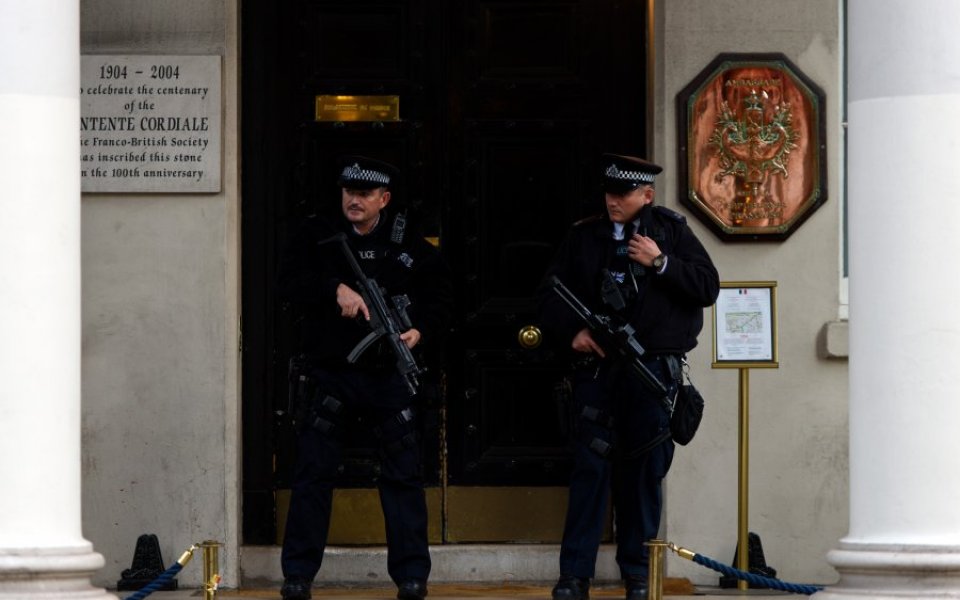
The findings come as the government steps up security measures across the country in the wake of the suicide attacks in the heart of Paris last week.

Seven terrorist plots have been thwarted in the last six months, Prime Minister David Cameron said as he revealed plans to recruit 2,000 more spies. The Metropolitan Police’s counter terrorism commander Richard Walton has said the Met was involved in more than 600 ongoing counter-terror operations along with the security services and was making one arrest each day on average.

The cost of counter-terrorism programs in the UK has been calculated at a $40 per capita, while the losses from terrorism were put at 15 cents. This compares to an $888 loss from interpersonal violence and $231 of spending to contain it per capita.

The cost of terrorism is still 32 times smaller than for violent crime and homicide, but “the significant expense on counter-terrorism underscores the impact that the fear of terrorism has on the general population,” the report said.

Explore the map below by clicking or tapping on each point marking how each country is affected by terrorism.

Share this article

  • Facebook
  • X
  • LinkedIn
  • WhatsApp
  • Email

Similarly tagged content:

Sections

  • News

Categories

  • Business

Trending Articles

  • KPMG seeks financial support from parent group in wake of audit scandal

  • Greg Norman: I’d rather see LIV Golf end than wither away

  • Drive to Survive renewed by Netflix as Formula 1 docuseries gets ninth season

  • European private credit booms as private equity firms are forced to refinance

  • Burnham accused of ‘piecemeal’ business rates reform

More from Morning Wire

  • Manufacturers overcome gloomy economy as output surge continues

    Industrials
    Manufacturing sector faces mounting tribunal pressures amid economic uncertainty
  • John Caudwell and Stuart Rose blast ‘tax creep’ 

    Economics
    John Caudwell in a formal setting, possibly during a business meeting or public speaking event, conveying professionalism.
  • As it happened: FTSE 100 rallies after JD Sports drags on blue chips; oil jumps again

    FTSE 100 Live
    Londons Stock Exchange orb with FTSE 100 display, symbolizing business and market updates
  • As it happened: Stocks rally; US to unveil ‘economic D-Day’ Iran sanctions

    FTSE 100 Live
  • Tracker funds are turning 50 – will they make it to 100?

    Markets
    John C. Bogle, Vanguard founder, speaking at a business event, wearing a suit and tie
  • Where are Andy Burnham’s economic advisers?

    Politics
    Andy Burnham and John Healey at Number 10 North, both wearing suits and ties, with a microphone in the foreground.
  • Consumer confidence extends upward streak in boost to Burnham and Healey

    Politics
    High street bustling with shoppers and vibrant storefronts, showcasing dynamic urban life and economic activity
  • Labour’s ‘chaotic’ zero-hour crackdown could cost firms £3bn per year

    Economics
    Andy Burnham, Mayor of Greater Manchester, in a suit and glasses, looking serious against a bright sky.
MorningWire

Independent European business, markets and political news for decision-makers.

Morning Briefing

Europe

  • Germany
  • France
  • EU Institutions
  • Europe

Business

  • Markets
  • Business
  • Economy
  • Regulation
  • Competition
  • Public Affairs

Editorial

  • Opinion
  • Editorial Policy
  • Corrections
  • Contact

Company

  • About Morning Wire
  • Privacy Policy
  • Terms of Use
  • Cookie Policy
© 2026 Morning Wire Ltd · Published by Morning Wire Media, Bahnhofstrasse 65, 8001 Zürich, Switzerland
Privacy · Terms · Cookies · Facebook