European Central Bank extends asset purchases to March 2017 and cuts interest rates to new record lows

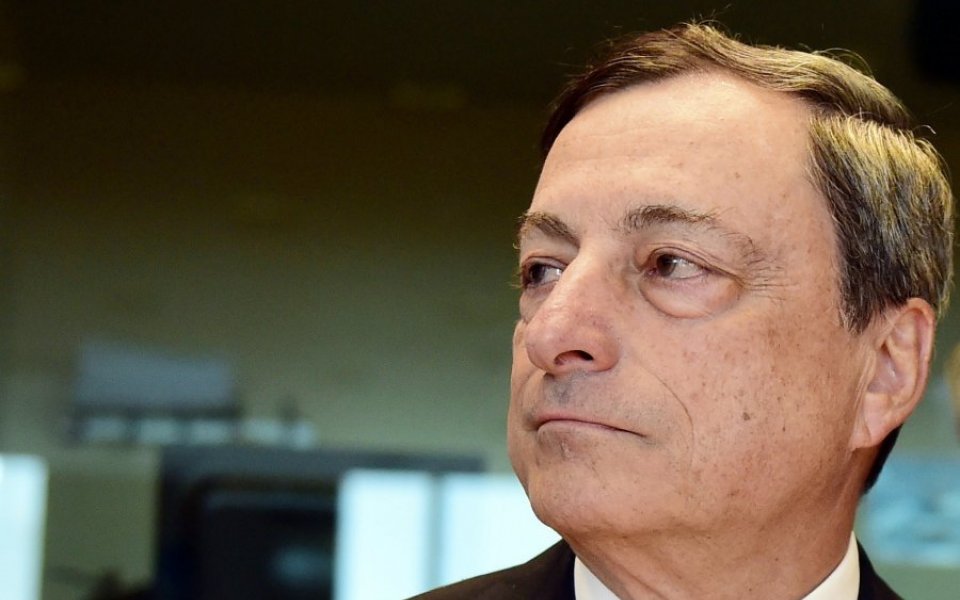
The European Central Bank (ECB) has ramped up its asset purchase programme to the tune of €360bn (£257bn), its president Mario Draghi announced today.
The programme will now run until the end of March 2017 instead of September 2016 as initially planned, but will stay at a rate of €60bn. It will take the value of the programme up to €1.5 trillion from €1.1 trillion. The ECB also added regional government bonds to the list of eligible assets it can buy, so it can now buy the bonds of Paris or Milan local governments.
Draghi also said the ECB would be reinvesting money it gets when the debt it purchases expires, as was done with the asset purchase programme in the UK.
Members of the ECB’s governing council also cut the central bank's deposit rate to minus 0.3 per cent from minus 0.2 per cent today.
The main refinancing rate, which applies to short term loans to banks, was kept at 0.05 per cent.
The euro immediately shot up to a value of 71.410p from 70.599p. The currency move suggests markets were disappointed, with many analysts expecting the deposit rate to be cut to minus 0.4 per cent. After the announcement of asset purchase programme extension, it then jumped to 71.971p.
Jonathan Loynes, chief European economist at Capital Economics, said:
Hopes that the ECB would make up for the disappointingly small cut in its deposit rate (to minus 0.3 per cent) with a decisive expansion of its asset purchase programme have been dashed by the announcement that it has merely extended the programme from September 2016 to March 2017.
The cut comes despite a report in the Financial Times published before the announcement that rates had not moved.
Inflation in the Eurozone has undershot the ECB’s two per cent target since 2013. In its September forecasts, ECB economists predicted that inflation would be 1.1 per cent next year and 1.7 per cent in 2017. These have today been downgraded to one per cent in 2016 and 1.6 per cent in 2017.
Eurozone inflation remained stuck at 0.1 per cent in November, despite the effect of lower oil prices starting to wear off.
President Mario Draghi and other ECB officials have managed to launch the asset purchase programme despite protests from Germany, whose official economic council warned the policy would encourage risk taking.
The €1.1 trillion (£780bn) asset purchase programme was launched in March but had been expected since the beginning of the year. The euro has fallen nine per cent against the pound since then. It uses newly created money to buy mostly government bonds.
The programme has also rocked bond markets, with the interest rate on the German government’s notoriously stable 10-year bund nearly hitting negative territory earlier this year before rebounding sharply.
The money supply has accelerated this year, with the programme helping the ECB’s M3 measure to regularly hit annual growth rates of around five per cent this year, a further sign of improvement in Eurozone financial conditions.
Simon Ward, chief economist at Henderson, suspects Draghi wanted to ease further but ran into opposition. He said:
The ECB badly mishandled its communications strategy in the run-up to today’s meeting, with comments from Mr Draghi and leaks about 20 different easing measures being under consideration encouraging market expectations of much more aggressive action than the announced 10 basis point cut in the deposit rate and six-month extension of QE at an unchanged pace.
The suspicion is that Mr Draghi overplayed his hand and ran into stiff German-led opposition based on doubts about the economic case for further easing and objections to an income transfer from core to peripheral banks implied by a larger cut in the deposit rate.