Fed rate hike decision: What’s expected to change, what it means, and how it will impact your investments

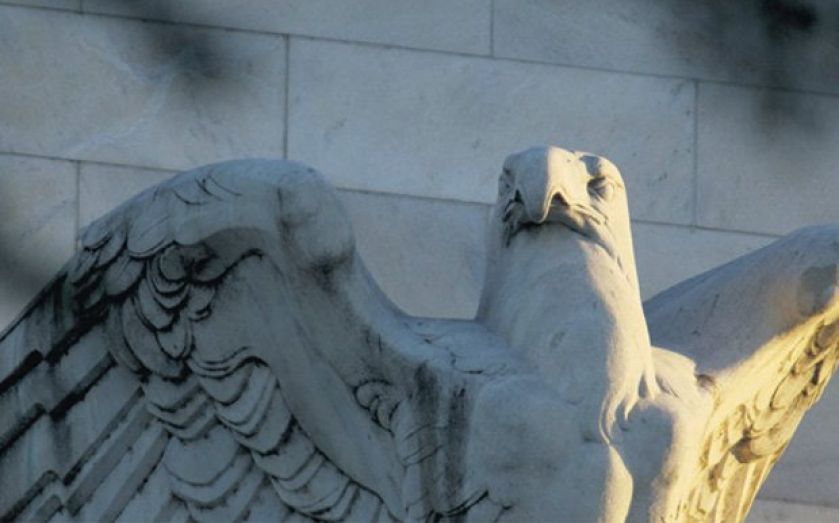
The world is watching the US central bank, the Federal Reserve, as experts think it will finally raise interest rates from their record lows today..
The Federal Reserve’s main interest rate was cut to 0.25 per cent in December 2008, the depths of the financial crisis. It has stayed there since. It was an emergency measure, but although the Fed meets regularly to discuss the rate, it has never considered the economy strong enough to withstand a rise.
WHAT DOES IT MEAN?
The Federal Reserve manages several interest rates. The main one is the Federal Funds rate, which is the interest banks charge each other for overnight loans. The Fed’s other rates apply to levels of interest it pays banks for having excess funds deposited with it, and the rate it pays to take part in short-term trades.
When economists talk about rate rises, they are generally talking about the Federal Funds rate, although the others may be tweaked too.
Although it sounds complicated, the level of these interest rates is used to determine the cost of loans across the whole of the economy. So bank loans to businesses and people’s mortgages are influenced by these figures.
Because modern economies are so dependent on lending and borrowing, changing interest rates can have a big effect. A country’s central bank, such as the Federal Reserve or Bank of England, raises and lowers interest rates to control inflation, employment levels and even economic growth.
WHAT IS EXPECTED?
A tiny increase of 0.25 per cent is being widely tipped as the most likely outcome today. It would be the first interest rate rise in the US since June 2006.
“It is as close to being certain as possible,” says David Morrison of Spread Co. “However, there is still the smallest of chances that the Fed may delay hiking rates.”
Experts believe the rate will then be increased gradually and in very small increments. “It is going to be a very slow and low path. Rates will get towards 1 per cent by the end of 2016, maybe even 0.75 per cent,” says Kully Samra of Charles Schwab.
This means monetary policy – simply the central bank’s rates and targets for the economy – should soon be returning to more normal levels. In official jargon, it is a “normalisation of monetary policy”.
On the surface, it is a good thing. It means the US economy is strong enough now to withstand normal conditions, and that the economy has recovered from the crisis.
WILL MARKETS REACT?
That rates will rise from rock bottom has been a fact for eight years now. Most investors will not be shocked by this.
“The good news is that this is probably the most well advertised, discussed, thought-about, mused-over prospect of beginning a normalisation of monetary policy in history. I’m not looking for a big reaction,” said William Dudley, head of the New York Federal Reserve.
In the pre-crisis days, rate rises were a shock. They were just announced with no warning. Given how well aware people are of this one, most experts think the change has been largely “priced into markets” – which means investors have already acted on the assumption that interest rates will rise. So the price of shares on the US stock market is generally considered to reflect a 0.25 per cent increase.
“The rate rise will be pretty meaningless, unless the Fed doesn’t do it,” says Andrew Birt of Saunderson House. “If they don’t, it means the Fed is concerned about the health of the US economy. That will spook markets a lot. I don’t think the market has priced in the effect of the Fed not raising.”
Rate rises are also typically bad news for bonds. The reasons why are complicated, but most investors will have bought bonds via a fund and the manager will be well prepared for this moment.
IS IT BAD FOR SHARE PRICES?
In theory rising interest rates are bad news for stock markets.
“It means the cost of borrowing increases and so individuals and businesses are both likely to have less money to spend on goods and services, because they are paying more on mortgages and other debt,” explains Patrick Connelly of Chase de Vere.
The counter argument is that, when rates rise, it is because the economy is continuing to improve, which should mean a more positive environment for companies to make profits, he adds.
Birt explains: “There may be a relief rally if the Fed goes ahead because it shows slightly higher rates won’t be a problem.” It could also be a good time to buy US shares. “If the economy is genuinely strong enough to merit higher rates, this could be a great buying opportunity,” says Rebecca O’Keeffe of Interactive Investor.
WILL IT AFFECT MORTGAGES?
Banks make money from lending to people, or investing in assets like US government bonds.
Yields on the latter are not expected to rise greatly (so they won’t be much higher-paying investments), and banks may increase rates on mortgages to make money.
Now could be time to lock in a good fixed-rate mortgage, Birt says.