25 years later: Remembering the fall of the Berlin Wall

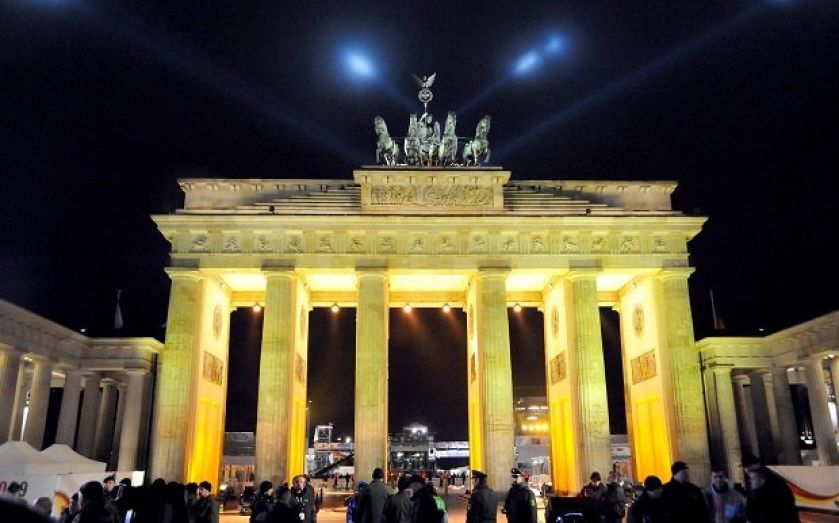
This weekend, the world observes the 25th anniversary of one of the most historic events in modern history, the fall of the Berlin Wall. The wall, erected by the German Democratic Republic of East Berlin in 1961 and fortified for nearly 30 years, was built to stem the flow of defectors from the Eastern bloc into free Europe. The wall became a symbol for oppression and a divided world torn apart by Cold War.
Over 5,000 people are believed to have escaped Soviet oppression over the wall, while over 100 were killed by East German border guards. When the wall fell in 1989, millions of people were liberated and the threat posed to the world by nuclear war subsided. A great conflict which had divided the world had ended without expectation and without violence.
When the Allied powers divided up the defeated German nation into Allied-controlled sectors, they condemned East Germany to life under Soviet Communism. Even though Berlin was within the Soviet territory, being the capital city, it was divided into sectors similar to the way the country was split. Tensions on the border between East German and US officials were common. Throughout the 1950s, the Soviets were embarrassed by the flow of defectors into the West.
Nearly 3m people had defected to the West, many of whom were skilled workers: doctors, scientists, engineers, and teachers. In 1961, the flow became even greater, with tens of thousands fleeing the German Democratic Republic. As a result, Russian Premier Nikita Khrushchev ordered an end to the defections. Soldiers and police were used at first and before long the beginnings of the Berlin Wall were erected, closing off East Berlin from the rest of world, dividing families, and giving rise to 30 year standoff between nuclear powers.
Life behind the wall would be something unfathomable to most today. Centrally planned agriculture from Moscow led to frequent food shortages. Without economic freedom, Germans living under Soviet rule were not free to make a decent living. Such economic policies led to unreliable production, shortages, and widespread poverty.
Western ideas and technology were shunned. While the West saw incredible advancement over the 30 years that the wall stood, Eastern Europe stayed nearly stagnant behind what Winston Churchill called an Iron Curtain. While Western society was seeing a wave of economic prosperity by the end of the 1980s, in East Berlin only every other household had a car or television.
New technology that had improved communication, transportation, education, and manufacturing was all but absent from the East. Free trade was seen as dangerous as it would work to undo the economic controls the Soviet system was based on. Black market demand for things like walk-mans, Coca-Cola, and blue jeans made smuggling Western goods a profitable enterprise for those who dared.
Religion was outlawed under Soviet rule, with atheism being the official policy of the USSR. The Soviet Union viewed religion and religious institutions as divisive and exploitive as it did any institutions with money and power. Religion was part of the old system which communism sought to abolish. Even belief in God became a rebellious act for those living under Soviet yoke.
It’s sobering to remember that a system so wholly incompatible with modern notions of personal freedom and an interconnected world of commerce and trade existed only 25 years ago. We take those notions for granted today. For the most part, we don’t consider ourselves lucky to be free, or to live in a world that isn’t threatened with nuclear annihilation. We fret over buying the latest iPod without realising the freedoms we are exercising and how empowered we have become because of them.
It is the basic rights to earn a living, to pursue happiness, to acquire property, to communicate freely, and to worship God, which Westerners take for granted, but which so many would have risked their lives for only 25 years ago. The Berlin Wall fell because Günter Schabowski, a member of East Germany’s Politburo, botched an announcement regarding the easing of travel restrictions. Schabowski’s remarks mistakenly led people to believe travel restrictions to West had been lifted.
Even though Schabowski’s remarks were made in error and misinterpreted by the press, it was enough to spur massive gathering at checkpoints along the German border. Peacefully overwhelming the guards, East Germans began to break apart the wall that had kept them from the rest of the world for 30 years. But, it was not Schabowski’s remarks that caused the Wall to fall. The Wall had to fall — it was an inevitability, as you can only wall off human rights, ambition, and progress for so long before they burst through. Schabowski’s botched remarks were a crack in the dam, but the pressure of millions longing for freedom is what caused it to break.