Skip to content
Tuesday 11 August 2026London --:--Frankfurt --:--Zurich --:--
NewslettersSearchEN · DE
MorningWire

European business, markets and politics

FTSE 100
10,863.82
+0.01%
DAX
26,461.97
+0.52%
CAC 40
8,740.19
+0.16%
STOXX 50
6,570.20
+0.53%
  • Europe
  • Markets
  • Business
  • Economy
  • Technology
  • Politics
  • Opinion
More
GermanyFranceBankingAIEnergyFintechPropertyCapital Markets
  • Germany
  • France
  • Europe
  • Markets
  • Business
  • Economy
  • Technology
  • Politics
  • Opinion
  • DE
Tuesday 28 August 2018 6:45 pm  |  Updated:  Friday 24 May 2019 7:45 pm

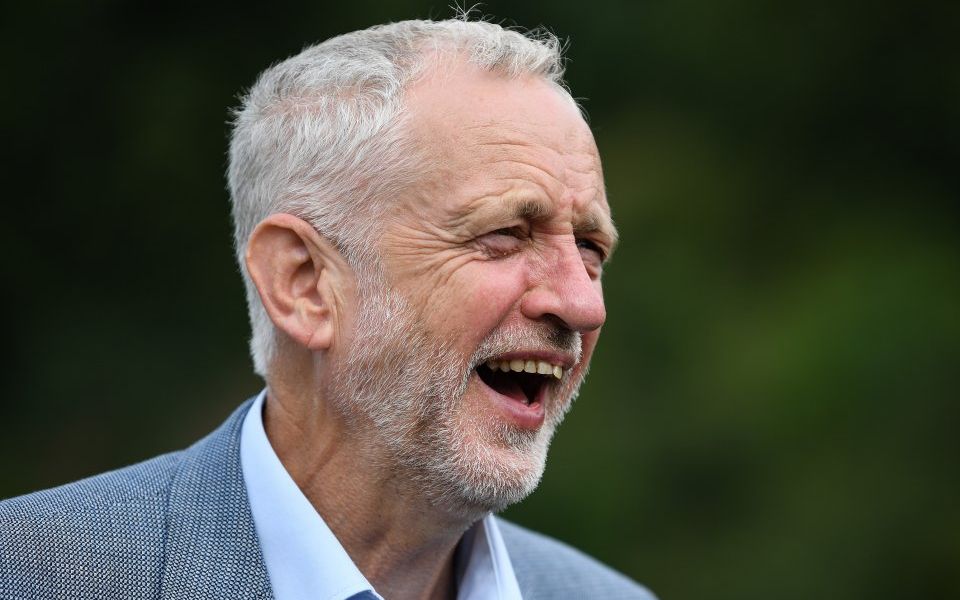
Voters believe Jeremy Corbyn would divide post-Brexit Britain, according to a new poll

By: Julian Harris

Add as a preferred source on Google

The 2017 General Election seems like a long time ago, such is the degree of political jockeying to have taken place in the intervening period – yet not even 15 months have passed since Jeremy Corbyn shocked analysts by eliminating Prime Minister Theresa May's parliamentary majority.

Labour's strong showing in that election was pinned on its extraordinary success in sidelining Brexit as a core issue. Instead, the party tapped into deep-lying economic dissatisfaction with the Conservative government and the coalition that preceded it.

However, with the UK set to officially leave the EU in little over 200 days, and the form that Brexit takes still the subject of furious debate in Westminster and beyond, Corbyn's discomfort and his party's own splits on the matter are increasingly clear to the electorate.

A startling new survey, published yesterday, unveils the Labour leader's terrible standing when it comes to Brexit. Consultancy WPI Strategy asked 2,000 people how likely it was that certain politicians would unite or divide the country after Brexit. From 11 big political names including London mayor Sadiq Khan, rising Tory star Ruth Davidson, Boris Johnson, Jacob Rees Mogg, John McDonnell, May herself, and several more – Corbyn came last.

A balance of 30 per cent believe Corbyn is more likely to divide Britons than unite them. Astonishingly, among Remain supporters – who accounted for six in 10 London voters in the referendum – the poll showed Corbyn with a negative balance of 50 per cent.

In fairness, the Islington MP scores well among Labour voters, suggesting the party would hold on to its core vote under his leadership. But what about the gains needed to propel Corbyn and McDonnell into Downing Street? In Tory-Labour marginals, Corbyn, with a score of minus 40 per cent, is "seen as the least likely person to unify the country post Brexit".

While we may be four years away from the next General Election, parliamentary machinations surrounding Brexit mean this is far from certain. Indeed, betting markets currently show a 44 per cent chance of Theresa May being forced out of Downing Street next year. If Labour really wants to force an election over Brexit, as senior figures have claimed, it needs to decide if Corbyn is still the man to take the fight to the polls.

Share this article

  • Facebook
  • X
  • LinkedIn
  • WhatsApp
  • Email

Similarly tagged content:

Sections

  • News

Categories

  • Business
  • Politics

Trending Articles

  • Five-star Mayfair hotel hit with HMRC winding-up petition

  • Nottingham Forest owner Marinakis sues Crystal Palace for defamation

  • Back to basics: Sainsbury’s gradual retreat from the British high street

  • Hargreaves Lansdown orders staff back to office

  • As it happened: Intel, Arm shares slide; Oil climbs higher

More from Morning Wire

  • On this day: the birth of Michael Foot

    Opinion
    Michael Foot speaking at a public rally in a city square with a large crowd and buildings in the background.
  • Farage quits to stand in ‘people versus establishment’ by-election

    Politics
    George Cottrell and Nigel Farage engaging in a conversation at a political event, both dressed in formal attire.
  • Nigel Farage asks the crudest question: are you with me or against me?

    Opinion
    Nigel Farage speaking at a podium during a press conference, addressing current political issues and public concerns
  • Singapore on Thames or the Sick Man of Europe?: The Economics of Brexit Ten Years from the Referendum 

    Opinion
    UK-EU Brexit negotiations meeting with officials discussing trade agreements and policy impacts in a formal conference room
  • Reform’s Richard Tice under parliamentary investigation

    Politics
    Reform UK leader Nigel Farage and Deputy Leader Richard Tice are set to meet with Andrew Bailey to discuss interest rates and stablecoins.
  • Exclusive: Government to reject Reform’s offer to cover Farage by-election cost

    Politics
    Nigel Farage speaking at a podium, dressed in a suit, addressing an audience at a business conference event
  • Brits say Burnham should call an election

    Politics
    Number 10 Downing Street entrance with iconic black door, symbolizing British political power and leadership
  • City sizes up mystery Mahmood

    Politics
    Shabana Mahmood, potential Chancellor, in a professional setting, poised and confident, reflecting leadership qualities
MorningWire

Independent European business, markets and political news for decision-makers.

Morning Briefing

Europe

  • Germany
  • France
  • Europe
  • UK & Ireland

Business

  • Markets
  • Banking
  • Technology
  • Energy
  • Property
  • Fintech

Editorial

  • Opinion
  • Editorial Policy
  • Corrections
  • Contact

Company

  • About Morning Wire
  • Privacy Policy
  • Terms of Use
  • Cookie Policy
© 2026 Morning Wire Ltd · Published by Morning Wire Media, Bahnhofstrasse 65, 8001 Zürich, Switzerland
Privacy · Terms · Cookies · Facebook