Skip to content
Sunday 9 August 2026London --:--Frankfurt --:--Zurich --:--
NewslettersSearchEN · DE
MorningWire

European business, markets and politics

FTSE 100
10,901.09
+0.31%
DAX
26,319.45
+0.69%
CAC 40
8,714.93
+0.17%
STOXX 50
6,523.86
+0.33%
  • Europe
  • Markets
  • Business
  • Economy
  • Technology
  • Politics
  • Opinion
More
GermanyFranceBankingAIEnergyFintechPropertyCapital Markets
  • Germany
  • France
  • Europe
  • Markets
  • Business
  • Economy
  • Technology
  • Politics
  • Opinion
  • DE
Wednesday 12 September 2018 11:26 am

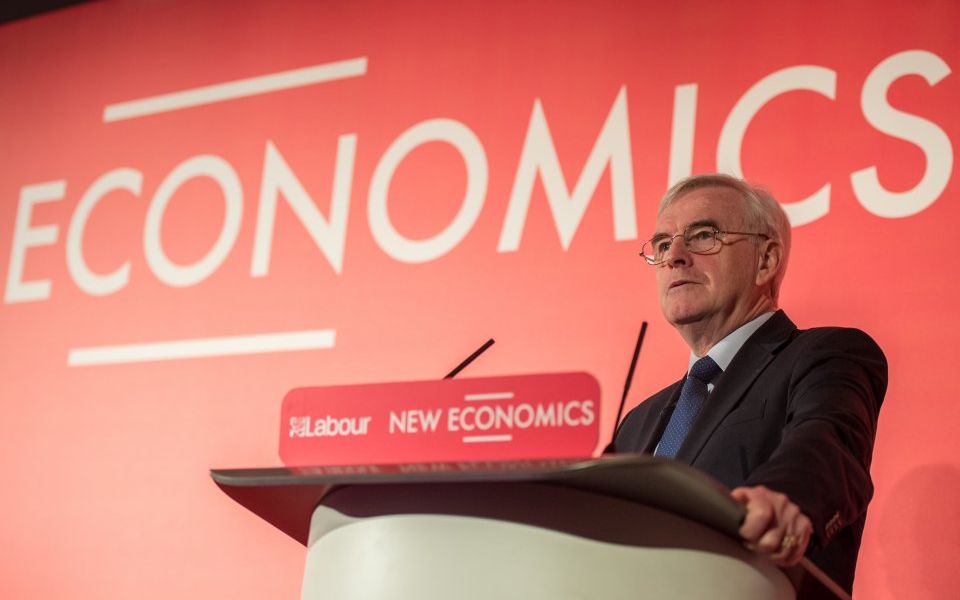
DEBATE: Should gig economy workers be given more rights and protections, as John McDonnell suggests?
By: Brhmie Balaram and Andy Chamberlain

Add as a preferred source on Google

Should gig economy workers be given more rights and protections, as John McDonnell suggests?

Brhmie Balaram, senior researcher in the RSA’s Economy, Enterprise and Manufacturing team, says YES.

I imagine most people would agree with John McDonnell that it would be desirable to grant gig economy workers more rights. At the same time, they might hear the Prime Minister’s voice in their heads, scolding “there is no magic money tree”, and feel less sympathetic towards Labour’s proposals due to concerns about who should foot the bill for sick pay or parental leave, and how.

However, there are many possible ways of funding these protections.

Some gig economy platforms are already experimenting with ways to offer these benefits themselves, setting up contribution schemes akin to that of insurance providers. But if the state wants to strengthen the safety net for these workers, it could recoup the costs by introducing a tax on companies which use self-employed labour, rather than on the self-employed themselves, like an equivalent to Employer National Insurance Contributions.

While maintaining a flexible labour market is ideal, this shouldn’t come at the expense of security for gig workers.

Read more: Hammond rows back on pledge to ease tax burden for self-employed workers

Andy Chamberlain, deputy director of policy at the Association of Independent Professionals and the Self Employed (IPSE), says NO.

There are a lot of misconceptions about the gig economy. Many think it’s largely made up of Uber drivers, but a recent government report confirms that three times as many lawyers and accountants work in the gig economy than delivery drivers. The other myth is that people rely on gig work for their main source of income. In fact, 92 per cent of people have regular jobs alongside their gig work, which provide a source of additional, flexible income.

Introducing rigid employment patterns into the gig economy will destroy the flexibility which people crave, and businesses will be less inclined to create work opportunities for people who want them.

While we must protect vulnerable workers, it would be a mistake to conflate “bogus self-employment” with the “gig economy” or wider self-employment, and then try to regulate these ways of working into oblivion. That just hurts the overwhelming majority of people who actively chose to work in this way.

Read more: Labour would make companies found employee share schemes

Share this article

  • Facebook
  • X
  • LinkedIn
  • WhatsApp
  • Email

Similarly tagged content:

Sections

  • Markets & Economics
  • News

Categories

  • Business
  • Economics
  • Politics

Trending Articles

  • Why the Loire Valley is about so much more than fairytale castles

  • Why HMRC is huge Premier League transfer window tax headache

  • Thames Water faces fresh threat to survival after pensions regulation breach

  • Back to basics: Sainsbury’s gradual retreat from the British high street

  • Thunder Call set to Strike in Shergar Cup Sprint

More from Morning Wire

  • Staff would turn down promotion to keep flexibility at work

    Retail
    Keir Starmer is heading to China
  • UK fintech Pockit recruits founder of Burger King Kazakhstan

    Fintech
    Burger King restaurant exterior with logo and drive-thru lane, reflecting fast food industry presence.
  • Net zero and DEI targets cut from procurement rules as firms pressed to raise pay and hire NEETs

    Politics
    Louise Haigh, Andy Burnham, and another man smiling in front of a dark door with 10 visible.
  • Is ABBA Voyage suitable for children? You bet it is!

    Life&Style
    ABBA Voyage concert at ABBA Arena London with performers on stage and a large audience.
  • BNPL regulation is proof that industry and regulators can work together successfully

    Opinion
    Woman using Zopa Bank credit card and smartphone app, demonstrating digital banking on-the-go features.
  • Manchester United’s new stadium is a test of sports finance – but markets have a solution

    Sport Business
    Architectural model of a city development featuring a large stadium, buildings, and waterways by Allies and Morrison
  • Britain should look to Japan to manage its ageing population

    Opinion
    Elderly pedestrians crossing a busy street in Tokyo, illustrating Japans ageing population challenge.
  • Iran war could ‘halt growth’ across UK economy 

    Economics
    Andy Burnham, Mayor of Greater Manchester, in a dark suit and glasses, listening intently at a wooden table.
MorningWire

Independent European business, markets and political news for decision-makers.

Morning Briefing

Europe

  • Germany
  • France
  • Europe
  • UK & Ireland

Business

  • Markets
  • Banking
  • Technology
  • Energy
  • Property
  • Fintech

Editorial

  • Opinion
  • Editorial Policy
  • Corrections
  • Contact

Company

  • About Morning Wire
  • Privacy Policy
  • Terms of Use
  • Cookie Policy
© 2026 Morning Wire Ltd · Published by Morning Wire Media, Bahnhofstrasse 65, 8001 Zürich, Switzerland
Privacy · Terms · Cookies · Facebook