Skip to content
Monday 10 August 2026London --:--Frankfurt --:--Zurich --:--
NewslettersSearchEN · DE
MorningWire

European business, markets and politics

FTSE 100
10,901.09
+0.31%
DAX
26,319.45
0.00%
CAC 40
8,714.93
0.00%
STOXX 50
6,523.86
0.00%
  • Europe
  • Markets
  • Business
  • Economy
  • Technology
  • Politics
  • Opinion
More
GermanyFranceBankingAIEnergyFintechPropertyCapital Markets
  • Germany
  • France
  • Europe
  • Markets
  • Business
  • Economy
  • Technology
  • Politics
  • Opinion
  • DE
Friday 28 September 2018 8:03 am  |  Updated:  Tuesday 21 May 2019 4:25 pm

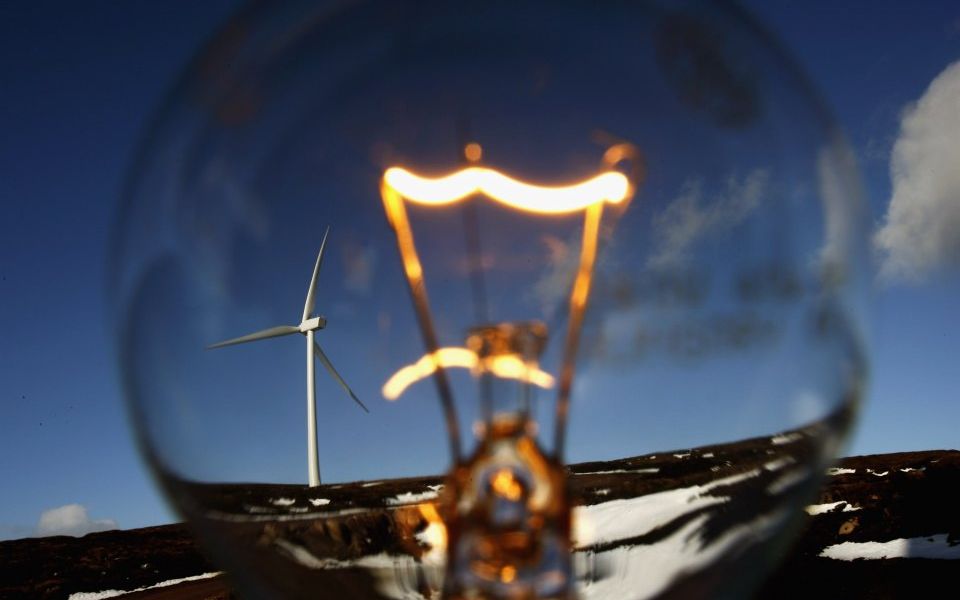
DEBATE: Would the energy market benefit from Corbyn’s proposed wind turbines and renewable subsidies?
By: Tony Lodge and Alan Lockey

Add as a preferred source on Google

NULL

  Would the energy market benefit from Corbyn’s proposed wind turbines and renewable subsidies?

Alan Lockey, head of research at Demos, says YES.

First, let’s dispense with the notion that it’s a choice between unsubsidised fossil fuels and subsidised renewables: the global energy “market” is all subsidised. In fact, research by the International Energy Association shows that in 2016 fossil fuels received more subsidies than renewables by a cool $120bn.

The question is therefore what future do we want for Britain. And for the obvious reason – that the planet itself is at stake – the answer should be a renewable one.

The good news is that renewables are now close to cost-competitive. But this has only happened because the initial high-risk investment was absorbed and stimulated by what the economist Mariana Mazzucato would call an “entrepreneurial state”.

What we need now is to take the renewables revolution away from conventional power generation and to homes.

The future of energy is decentralised – people, not the state or market, should generate and own their energy. That would be truly transformative, but it will require clever subsidies.

Read more: May and Corbyn set out competing economic visions in major speeches

Tony Lodge, research fellow at the Centre for Policy Studies, says NO.

Labour’s pledges to double the number of wind turbines across Britain, alongside new green taxes, risk the security of energy supply and would increase fuel poverty.

Upping the provision of weather-dependent renewables, such as wind and solar, presents a real challenge. It would need to be backed up by new gas-fired power stations for when the wind doesn’t blow and the sun doesn’t shine, thus defeating the point.

Such high growth targets for low-efficiency renewables would also pose a major challenge to National Grid, as it would need to manage and balance unpredictable and unreliable peaks and troughs in supply, which will not always match demand.

Finally, more green energy subsidies inevitably mean higher energy bills for households, hitting hardest the very people Labour claims to want to help.

After Brexit, Britain will need to reduce bills to become more competitive. Labour’s plan would do the opposite – it would mean more fuel poverty, lost jobs, and reduced energy security.

Read more: DEBATE: Is Labour looking more like a credible government-in-waiting now?

Share this article

  • Facebook
  • X
  • LinkedIn
  • WhatsApp
  • Email

Similarly tagged content:

Sections

  • Markets & Economics
  • News

Categories

  • Business
  • Economics
  • Politics

Related Topics

  • Company
  • Green energy
  • National Grid

Trending Articles

  • Thames Water faces fresh threat to survival after pensions regulation breach

  • Back to basics: Sainsbury’s gradual retreat from the British high street

  • Hargreaves Lansdown orders staff back to office

  • PwC’s Embankment HQ to get major makeover ahead of Canary Wharf move

  • A tribute to wine legend Matthew Jukes by his friend Libby Brodie

More from Morning Wire

  • KKR to Acquire a 50% Stake in a Portfolio of Developed Renewable Assets from TotalEnergies Across Europe

    Business Wire
  • Quinbrook Closes Oversubscribed GBP 587 Million Renewables Impact Fund II

    Business Wire
  • Europe has made a ‘major mistake’ on slow electrification, IEA chief warns 

    Energy
    UK industrial electricity prices are the highest in the G7 and 46 per cent above the average of the International Energy Agency.
  • Grid operator issues fresh heatwave warning over power supplies

    Energy
    Air conditioning vents in a grid pattern, illustrating cooling solutions during a heatwave
  • Energy operator ‘flying blind’ as net zero push threatens hiked bills and blackouts

    Energy
    Energy prices are high due to a range of factors including volatile gas prices and high net zero levies.
  • Quaise Energy Raises $134 Million in Initial Close of Series B to Build World’s First Superhot Geothermal Power Plant

    Business Wire
  • What Burnham could learn from BP’s pragmatism

    Energy
    BP logo and green lettering on a light background.
  • Ekovolt Welcomes Éric Scotto, Co-Founder of Akuo Energy, as a Shareholder, and Rebrands as Pont Digital Infrastructure

    Business Wire
MorningWire

Independent European business, markets and political news for decision-makers.

Morning Briefing

Europe

  • Germany
  • France
  • Europe
  • UK & Ireland

Business

  • Markets
  • Banking
  • Technology
  • Energy
  • Property
  • Fintech

Editorial

  • Opinion
  • Editorial Policy
  • Corrections
  • Contact

Company

  • About Morning Wire
  • Privacy Policy
  • Terms of Use
  • Cookie Policy
© 2026 Morning Wire Ltd · Published by Morning Wire Media, Bahnhofstrasse 65, 8001 Zürich, Switzerland
Privacy · Terms · Cookies · Facebook