A British Baccalaureate should replace our outdated way of educating teens

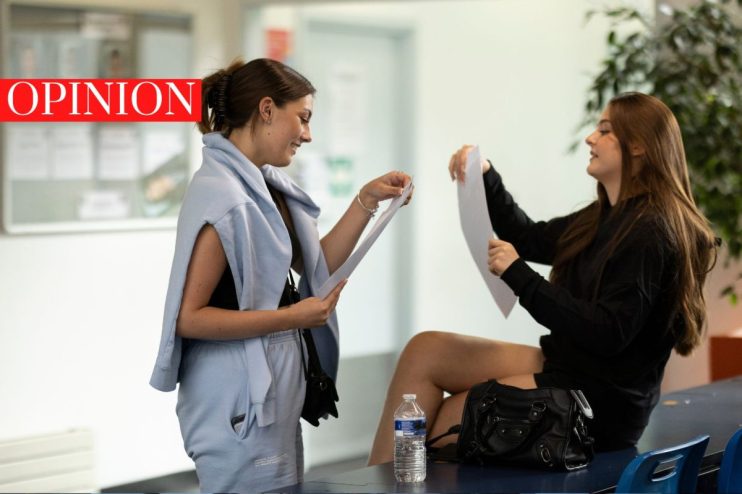
A-levels are one of the least useful ways of equipping students with the skills they need for the future workforce, writes Alice Barnard
As many as 65 per cent of young people today will be employed in jobs that don’t yet exist. With this knowledge, we might well have expected a sense of urgency to design an education system that properly prepares pupils for the rapidly changing world of work. Yet, according to the OECD, we are the only country where young people entering the workforce are no longer better skilled than their counterparts leaving for retirement.
We have one of the narrowest systems in the world, with around 83 per cent of pupils in England taking A Levels (as opposed to vocational and technical pathways) – and an average of only 2.7 A levels subjects at that.
Young people are forced to make near-permanent decisions about their careers at just 15-years-old, as they submit their three or four preferred subject options for A Levels and BTECs (or even just one, if they choose to pursue a T Level).
This early specialisation that characterises the English education system closes off young people’s options, when a changing world of work demands flexibility. Indeed, one third of Britons (34 per cent) want to change careers, yet only 16 per cent understand exactly how their skills would be useful in another career.
It also contributes to the ever increasing skills shortages, as Edge’s Skills Bulletins show. The public sees it too. A survey for the Times in May 2023 revealed that just 13 per cent of people think the current education system equips young people well to work in skills shortage sectors. The implications in a high inflation economy are potentially huge, with fierce competition for jobs causing surging salaries.
So, the news on Friday that the Prime Minister is doubling-down on his pledge during the summer leadership election to instate a British Baccalaureate could, with the right focus on addressing these issues, signal a real shift in the thinking that has underpinned education policy over the last 13 years.
Some of the more sceptically-minded say this is simply about creating dividing lines with Labour. But Starmer has already pledged a review of the curriculum and the assessment system, and there is certainly some cross-party consensus around a baccalaureate model.
And there will be calls for immediate detail and practical arrangements. Will this be akin to the Scottish Highers model, where students take four or five subjects? The US High School Diploma? Or will this be more like the International Baccalaureate, with two tracks: an academic Diploma programme (DP) and a Career-related Programme (CP)?
Officials grappling with that task may take some comfort in knowing that the British Baccalaureate is not a new idea. At Edge, we went back to the drawing board to explore the thinking that has already been done by the likes of the Times Education Commission and the Hayward Review in Scotland, as well as the international evidence, and examples at home of schools piloting baccalaureate models.
What is clear, is that this cannot simply be a widening of A Levels, at the expense of vocational and technical education pathways. Students should have the option to “mix and match” A Levels and modularised vocational qualifications (T Levels and other AGQs) programmes to create the qualification that best suits them, and officials should explore the option to incorporate projects, digital skills and work experience as part of that.
This is an opportunity to put an end to the false dichotomy of academic versus vocational at 16, to better meet our skills deficits, and to ensure young people develop skills alongside knowledge across a range of disciplines, in a way that broadens their career prospects and meets the demand of UK plc. Anything less than that, and we miss an opportunity to transform our education and skills system for young people and to create a talent pipeline for business, which would see premium productivity levels achieved.