A call to arms: where will we find tomorrow’s bright Whitehall leaders?

It is one of the most common, and pointed, criticisms of government in this country now that we are not finding leaders properly equipped to take the United Kingdom into the middle of the 21st century. For all his sociopathic behaviour and sheer oddness, it was the mission of Dominic Cummings to solve that problem, and his voluminous blog takes the challenge head on. Last week, however, a new project was launched to try to find a solution.
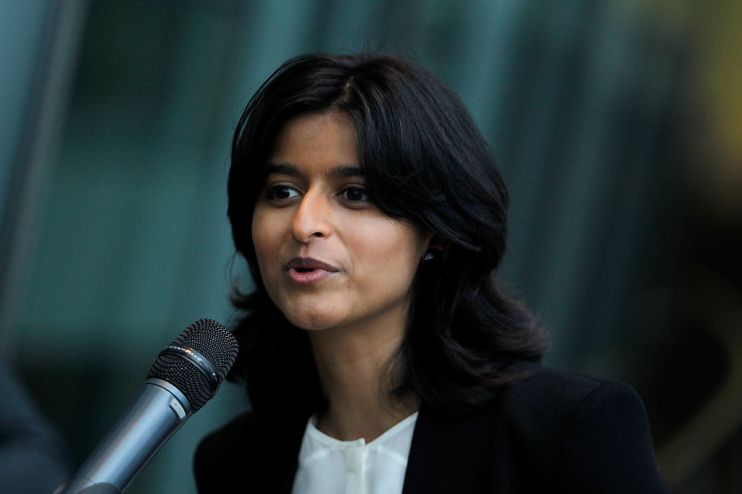
You may not have heard of Dr Munira Mirza. From 2019 until earlier this year, she was head of the Downing Street Policy Unit, until Boris Johnson became too much for her and she resigned. She had previously been his deputy mayor for education and culture. Mirza is an unusual character in Conservative politics. The state-educated child of Pakistani immigrants, she was educated at Oxford and Kent before joining the Revolutionary Communist Party; after its implosion, she drifted to the right-wing think tank Policy Exchange and focused on the politics of culture, writing a book with that title in 2012. She also embraced Brexit.
Last week she launched an organisation called Civic Future. Its stated mission is to “open up public life by identifying and educating talented young people in early or mid-career, as well as established leaders in the public, private and social sectors.” Specifically, it aims to provide “intellectual insight and practical training” to allow those with imagination and vision to negotiate the UK political system, in order to draw in future leaders from backgrounds and cultures which might previously have seen that as a closed door. It declares itself a non-partisan organisation, and includes among its advisory council Lord Glasman, father of “Blue Labour”, Andy Haldane, chief executive of the Royal Society of Arts, and David Laws, the former Liberal Democrat minister and “Orange Book” champion.
Mirza’s criticisms of Whitehall are those of a battle-scarred veteran. Officials are not incompetent, she argues: rather, it is a matter of the lack of specific, sometimes technical skills. In essence, she endorses a long-held belief that the government machine relies on talented generalists who have to spend valuable time engaged in the on-the-job training to master the complexities of modern administration. Moreover, she worries that “clever and hard-working people with good values” do not choose careers in public service. “Westminster leaves them cold.”
Her prescription is ambitious but attractive. Civic Future will offer fellowships, training in skills and the opportunity to think deeply about values and philosophy. It points specifically to economic and scientific literacy and crisis management, but we can all think of competences in which our leaders have been found lacking as we have faced the financial crisis, then Brexit, then the pandemic. Surely, if we could not only promote these kinds of skills, but also open up the government—both political and official—to broader participation, it would equip the nation better to move forward.
In this regard, she is undoubtedly correct. We rely on too narrow a base of skills: three of our last five prime ministers have been PPE graduates, another a classicist, and all five have attended Oxford, the only diversity being that each chose a different college. We have not been led by a scientist since the fall of Thatcher. Changing this, however, requires a change in culture to attract those deterred in the first place. It must also remain rigorously non-partisan, for fear of seeming like little more than an attempt to pack one front bench or the other. It will not be quick, easy or cheap.
Nevertheless we should wish Mirza our best. She is trying to do a noble thing. It is to be hoped that Civic Future will be an idea that encourages others to do the same, in whatever ways they can. Let us recruit from the best and brightest, irrespective of their socio-economic and cultural circumstances, and let us try also to bring in those with talents and qualifications from across the academic and practical spheres.
We know our national leadership is not working as well as it could. We can see the effects. Good people are putting their shoulders to the wheel, but they need to be joined by other, different cohorts. That is the challenge which faces Civic Future, and the UK. This is a chance to prove that Britain can do it.