A decade after Brexit, what does the City want next?

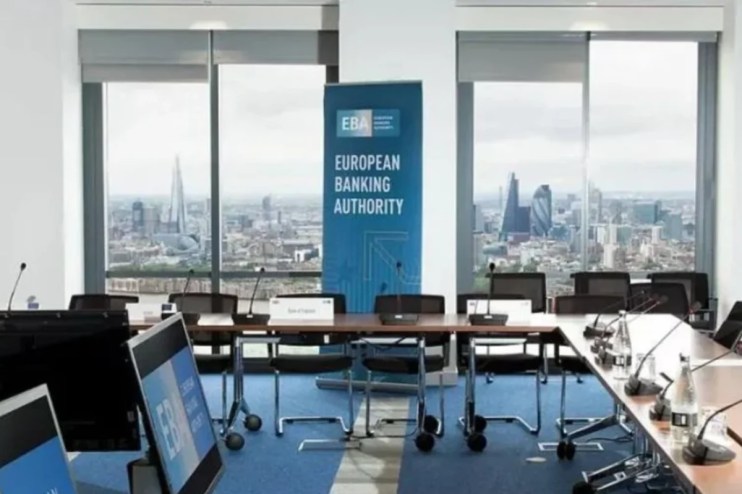
The 46th floor of the iconic One Canada Square building was once home to the European Banking Authority.
Towering over a sea of skyscraper headquarters adorned with the biggest names in finance, the watchdog’s office was both a nod to its regulatory might, turbocharged by the fallout from the 2008 crash, as well as to the magnetic pull of London within Europe’s sprawling financial system.
To its supporters, the EBA was a key weapon in the armoury developed by the EU to stop the financial crash ever happening again – an antidote to the excesses of risk and greed that precipitated a global recession.
To its opponents, the EBA was a provocation: an army of bureaucratic, bespectacled lawyers whose only task was to make it harder for bankers to do their jobs. They churned out reams of new regulation – the guidelines on banker bonuses alone ran to 121 pages – and sent compliance costs through the roof.
But views about the EBA are now seldom exchanged in the City. Following the Brexit vote in 2016, the institution and its 160 staff packed their bags and left Canary Wharf for a new home in Paris as the UK charted a new future outside the regulatory aegis of Europe (the office in Canary Wharf is now occupied by the UCL School of Management).
Financial services exodus fears
Britain’s vote to leave the EU came as a shock to financial markets. Stocks slid and the pound tumbled against the dollar and the euro (the lion’s share of global FX trades, then as now, took place in the City).
There was an expectation in some quarters that, following in the footsteps of EBA staffers, tens of thousands of well-paid City jobs would shift from London over to Paris, Frankfurt and Amsterdam. Some estimates put the scale of job losses as high as 80,000.
Those fears have turned out to be wildly overblown. A decade on it’s thought that only around 7,000 jobs have been lost to mainland Europe – and they have quickly been replaced by new ones. The total number of jobs in Canada has rocketed from around half a million in 2016 to some 675,000 today, according to data from the Office for National Statistics.
That being said, economists who think Britain has been boosted by Brexit are few and far between. A Bloomberg Economics analysis published earlier this month estimated the impact at somewhere between two and four per cent of GDP.
But does the City think that drop is transient – the downward dip on a Nike swoosh before the upwards pivot, as leading Brexiteer Michael Gove recently put it – or something with permanent, long-term damage? Some would rather stop talking about it.
‘Don’t reopen the debate’
“The evidence is compelling and indisputable that Brexit has created costs for business,” Rain Newton-Smith, director-general of the CBI, said this week.
“But businesses aren’t looking to re-litigate the referendum. None of the business leaders I speak to want to reopen that debate.”
“I don’t think the City will ever speak with a single voice on this issue, a bit like the country never spoke with a single voice,” said Simon French, chief economist at Panmure Liberum.
“But on balance, I think most people would not want to, you know, re-entertain the whole question, because it’s just sucking energy and time away from other big policy questions like pensions reform, like planning reform, like energy market reform—the kind of stuff that we know, on a macro sense, is as, if not more, significant than Brexit.”
Banking regulation doesn’t look much different since the UK left the EU, beyond some tweaks at the fringes. Among the most headline-grabbing rule-changes was the decision to rip-up the EBA bonus cap rule, which restricted bank variable pay as a proportion of fixed pay, a change which does appear to have been embraced across Canary Wharf, with top bankers enjoying outsized pay packets compared to their European counterparts.
The biggest potential departure from EU bank rules has come from opposition leader Kemi Badenoch in the form of proposals to scale back capital requirements – something she could not achieve within the EU. If Badenoch pressed ahead with these rule-changes, it could represent a major unwinding of London’s close regulatory alignment with Brussels. Is that something the Square Mile would embrace – or do bosses want a closer relationship?
“There will be groups for whom they have built a big regulatory model that suits being outside the EU, and therefore they would not want to then have to revisit it,” French said.
“And then there’s others who will say, “Well, actually, no, most of our activity is still within the European Union, therefore we can remove the carve-out that we had to do as a result of Brexit.”
“Had there been a capital markets union and a banking union across the European Union, then actually, the cost of Brexit would have paradoxically been much higher for the UK because you’d be leaving something which was of much greater integrated scale. But the fact that it was, and remains, very federated…diminishes the cost of leaving.”
London still standing after Brexit
Regardless of the Brexit impact, there are signs London remains one of the top global business hubs.
Ten years on from the EU referendum, new EY analysis shared exclusively with Morning Wire found the UK has retained its position as Europe’s leading financial centre, despite a period marked by market disruption and shifting global competition. The UK recorded a total of 949 projects in the ten years 2025, more than double France (449) and Germany (452), the next most attractive destinations.
The UK also recorded a 16 per cent year-on-year increase in financial services projects in 2025, despite a slowdown in wider investment into the UK.
Would these figures be higher still if it were not for Brexit? The answer to that counterfactual depends very much on who you ask – and how they voted.
What has certainly changed, however, is the intensity of competition, says EY Financial Services partner Andrew Pilgrim.
“Other European markets have strengthened, and global centres are increasingly attractive alternatives to investors.
“The UK’s position is strong, but this is no longer something that can be taken for granted.”