A decentralised financial future

If you’re involved or interested in the crypto space, you may have heard about decentralised finance (DeFi for short) quite a bit in the past year. Even amidst the COVID-19 crisis, 2020 has seen DeFi grow from an ecosystem with $675.92 million to $10.77 billion total value locked (source: https://defipulse.com/). The world of crypto lending and borrowing has gained enormous traction, boasting historically higher interest rates for depositors and efficiency and ease for borrowers, all without the traditional financial gatekeepers: banks. In fact, the total value locked in the decentralised lending space has increased by sixfold since May, totalling $4 billion as of today.
So what is this DeFi?
DeFi uses open-source networks to create financial products and services without involving centralized institutions. Like in traditional finance, DeFi lending protocols allow people to earn interest on deposits and borrow assets, but DeFi doesn’t require any middlemen. DeFi provides an opportunity to enable services that have a near zero cost of entry and are accessible worldwide 24/7, as long as you have internet access.
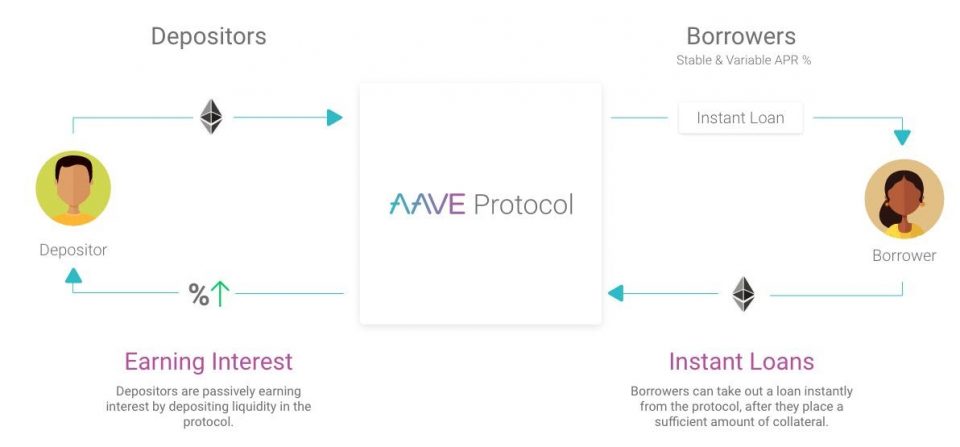
Decentralised lending and borrowing protocols work because loans are automatically negotiated through a system of smart contracts. Depositors can deposit cryptographic assets into one of these protocols and immediately start earning interest as their assets are loaned out to borrowers. The interest rate depositors earn is adjusted based on the liquidity supply and borrowing demand. For example, say a user deposits the stablecoin DAI, a cryptographic asset pegged to the price of the US dollar. If many people want to borrow DAI and the supplied liquidity in the protocol is relatively low, then interest rates for depositors will go up to incentivise more DAI deposits. On the other hand, if there is a lot of DAI liquidity available and nobody wants to borrow it, then interest rates for DAI depositors will decrease. DeFi rates for depositors have historically been higher than those of traditional banks, and these opportunities for higher yields have sparked interest among people looking to maximize their passive income.
Why all the excitement?
An equitable ecosystem
DeFi lowers barriers to entry, such as credit checks, that can prevent certain demographics from accessing traditional financial services. DeFi is permission-less, so the protocol is accessible to everyone and does not discriminate based on financial background, gender, race, or other factors that make the traditional financial system restrictive toward some. In a decentralised system, there is no need to KYC, and you never need to disclose or prove your identity. The whole system is trustless– lenders and borrowers can be complete strangers since loans are fulfilled automatically.
DeFi’s global reach means that the market is open all the time all over the world, providing many people new access to financial tools and services that were previously not an option. This also means that DeFi is supercharged by global liquidity, bringing new opportunities and yield into the space.
Transparent, open, and secure
Unlike the traditional financial system, DeFi is completely transparent. All of the data is public, so it is open to and auditable by anyone. Decentralisation means that the records are kept across a network of smart contracts on the blockchain, making the ecosystem resistant to failure at a single point.
You control your money
One of the pillars of DeFi is that it is non-custodial, so when you deposit your assets in a lending protocol, the protocol does not control your assets. You are in total control of your funds and you can use them however, whenever, and wherever you want.
Interoperability and money legos
DeFi is open-source, so the code is publicly accessible. DeFi’s surge in popularity is in part due to its composable nature, and anyone can build DeFi applications by default. This results in the creation of many money legos, or different financial instruments that plug into each other and can be assembled in inventive ways to make new tools.
DeFi at its core is extremely open and transparent, fostering a culture of rapid innovation on a whole other level than the traditional financial system, which remains closed-off to the majority of people.
The Aave Protocol: DeFi for everyone
The Aave Protocol is one of the first lending and borrowing protocols for decentralised finance. Users can purchase and deposit cryptocurrency assets into the protocol and earn interest on their deposits as the underlying assets are loaned out to borrowers. The protocol is entirely decentralised, open-source, and non-custodial, so everything is transparent and users maintain full control over their funds.
2020 has witnessed a trend of major banks, such as Goldman Sachs, exploring the role of digital assets and how blockchain technology can be used to complement traditional finance. As institutions invest more in DeFi and DeFi builds money legos that plug into the rest of finance, new innovative applications will broaden the FinTech sector– the future of finance is transparent, trustless, and open to everyone.
Stani Kulechov is the Founder and CEO of Aave, an open source and non-custodial money market protocol to earn interest on deposits and borrow assets. Stani was studying law at the University of Helsinki when he first got into Ethereum and he started exploring how it could impact the traditional financial system. In 2017, Stani released ETHLend, one of the first applications for decentralised finance ever. Since then, he has made it his mission to create tools for an open, transparent, and equitable financial ecosystem through Aave Protocol.
The above is the opinion of the author and does not constitute financial advice.