Skip to content
Friday 28 August 2026London --:--Frankfurt --:--Zurich --:--
NewslettersSearchEN · DE · FR
MorningWire

European business, markets and politics

FTSE 100
10,824.26
+0.29%
DAX
26,583.35
+0.82%
CAC 40
8,401.18
+0.98%
STOXX 50
6,491.50
+1.04%
  • Europe
  • Markets
  • Business
  • Economy
  • Regulation
  • Politics
  • Opinion
More
GermanyFranceEU InstitutionsCompetitionPublic AffairsBankingTechnologyEnergy
  • Germany
  • France
  • Europe
  • Markets
  • Business
  • Economy
  • Regulation
  • Politics
  • Opinion
  • DE
Wednesday 31 July 2019 4:01 am  |  Updated:  Tuesday 30 July 2019 6:07 pm

A gender equality lesson for the new cabinet from the world of academia

By: Paul Ormerod

Add as a preferred source on Google
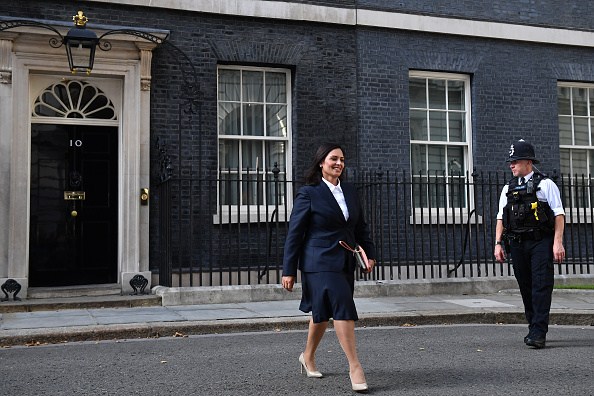
LONDON, ENGLAND - JULY 24: Priti Patel leaves Number 10, Downing Street after being appointed Home Secretary on July 24, 2019 in London, England. Boris Johnson took the office of Prime Minister of the United Kingdom of Great Britain and Northern Ireland this afternoon and immediately began appointing new Cabinet Ministers. Former Foreign secretary and leadership rival Jeremy Hunt returns to the back benches, along with Liam Fox, Jeremy Wright, Penny Mordaunt and Karen Bradley. (Photo by Jeff J Mitchell/Getty Images)

There has been much discussion on the gender and ethnic composition of Boris Johnson’s cabinet.

The Channel 4 Fact Check site calculates that 33 MPs are entitled to attend cabinet. Of these, six – 18 per cent – are from an ethnic minority background. 

According to the 2011 Census, 14 per cent of the UK population were not white, potentially making the Boris cabinet more ethnically diverse than the country as a whole.

However, on gender diversity, the cabinet appears to fall short. Although it includes eight women  compared to the six under Theresa May, this is still only 24 per cent, compared to the 51 per cent of the total population who are female.

The under-representation of women at the highest levels is not only an issue in politics, of course. And a scientific paper published earlier this month on the Cornell University archive site offers an intriguing explanation for why this is.

Albert-Laslo Barabasi, one of the world’s leading experts on the science of networks, and his colleagues examine gender inequality in scientific careers, across both disciplines and countries. 

The team investigates the publication records of more than 1.5m academics since the 1950s. And the work is of considerable practical relevance: publication is a key way by which academics get promoted.

The paper’s main focus is on the so-called stem disciplines – science, technology, engineering and maths – where gender inequalities are the most marked. For example, in physics only 15 per cent of all active authors are female.

Just as important are the persistent productivity and impact differences between the genders. In the stem subjects, on average male scientists publish 13.2 papers during their careers, while female authors publish only 9.6.

Read more

Improve technical education for women to plug engineer shortage

Two engineers in hard hats and high-visibility gear inspecting a large, illuminated tunnel under construction.

The differences are even more marked when looking at quality as well as quantity. The scientific importance of a paper is measured by how many other scholars cite it in their own published work. Male authors in the top 20 per cent in terms of career impact receive 36 per cent more citations than women do.

The gradual increase in the number of women in the sciences compared to 60 years ago has actually led to a widening of the productivity and impact gaps.

Yet Barabasi and his colleagues find that, even at the top level, there is no difference in the annual productivity rates and impact of male and female scientists. The gaps only arise when these are cumulated over the course of a career.  

Essentially, men and women produce work of equal quantity and quality. But men have longer research careers, and as a result get to pick up more of the plum jobs.

Significantly, the drop-out rate from active publishing is higher among women than men at every stage of their career, from post-doctoral student to professor.

From this, we can conclude that the key reason for gender inequality of outcome is not the processes by which scientists do research, but how long they keep it up for. Policy interventions must focus on retaining women in science at every stage. 

Perhaps that is something to think about in politics too, when considering the gender composition of the next cabinet.

Main image credit: Getty

Read more

That women ‘lack confidence to invest’ is a lazy answer to a major problem

Two business women talking about sales in office at desk with laptop (Photo: Unsplash)

Share this article

  • Facebook
  • X
  • LinkedIn
  • WhatsApp
  • Email

Similarly tagged content:

Sections

  • Jobs and Money
  • News
  • Opinion

Categories

  • Opinion
  • Personal Development
  • Politics

Trending Articles

  • Pensioners to hand over bank statements in government benefits crackdown

  • Jamie Carragher: HMRC petitions for Sky Sports star to be declared bankrupt

  • Brewdog founder James Watt hits out at ‘total silence’ over new venture

  • Lloyds Bank and Halifax users unable to use app in latest outage

  • Economists urge Bank of England to halt bond sales as borrowing costs climb

More from Morning Wire

  • Improve technical education for women to plug engineer shortage

    Opinion
    Two engineers in hard hats and high-visibility gear inspecting a large, illuminated tunnel under construction.
  • That women ‘lack confidence to invest’ is a lazy answer to a major problem

    Opinion
    Two business women talking about sales in office at desk with laptop (Photo: Unsplash)
  • State pension set to pile pain on next generation of taxpayers, Healey warned

    Politics
    Andy Burnham and Angela Rayner interacting with children at an outdoor event
  • IPOs aren’t the new meme stocks

    Opinion
    Elon Musk discussing SpaceX investment as Scottish Mortgages largest holding on a business news platform
  • UK founders cast doubt on Burnham’s pro-business push

    Entrepreneurship
    Andy Burnham, Mayor of Greater Manchester, in a professional setting.
  • Exclusive: City giants tighten trans policies

    Business
    Progress Pride flag flying on a pole against a modern building, symbolizing trans policies in city firms
  • In Jason Arday, Cambridge is discovering the dangers of DEI

    Opinion
    Jason Arday smiling, wearing academic regalia with a blue cap and gown with red accents.
  • Astrazeneca and Jaguar Land Rover given power to endorse talented migrants for visas

    Politics
    Jonathan Reynolds addressing the SMMT's annual International Automotive Summit (image courtesy of SMMT)
MorningWire

Independent European business, markets and political news for decision-makers.

Morning Briefing

Europe

  • Germany
  • France
  • EU Institutions
  • Europe

Business

  • Markets
  • Business
  • Economy
  • Regulation
  • Competition
  • Public Affairs

Editorial

  • Opinion
  • Editorial Policy
  • Corrections
  • Contact

Company

  • About Morning Wire
  • Privacy Policy
  • Terms of Use
  • Cookie Policy
© 2026 Morning Wire Ltd · Published by Morning Wire Media, Bahnhofstrasse 65, 8001 Zürich, Switzerland
Privacy · Terms · Cookies · Facebook