A healthy dose of FOMO can get London’s workers back to the office

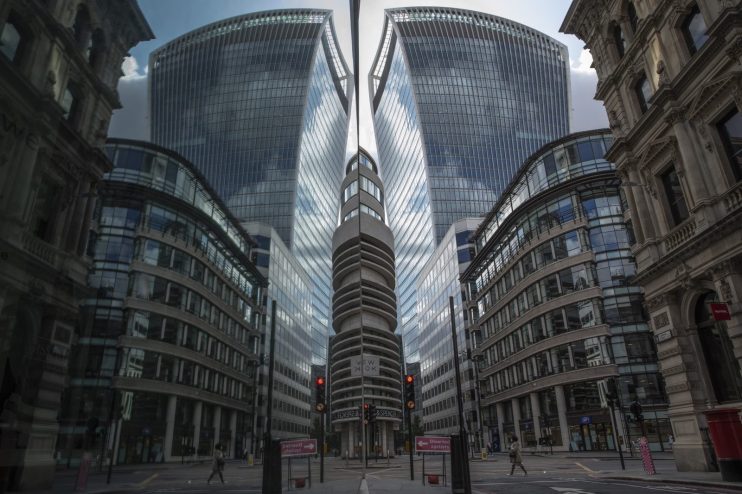
Covid-19 has made central London unrecognisable — the quiet streets and empty offices of today are a far cry from the bustling metropolis it once was.
Despite the end of the second national lockdown, there hasn’t been much improvement since the summer. A recent survey from Arup showed that London is still trailing other British and European cities when it comes to footfall, which is the lifeblood of its diverse economy.
Tourists have all but vanished, Londoners are seeking leisure closer to where they live, and — crucially — the vast majority of central London’s 750,000 daily office workers are being advised to continue working from home.
This, of course, means that other sectors suffer, with lunchtime purchases, after-work drinks and evening trips paused indefinitely, plus the lack of festive office parties this year.
According to recent estimates from Arup, even if the good news on a vaccine is a turning point, office occupancy could be down by 34 per cent by December 2021, compared to January 2020. If you take the daily bombardment of survey results at face value, office workers aren’t desperate to get back, and if they trickle rather than flood back after the vaccine roll-out, an estimated 84,000 jobs could be a risk, with a £60bn hole to fill in central London’s GVA.
The good news is that it doesn’t have to be this way. Many of the barriers to people coming back into central London are behavioural, which means we have the power to change them. When restrictions lift and government guidance permits, office workers need tangible incentives to return to their desks. Here are four key ways to make that happen.
Bringing FOMO back
Crucially, we need to recreate a “FOMO culture” for office workers.
FOMO — “fear of missing out” — has so long been associated with both big city work and leisure.
Let’s not forget that, for decades, it was the vibrancy and culture of London that attracted the brightest and the best from around the world to descend on the capital to build their careers. To get people back into the city, we need to change the story of our nights out from Netflix to cultural experiences, fine dining and gigs — preferably all in the same evening.
We also need to encourage those in-person water-cooler conversations that lead to career opportunities.
We know that densely populated areas like London grow faster as firms have more opportunities to share inputs and outputs, while a larger labour market provides better matching between companies’ needs and workers’ skills. In turn, the spend from these workers makes our city an incredibly attractive place to spend leisure time. Bringing back FOMO will quickly become a virtuous circle.
Making commutes less painful
Paying for expensive season tickets won’t be a fond memory for pre-pandemic rail commuters. With government guidelines constantly changing and some home working likely to become the norm, shelling out for tickets doesn’t seem logical right now. Flexible solutions like three-day-a-week and pay-as-you-go season tickets, as well as significant fares discounts at off-peak times, deserve serious consideration, in line with changing commuter behaviour. Alongside this, we need additional investment in our public transport infrastructure, including better walking and cycling routes, so that people can get back to work safely and sustainably.
Making the city fun
Hospitality and leisure businesses operating in central London have been hit extremely hard by Covid-19. For those that have survived, reduced capacity and the inability to welcome office workers via walk-ins is hampering spontaneity and preventing “spur of the moment” lunch or post-work drinks decisions among colleagues.
That means business rates holidays for the economic sectors most at risk from social distancing measures are essential if they are to continue attracting people in the future. If we don’t need the city for work as much anymore, the most successful urban areas are going to be those that offer the best leisure opportunities.
Historically London has excelled at this, and we need to support our amazing cultural offering to make sure that our museums, galleries, gigs and theatres continue to be world-class.
Rethinking the office
Finally, the office itself. The office needs to be a hive of collaboration, productivity and creativity — a place where people come together and share ideas, rather than merely somewhere to sit at a desk and stare at a screen all day. Firms need to play their part in rethinking how they use office space to ensure that workers are interested and encouraged to visit more often, and to allow them to make the most of face-to-face contact on their days in town.
The mayor of London’s recent announcement that he is commissioning research on the future challenges and opportunities facing central London, and the formation of a London Recovery Board, is a major step forward. Similar pieces of work are well underway in New York City, Sydney and other global cities.
The ability of cities to reinvent themselves is phenomenal. London has weathered crises, wars and pandemics, and has always managed to adapt and come back stronger.
While it’s clear that an element of remote working is here to stay, as a workforce we all need to play our part through our behaviour in helping the capital get back on its feet and thriving once again.
Main image credit: Getty