A modern type of safari with Sri Lanka’s leopards and elephants

If I were a wild leopard, or a tiger, or an elephant, I could think of few things more terrifying – or more frustrating – than confronting a line of jeeps, the vehicles encroaching ever closer on my personal space as I grazed, bathed, or cared for my young. Recent horror stories of tourists blocking the path of the Great Migration in order to get the best photos sickened me: as humans, we are guests in the wilderness, not its masters. In Sri Lanka, I wanted to see native wildlife, but not at any cost, and so I asked sustainable travel specialists Travel the Unknown to curate an itinerary where I could tread lightly in diverse ecosystems and enjoy their landscapes. And, if I were lucky, I’d see the birds and animals, too.
Wilpattu means “Land of the Lakes” and it’s a fitting description for one of Sri Lanka’s oldest and largest national parks. There are more than 100 lakes here, some of them seasonal, and the lush environment is a paradise for the Sri Lankan ‘Big Three’: leopards, elephants, and sloth bears. I drove out into the park two days running, first with Nadun from Mahoora by Eco Team and then with Manusha from Thamaravila, two naturalists with keen eyesight, patience, and a wealth of knowledge they’re passionate to share.
200 jeeps are registered at Wilpattu (less than half the number than at the more famous Yala National Park), of which around 60-70 are in the park on any one day. For safety reasons, visitors are only allowed to drive, not walk or horse ride. Just 10 per cent of the park is accessible by road, so the vast majority of the territory is untouched, the wildlife roaming there undisturbed. The park management has got their priorities right – conservation first, tourism second – but this actually enhances the wildlife viewing experience, because the creatures you see are truly wild, un-harrassed, and there are few if any other vehicles to get in your way. We found a leopard on our second attempt, yawning languidly and grooming himself. The leopards here have no predators, so you’ll find them on the ground as well as in the trees. I could just see him through the foliage, but with Manusha’s binoculars I got a much closer view.
Read more: The best part of Sri Lanka just got a stunning new hotel
The sloth bear – and this species is definitely more bear than sloth – made no such effort to camouflage himself. Making the most of a gap in the rain, he sauntered out of the undergrowth and beside the road, stopping occasionally, sniffing, and wandering on again. Sloth bears slurp up termites and ants in large quantities, but also, so I’m told, have a penchant for mangoes, something we both share in common. We watched him for five minutes or so, and were the only jeep in the vicinity.
On another drive, a mongoose ran across the road, Asian green bee-eaters and Sri Lankan jungle fowl added vibrant splashes of colour to grey monsoon days, and the larger birds – painted cranes, grey-headed fish eagles, and Malabar pied hornbills – feasted on abundant fish and fruits.
When I visited Sri Lanka 25 years ago, there were two popular forms of elephant tourism: visiting the Pinnewala Elephant Orphanage, and watching the caparisoned elephants in the Kandy Perehera procession.
Park authorities have recently upgraded the nine km walking trail linking the visitor centre with World’s End (a vertigo-inducing cliff with a 870m sheer drop) and the equally dramatic Baker’s Falls
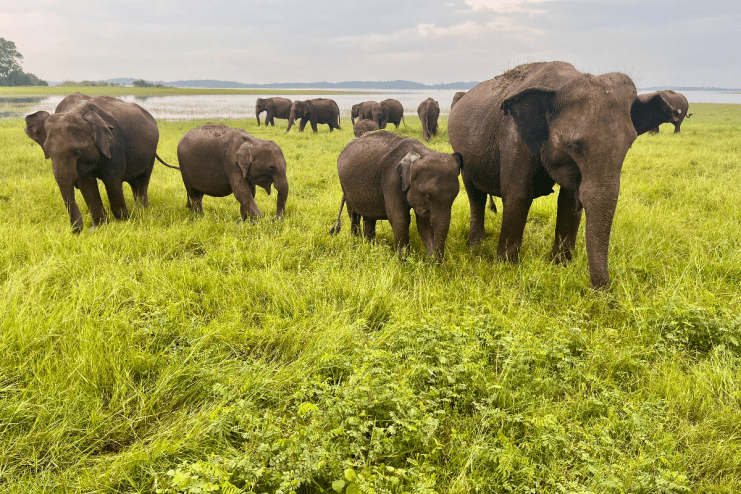
The market, thankfully, has shifted since then, and more tour operators and tourists realise that the best place to watch elephants is in the wild. Sri Lanka’s wild elephant population is around 7,500, a nearly four-fold recovery since the early 1990s. The migratory elephant corridor is through the Minneriya and Kaudulla National Parks, where sightings are pretty much guaranteed.
An elephant can eat half its bodyweight in one night, and ripe crops are a particularly appealing meal. Elephant-farmer conflict has escalated due to habit loss driven by development, and villagers know it is a lose-lose situation. Sri Lanka’s larger protected areas have a vital role to play in encouraging elephants away from farms and homes, but must ensure that there’s sufficient food and water year-round, to keep the elephants satisfied.
This is one of Minneriya’s strengths: in the dry season, elephants converge on the Minneriya Tank, a gargantuan reservoir built by King Mahasen in the 3rd century AD. The tank’s construction wasn’t a deliberate act of benevolence – it was to irrigate the ancient Kingdom of Anuradhapura – but elephants and other creatures are the long-term beneficiaries.
If you prefer to have your wildlife encounters on foot, one of the country’s best destinations is Horton Plains National Park, which incorporates the headwaters of Sri Lanka’s three main rivers. It was named after the British Governor of Ceylon, Sir Robert Wilmot-Horton. The British found this plateau in the island’s central highlands to be a fertile hunting ground, and shot as much as they could; but the montane forests and grasslands and the fauna they supported proved resilient. Today, Horton Plains is a UNESCO World Heritage Site and an Important Bird Area, in addition to being a popular tourist attraction.
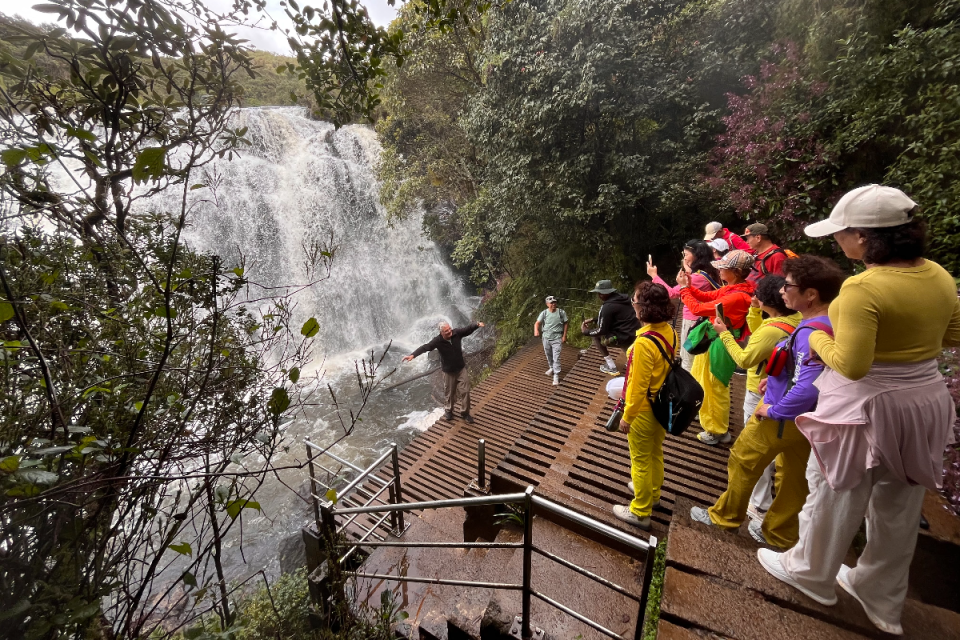
Most visitors come to Horton Plains for the views. The park authorities have recently upgraded the nine km walking trail linking the visitor centre with World’s End (a vertigo-inducing cliff with a 870m sheer drop) and the equally dramatic Baker’s Falls. Sir Samuel Baker was a big game hunter who is credited with discovering the falls in 1845; perhaps it’s time to retire his name in favour of one honouring the park’s irrepressible wildlife or its protectors.
Walking, rather slowly in my case, you have time to note the details of the flora around you. Almost 750 species of plants have been recorded at Horton Plains, and in places the forest canopy reaches 20m. Half of the woody plant species are endemic to Sri Lanka, as are 16 of the orchids. The greenery provides ample fodder for the sambar deer, of which there are 1,500 to 2,000; but there are also Indian muntjacs and spotted chevrotains, two smaller species of deer. Every now and then you’ll spot one grazing quietly, then springing away once it catches your eye.
Serendib, the ancient Persian and Arabic name for Sri Lanka, is the root of the English word ‘serendipity’ -— or a happy occurrence — stumbling on something positive by chance. For most foreign visitors, the draw of Sri Lanka is not its natural wonders but its culture. But when they arrive and discover the richness of the landscapes, the flora and fauna, and their resilience in the face of adversity, it is serendipitous indeed.
Book this Sri Lanka trip yourself
Travel the Unknown’s 14-day Sri Lanka itinerary incorporates nine national parks and protected areas, all with wildlife spotting opportunities. From £3,195 per person, traveltheunknown.com.
Read more: Why now is the best time to visit wild, untamed Sri Lanka