Skip to content
Friday 21 August 2026London --:--Frankfurt --:--Zurich --:--
NewslettersSearchEN · DE · FR
MorningWire

European business, markets and politics

FTSE 100
10,748.16
+0.04%
DAX
25,983.04
0.00%
CAC 40
8,453.09
0.00%
STOXX 50
6,422.06
0.00%
  • Europe
  • Markets
  • Business
  • Economy
  • Regulation
  • Politics
  • Opinion
More
GermanyFranceEU InstitutionsCompetitionPublic AffairsBankingTechnologyEnergy
  • Germany
  • France
  • Europe
  • Markets
  • Business
  • Economy
  • Regulation
  • Politics
  • Opinion
  • DE
Wednesday 21 December 2022 6:00 am  |  Updated:  Tuesday 20 December 2022 11:03 am

A muddled India trade deal will show how this government is negotiating our future without public scrutiny

By: Nick Dearden

Add as a preferred source on Google
Washington Post Global Women's Summit
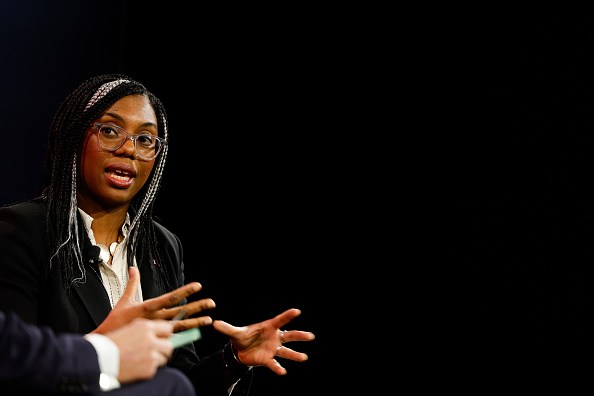
Trade secretary Kemi Badenoch was in India earlier this month. (Photo by Anna Moneymaker/Getty Images)

Earlier this month, trade secretary Kemi Badenoch flew to India for the latest round of talks on a new trade deal. A few days previously, a leaked chapter of the deal made it into the press, showing the British government pushing India to apply harder patent standards. 

Various groups, including the British Medical Association, expressed concern that this would damage India’s world-renowned generics medicine industry. This industry not only supplies affordable drugs to much of the developing world, but also to us here in Britain. Faced with an awful choice – break its budget or refuse drugs to patients who need them – the NHS has started buying a greater portion of generic medicines from India, as soon as they are able to. It has saved the health service a fortune in the process. 

The trade proposals uncovered threaten the very industry we depend upon to save the NHS this crucial money. 

When asked, Badenoch’s department showed no sign of having assessed – or even understood – the implications of the move. Sadly, this is symbolic of the government’s wider approach to trade. It pushes forward a series of poorly designed policies, which have received zero scrutiny, with the aim of signing a deal and getting a photo opp for ministers. 

Levelling up secretary Michael Gove was taken to task by the UK Statistics Authority recently for blatantly misleading the public over the value of new trade deals signed by the government. What matters for the government seems to be the headline, rather than the deal itself.

The rest of us, in the meantime, will have to live with the consequences of these trade deals for many years to come. This matters because trade deals aren’t simply about reducing tariffs. They incorporate broad areas of public policy: how we provide our public services, how we protect our food standards, and how we regulate the use of our data online. They have far-reaching consequences, which makes it particularly wrong that they’re negotiated in secret, signed and sealed with virtually no oversight by Parliament.  

Just last month, former government minister George Eustice admitted the UK-Australia trade agreement was “not actually a very good deal for the UK.” Farmers had been telling the government as much for months, yet ministers pushed on. 

Read more

UK inks trade deal with Switzerland – despite shouting match

UK and Switzerland officials signing a trade deal, highlighting international services agreement and bilateral cooperation

This will be the tip of a very big iceberg. The more trade deals the government signs, the more such examples will proliferate. 

Sadly, neither is this an area where the opposition can claim much greater authority. Labour Party leaders seem unsure whether to question the way that the government’s negotiating objectives will damage the country, or simply condemn them for not doing the deal even faster. 

All of this is particularly serious in a time when major questions are being asked about global trade policy. There’s a growing acceptance that ever-longer supply chains are just about ready to snap and cannot protect us from crisis after crisis.

Large segments of the population in many Western countries are deeply disaffected and angered by the damage which the offshoring of jobs and industry has caused to their communities. Meanwhile, we have trade rules which encourage the concentration of whole economic sectors by a handful of enormous businesses. 

In the US, in Europe and in emerging economies, this is posing serious questions about what future trade policy should look like. These issues need to be debated, honestly and openly, with the public. 

Unfortunately, for us in the UK, it seems our government has no intention of doing that, to the detriment of us all.

Read more

Meet the 33-year-old British former IPL boss changing Indian basketball

Young cricket player in pink and blue uniform with Rajasthan Royals helmet batting during a match.

Share this article

  • Facebook
  • X
  • LinkedIn
  • WhatsApp
  • Email

Similarly tagged content:

Sections

  • Opinion

Categories

  • Opinion

Trending Articles

  • House prices in wealthy London boroughs fall by up to £300,000

  • As it happened: Miners fuel FTSE 100 recovery; oil jumps as Trump claims Strait of Hormuz

  • City law firm sues prominent Emirati business family

  • Amanda Blanc has worked her magic at Aviva

  • As it happened: FTSE 100 rallies after JD Sports drags on blue chips; oil jumps again

More from Morning Wire

  • UK inks trade deal with Switzerland – despite shouting match

    Politics
    UK and Switzerland officials signing a trade deal, highlighting international services agreement and bilateral cooperation
  • Meet the 33-year-old British former IPL boss changing Indian basketball

    Sport Business
    Young cricket player in pink and blue uniform with Rajasthan Royals helmet batting during a match.
  • R|Elan™ Circular Design Challenge Celebrates Its 8th Season with a Landmark Global Edition Under the India–France Year of Innovation 2026

    Business Wire
  • Sweeping job cuts at GSK to fund £400m Cambridge campus

    Pharma
    Modern GSK Cambridge campus buildings with sky bridge, green spaces, and people walking and cycling.
  • Making free trade a reality: The UK-GCC strategic dialogue

    Partner
    Alexey Fedorenko credited image showing a relevant scene or subject matter related to the General news article content
  • Donald Trump is creeping towards a shrewd sanctions policy

    Opinion
    Donald Trump holding a red TRUMP 2028 hat, wearing a tuxedo with an American flag in the background
  • Terry Smith dubs weight-loss giant Novo Nordisk ‘investment disaster’

    Investing
    Terry Smith, founder of Fundsmith, speaking at a business conference, wearing a suit and tie, with a focused expression.
  • UK government backs British business to get slice of £33bn in Morocco World Cup contracts

    Sport Business
    Getty Images logo displayed on a modern digital screen, representing media and stock photography in a business context.
MorningWire

Independent European business, markets and political news for decision-makers.

Morning Briefing

Europe

  • Germany
  • France
  • EU Institutions
  • Europe

Business

  • Markets
  • Business
  • Economy
  • Regulation
  • Competition
  • Public Affairs

Editorial

  • Opinion
  • Editorial Policy
  • Corrections
  • Contact

Company

  • About Morning Wire
  • Privacy Policy
  • Terms of Use
  • Cookie Policy
© 2026 Morning Wire Ltd · Published by Morning Wire Media, Bahnhofstrasse 65, 8001 Zürich, Switzerland
Privacy · Terms · Cookies · Facebook