A price cap on bread and milk? SNP plan is unnecessary and unworkable

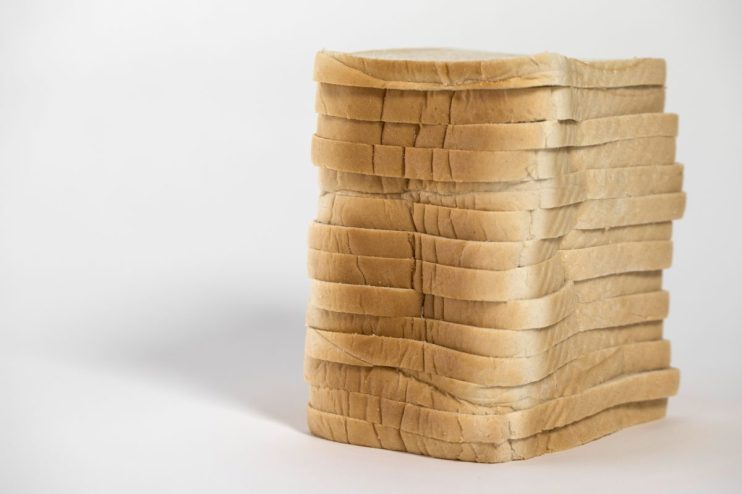
The SNP has pledged to cap the price of basic supermarket goods like bread but why? Poor people can afford the essentials, supermarket margins are tiny and pricing should be up to the retailer regardless, writes Charles Amos
Recently the SNP has announced it intends to put a price cap on a basket of 20 to 50 household essentials in supermarkets, such as bread, milk, cheese and chicken, to keep the cost of living down. The price cap is also supposed to act as a public health measure to ensure “everyone can get a balanced diet that meets nutritional needs”. Poor people can already afford more than enough food at supermarkets today and can easily access a balanced diet at a low cost too. There is no need for a price cap. Anyway, should a price cap be implemented it would result in shortages. Ultimately, however, a price cap is unjust as it violates supermarkets’ private property.
Bread and milk are already cheap
The essentials today are incredibly cheap. If we look to the bottom ten per cent of households we find they spend £39.20 a week on food, of which £8 is spent on buns, biscuits, cakes, chocolate, jam, fizzy drinks and ice cream, amongst other things. At Sainsbury’s 2kgs of potatoes can be bought for £1.32, which is nine servings, meaning a family of four can have all their carbohydrates at supper for the week for just £3.96. Rice is cheaper still. At 90g portions, the same family could have minced beef the whole working week in cottage pie, chilli con carne or tacos, then, frying steak on both weekend suppers, all for £22.86. What about fruit and vegetables though? After all, the price cap is supposed to support everyone meeting their nutritional needs.
Well, the family of four each need five fruits and vegetables every day, or, about 11kgs of them. For just £13.71, or, just over an hour’s labour at minimum wage, the household could get 2kgs of bananas, 1kg of oranges, 2kg of frozen peas, 2kgs of frozen green beans, 2kg of carrots, 1kg of parsnips and finally 1kg of frozen broccoli florets. In total then the family could get their meat and potatoes for dinner, and fruit and vegetables for the whole week, for just £40.53. That is less than four hours on the minimum wage, with maybe another couple required for breakfast and lunch. There is simply no need for a price cap on essentials as almost every single person can afford to eat well today.
But that’s really all beside the point, as price caps don’t work anyway.
SNP price cap is pointless politics
Price caps don’t work because they reduce prices below the equilibrium rate, meaning demand is in excess of what is supplied and a shortage results. In practice this would mean the first people to get to the supermarket would get the great deal but anyone turning up later, for example, after work, would face empty shelves. They’d then need to purchase the nonprice capped bread, cheese and eggs which would probably be more expensive than the previously uncapped price of the most basic variety. Thus, the overall result would be people with lots of time on their hands would benefit, while other people with little time on their hands would be disadvantaged.
Let us assume, however, this price cap could work. Would it be just? It is fine for me to grow potatoes and not give any to you, and, it is fine for me to give all of them to you as well. In other words: I am free to provide no benefit and a full benefit to you with no moral problem; I should be free to provide any benefit in between by selling them to you at a price I choose as well.
Analogously, then, supermarkets, simply being a complex group of potato sellers, should be free to sell their goods and services at any price they choose too. Supermarkets were never obligated to provide anything in the first place, so why should they be forced to provide maximum benefit to the consumer via a price cap.
Supermarkets are entitled to set their own prices
A price cap violates private property by restricting the owners’ freedom to set the price of their goods or services; forcing them to serve others on terms they do not choose. This is unjust. Perhaps you’re unpersuaded by this liberal reasoning because you think consumers have got no choice but to buy from supermarkets, and you think they’re ripping you off due to you having no choice. I can understand this point of view when voters think supermarkets are making 50 per cent profit margins.
However, it is totally misguided for two reasons. First, profit margins in supermarkets are between just two per cent and four per cent, so ripping off isn’t happening. Second, people are not ultimately forced to go to the supermarket as they can grow their own food in their gardens, allotments or on bought farm land. Now, obviously, no one would do that and the answer is because supermarkets, even with a massive profit margin, still provide food cheaper than we can ourselves. We should be thankful to supermarkets for making our lives so much easier, not demonising them for not giving us food at cost.
The SNP’s manifesto pledge to price cap a basket of essential foods in supermarkets is wrong on so many levels. It falsely assumes food essentials are not already affordable, then, building on this false assumption, falsely assumes a price cap would be effective in alleviating this alleged lack of affordability. In fact, it would result in a shortage of staple products. Most of all, however, the price cap is wrong because it violates supermarkets’ private property by forcing them to serve consumers on terms they do not freely choose.
Charles Amos works in the logistics industry and writes The Musing Individualist Substack