A success or not, Scotland’s tax hikes showcase the benefits of devolution

Tax devolution allows for invaluable experimentation and dynamism that Britain’s economy desperately needs, writes Tim Sarson
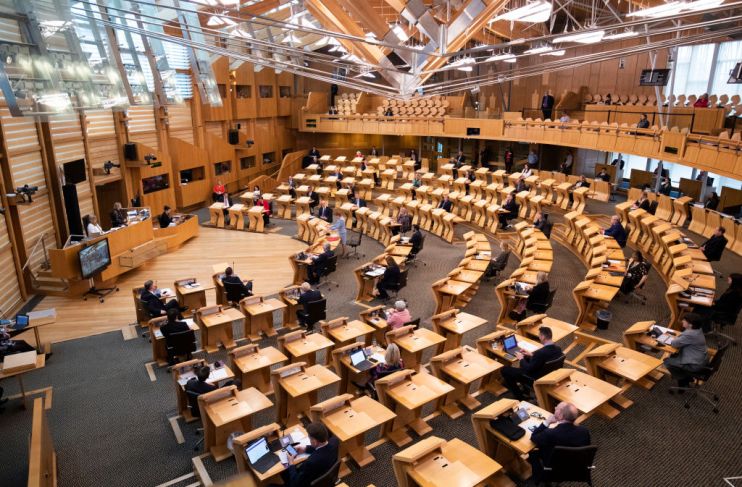
You might have missed the Scottish budget that took place just before Christmas. Fair enough: the announcements affect people and businesses north of the border. But you did miss quite a momentous event. A devolved administration used its powers to make big changes to income tax rates. A new 45 per cent “advanced” income tax band was introduced and the top rate of tax increased further.
That’s something quite novel on these shores. Not the rates themselves, but the fact they are now materially different in one nation to the others as a result of a decision taken by elected politicians in that nation. And that, in my opinion, is a thoroughly good thing.
If you’re a high earner in Glasgow you may well disagree, of course. Whether the tax hikes themselves were a good move is open to argument. But the fact is that in many other countries around the world taxes do vary from place to place – sometimes a lot – and people and enterprises make decisions about where to be based on tax rates or incentives.
The USA has had a federalised tax system since its foundation, and it definitely affects state economies. Several studies have shown both investment and population moving from higher to lower tax states in recent years, though some of that may reflect a broader shift from the rust belt states to the south. The differences are most marked in personal income and property taxes, so much so that you’ll often find someone commuting long distances across state lines to keep their bills down.
Plenty of other countries follow the same model. Germany’s trade tax rates encourage many businesses to forgo major cities for cheaper towns or suburbs, and Switzerland’s famous cantonal system creates an active internal market for investment despite the country’s diminutive size. Yet in the UK we are only scratching the surface of tax devolution. Most of our fiscal policy, including local incentives like freeports and even local authority business rates, is set and controlled in Westminster.
We’re also one of the most regionally unequal countries in the Western world. The London region is one of the richest in Europe, but several parts of the country are among the poorest. Coincidence, or is our hyper-centralised fiscal model part of the problem?
We are missing a trick. One of the guiding principles behind devolution is that a nation, region or city is better placed to decide which policies will work best for it than a distant capital that has to legislate for the whole country. That’s as true for tax policy as it is for planning and housebuilding, education provision or transport infrastructure.
We know tax can influence individual or corporate behaviour, but it also helps to fund public priorities. Tax policy is always a balancing act. A devolved system gives more flexibility. Example one: a thriving regional economy beset by housing shortages and creaking infrastructure or public services might benefit from charging higher rates of tax on some income or property to fund social housing and services. Example two: a left behind post-industrial city looking to encourage investment and incomers could slash corporate and personal taxes and watch them flood in. That’s using the laws of supply and demand to level up, rather than relying on central government favours.
Devolution also encourages controlled experimentation. We know the UK economy needs to rediscover investment and productivity growth but economists and politicians differ on how to achieve it. Let cities, regions and nations try things out. That’s multiple controlled experiments from which these administrations can learn. The Scottish budget tax rises are a case in point. Nobody really knows whether those rates will drive an exodus of higher earners south. But last December’s budget gives us all a chance to find out.
Proper tax devolution can help to narrow regional inequality by tipping the scales on investment and spending decisions. It can inject dynamism and experimentation into our system. It can and should create more accountability for devolved governments and make it harder to blame Westminster when things go wrong, and it brings democracy closer to home by giving people something more tangible to vote on.
What I’m suggesting is not new. It’s been talked about for donkey’s years by politicians and think tanks like the Institute for Fiscal Studies. But this is an election year and things can change quickly when governments change. Tax devolution isn’t in either of the main parties’ sights at the moment, but it should be.