Skip to content
Saturday 12 September 2026London --:--Frankfurt --:--Zurich --:--
NewslettersSearchEN · DE · FR
MorningWire

European business, markets and politics

FTSE 100
10,650.44
+0.39%
DAX
25,568.56
+0.82%
CAC 40
8,179.77
+0.78%
STOXX 50
6,325.13
+0.90%
  • Europe
  • Markets
  • Business
  • Economy
  • Regulation
  • Politics
  • Opinion
More
GermanyFranceEU InstitutionsCompetitionPublic AffairsBankingTechnologyEnergy
  • Germany
  • France
  • Europe
  • Markets
  • Business
  • Economy
  • Regulation
  • Politics
  • Opinion
  • DE
Wednesday 08 June 2022 6:15 am  |  Updated:  Tuesday 07 June 2022 5:31 pm

A windfall tax raised by a money-hungry government will scare off our businesses

By: Paul Ormerod

Add as a preferred source on Google
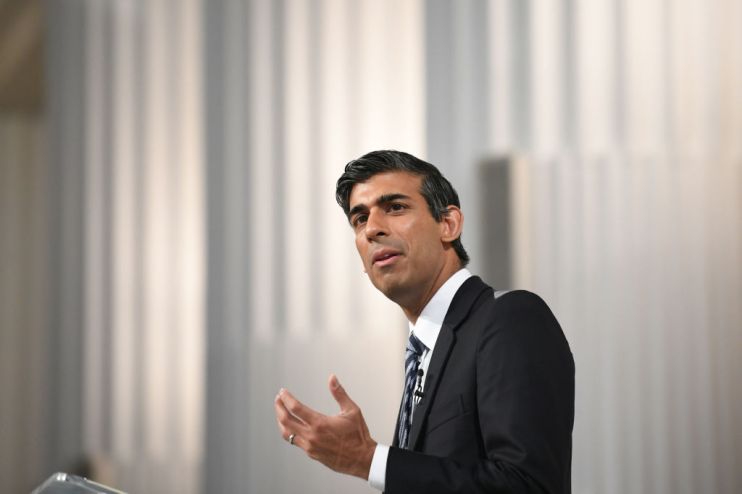
Rishi Sunak Delivers 'Mansion House' Speech At The Professional And Financial Services Dinner
Rishi Sunak has introduced a windfall tax to ease the cost of living crisis

Rishi Sunak’s windfall tax on energy firms – what he called a “temporary targeted profits levy” – has gone down well with voters. The tax makes it look like money is raised from someone else and given to them through subsidies to their bills.

Despite claims that the tax will yield an additional £5bn in revenue for the government, there are potential offsets in the legislation that make it hard to predict how much will actually be raised.

Still at one level, economists look quite favourably on taxes such as this. They are efficient in the sense that the collection costs are low.

More importantly, the ideal tax in the standard model of economic theory is one which has a minimal impact on the behaviour of those being taxed.  

An increase in, say, income tax definitely does not meet this criterion: it impacts on decisions as to how much to work, and how much to spend rather than save.

The windfall tax is taxing profits which have arisen due to an unforeseen external event, namely the huge rise in world energy prices. If it’s seen as a purely one-off, the behaviour of the energy companies will not be affected very much, if at all.

But the equilibrium model of economic theory is itself an idealised one. When it meets the real world, it may not always be a reliable guide.

Windfall taxes on profits are fairly unusual in the UK. Both parties have used them when in government, but at decently long intervals. The Conservatives taxed what were deemed to be excessive bank profits in 1981. Labour raised money from the increased value of privatised companies in 1997. And in 2011 George Osborn had a “supplementary” charge on oil and gas companies due to high world prices at the time.

If the energy companies believe that the new tax is a genuine one-off, then there shouldn’t be any serious adverse consequences.

Read more

JP Morgan boss issues bank tax warning to John Healey

JPMorgan Chase CEO Jamie Dimon

But the public finances are in a completely different state to when windfall taxes were introduced in the past.

As a good approximation, the ratio of public sector debt to GDP fell steadily for decades from the record highs built up in the Second World War. From 250 per cent in the mid-1940s, by the mid-1990s it was only around 35 per cent.

In those decades, companies could reasonably believe a Chancellor who said that a tax was a purely one-off levy. Now, following the massive deficits and build-up of debt during the pandemic, the government is desperate for cash.

The energy companies might reasonably conclude that if world prices, and hence their profits, stay high for some time, they are ripe for repeated plucking.

The real risk for the government is that companies, not just those in the energy sector, start to feel nervous about the government’s intentions on tax.

The build up of debt is not a free lunch. It implies a stream of taxes in the future to pay not just the principal but also the interest on the debt.

Ultimately, the tax burden can only fall on individuals. Higher corporate taxes might lead, for example, to lower dividends or lower wage increases. Companies might squeeze suppliers harder or cut back on investment.

At a time when the government really needs companies to be investing to promote growth, higher taxes on the corporate sector is playing with fire.

Read more

Big bank bosses on alert as tax noise gets louder under Burnham

Two men, one in a white shirt and red tie, the other in a navy jacket, conversing outdoors.

Share this article

  • Facebook
  • X
  • LinkedIn
  • WhatsApp
  • Email

Similarly tagged content:

Sections

  • Opinion

Categories

  • Opinion

Trending Articles

  • Serie A won’t catch the Premier League by selling its rights better

  • Last Night, a Star-studded Evening Celebrating Moncler’s Fifth Avenue Flagship Ushered in a New Chapter in the Brand’s Enduring Love Story With New York

  • Crystal Palace agree deal with HSBC that paves way for new training ground

  • Lotus, Porsche and Corvette: the best sports cars to buy in 2026

  • Claridge’s swings to £10m loss as luxury hotel warns on ‘adverse impact’ of tax hikes

More from Morning Wire

  • JP Morgan boss issues bank tax warning to John Healey

    Banking
    JPMorgan Chase CEO Jamie Dimon
  • Big bank bosses on alert as tax noise gets louder under Burnham

    Banking
    Two men, one in a white shirt and red tie, the other in a navy jacket, conversing outdoors.
  • ‘War on wealth creation’: capital gains tax raid would lose government money, Tories argue

    Politics
    Mel Stride speaking at a press conference, addressing key issues, in a formal setting with a backdrop of the events logo.
  • Treasury ‘tells Healey’ to consider tax on banks and oil

    Politics
    Chancellor John Healey smiling, wearing a navy suit, white shirt, and red tie.
  • Burnham urged to axe tourist tax expansion in devolution drive

    Hospitality
    Andy Burnham, Mayor of Greater Manchester, speaking outdoors with a lapel microphone on his suit jacket.
  • Budget 2026: Which taxes will Burnham and Healey hike?

    Tax
    Andy Burnham, John Healey, and Louise Haigh by a doorway, discussing tax policy for a news article.
  • Vibes matter with tax, so here’s how Healey can deliver a feel-good Budget

    Opinion
    Chancellor John Healey smiling, wearing a navy suit, white shirt, and red tie.
  • Stamp duty on shares is ‘biggest handbrake’ says UK bank chief

    Markets
    LSEG logo on a large screen inside a modern building with stock tickers and glass ceilings.
MorningWire

Independent European business, markets and political news for decision-makers.

Morning Briefing

Europe

  • Germany
  • France
  • EU Institutions
  • Europe

Business

  • Markets
  • Business
  • Economy
  • Regulation
  • Competition
  • Public Affairs

Editorial

  • Opinion
  • Editorial Policy
  • Corrections
  • Contact

Company

  • About Morning Wire
  • Privacy Policy
  • Terms of Use
  • Cookie Policy
© 2026 Morning Wire Ltd · Published by Morning Wire Media, Bahnhofstrasse 65, 8001 Zürich, Switzerland
Privacy · Terms · Cookies · Facebook