Skip to content
Friday 7 August 2026London --:--Frankfurt --:--Zurich --:--
NewslettersSearchEN · DE
MorningWire

European business, markets and politics

FTSE 100
10,919.08
+0.47%
DAX
26,367.44
+0.87%
CAC 40
8,733.14
+0.38%
STOXX 50
6,535.46
+0.51%
  • Europe
  • Markets
  • Business
  • Economy
  • Technology
  • Politics
  • Opinion
More
GermanyFranceBankingAIEnergyFintechPropertyCapital Markets
  • Germany
  • France
  • Europe
  • Markets
  • Business
  • Economy
  • Technology
  • Politics
  • Opinion
  • DE
Monday 03 November 2025 10:42 am

Abolish regressive, outdated stamp duty

By: Alex Michelin

Add as a preferred source on Google
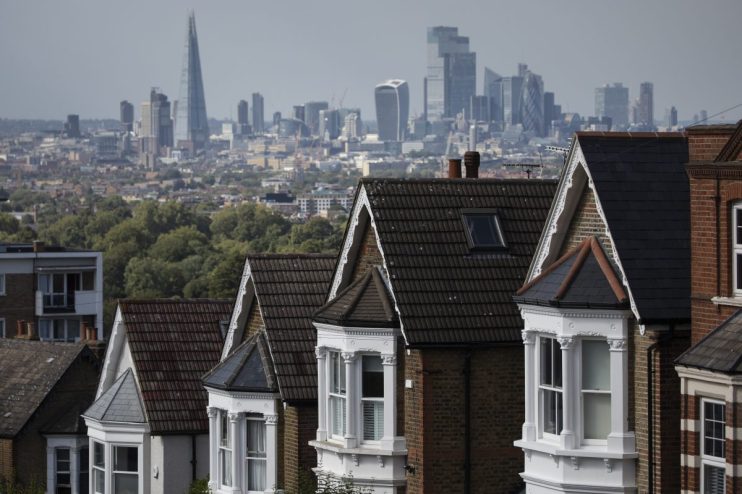
Average house prices in June flatlined in the UK
The estate agent is headquartered in London.

Stamp duty abolition isn’t just desirable it’s an economic necessity, says Alex Michelin

Ask any first-time buyer, young family or downsizing pensioner what’s stopping them from moving  home and you’ll hear the same answer: Stamp Duty Land Tax (SDLT). This once marginal transaction cost has evolved into a structural impediment to the UK housing market, throttling mobility, discouraging movement and stifling productivity and economic growth. 

Let’s start with the numbers. SDLT receipts reached £11.6bn in 2022-23, nearly double what they  were a decade ago. This has come not from a booming market, but from bracket creep; as house prices  rise, more buyers are pushed into higher tax bands. In London, where the average house price is £564,000, even modest family homes incur hefty SDLT charges. A family upgrading to a £1.2m home, a typical four-bedroom house in Zones 2-4, faces a tax bill of £61,250 before a single box is  packed. 

This cost has a chilling effect. In 2023, just 1.01m transactions took place, down from 1.2-1.3  million pre-pandemic, and the lowest since 2012. A 2017 LSE report concluded that SDLT is a major  deterrent to transactions. In 2015, following the Conservative government’s SDLT overhaul,  transaction volumes fell notably: total sales in England and Wales dropped 11 per cent, while prime central London declined 17 per cent compared to 2014. People are trapped because they cannot justify the SDLT cost. 

Young buyers are hit hardest. Despite schemes like Help to Buy, many first-time buyers face the  double challenge of high deposits and SDLT. Those who scrape together a deposit find themselves  unable to afford the tax hit required to climb the ladder. Successive governments pledge to support “generation rent” yet allow SDLT policy to trap them. 

It’s not just the young who suffer. Older homeowners, often asset-rich but income-poor, want to  downsize and free up family homes but find themselves penalised for doing so. 

Stamp duty put lives on hold

The broader economic impact is equally troubling. The housing market is a critical enabler of labour mobility. When people can move easily, they take new jobs, start families, grow businesses. SDLT disincentivises this. A 2017 LSE study found that for every one per cent increase in SDLT, there’s a 17-20 per cent decrease in the probability of a household moving. We’ve designed a tax that penalises dynamism. 

Read more

Industry hits out at rumours as No 10 denies plan to abolish stamp duty and council tax

Two women view property listings in an estate agents window, one takes a photo with her phone. Real estate, stamp duty.

SDLT also distorts where people live. It incentivises staying in unsuitable homes, too small for growing families or too large for ageing singles, simply to avoid the tax. This creates gross  misallocation of housing stock in a country already suffering chronic shortage. 

Whilst revenue from property taxes is important for our economy, SDLT is an inefficient way of raising it. It punishes transactions rather than ownership. It penalises the behaviour we should encourage: moving, downsizing and releasing housing stock. 

Simply altering rates won’t fix this. In its current form, SDLT is regressive and outdated. SDLT should be abolished entirely. Revenue should instead be replaced by a reformed and fairer Council Tax – introduced in 1993, based on 1991 property prices and not reassessed since – to reflect current values.  

This would be more progressive, placing the burden on those with the broadest shoulders whilst maintaining revenue and removing current market friction. 

Ultimately, a dynamic housing market fuels consumption, employment, construction and economic growth. Most importantly, it’s about lives on hold: the young family with no second bedroom, the retiree facing a £90,000 tax penalty to downsize, the worker turning down a job because moving house is too expensive. 

Stamp Duty works against all of them. Abolition isn’t just desirable; it’s an economic and social necessity.

Alex Michelin is founder and CEO of Valouran 

Read more

Burnham can prove he’s pro-business by scrapping stamp duty on shares

Andy Burnham, Mayor of Greater Manchester, in a professional setting.

Share this article

  • Facebook
  • X
  • LinkedIn
  • WhatsApp
  • Email

Similarly tagged content:

Sections

  • Opinion

Categories

  • Opinion

People & Organisations

  • Housing
  • stamp duty
  • stamp duty land tax

Trending Articles

  • Revolut founder’s wealth set to balloon amid talks of share award at $500bn valuation

  • Rupert Lowe axes pensions triple lock and pledges tax cuts in economic plan

  • Liverpool owners tipped to sell – but not to Amazon boss Bezos – by former CEO

  • WPP slashes jobs as revenue continues to fall

  • As it happened: Stocks rise as oil fluctuates after Red Sea attack; US-Iran deal ‘being circulated’

More from Morning Wire

  • Industry hits out at rumours as No 10 denies plan to abolish stamp duty and council tax

    Politics
    Two women view property listings in an estate agents window, one takes a photo with her phone. Real estate, stamp duty.
  • Burnham can prove he’s pro-business by scrapping stamp duty on shares

    Opinion
    Andy Burnham, Mayor of Greater Manchester, in a professional setting.
  • Top Tory slams ‘ivory tower’ financial regulators as takeover bids blight London Stock Exchange

    Markets
    Shadow business secretary Andrew Griffith has said he would make it easier for small businesses to open bank accounts. (Photo by Dan Kitwood/Getty Images)
  • House prices slump as Iran war and interest rates hit demand

    Property
    The price paid for first homes has surged 7.1 per cent in a year
  • We should all get behind this wealth tax

    Opinion
    LONDON, ENGLAND - JUNE 01: A general view of a house along Kensington Palace Gardens, which has been named as Britain's most expensive street on June 1, 2011 in London, England. Many of the mansions are occupied by billionaire businessmen, embassies and ambassadorial residences. (Photo by Oli Scarff/Getty Images)
  • Barratt Redrow urges Burnham to slash tax to boost housebuilders

    Property
    Barratt and Redrow partnership announcement showcasing executives shaking hands in a modern office setting
  • London house prices fall again as property slowdown drags on

    Property
    Two people looking at real estate listings in an estate agents window, showcasing properties for sale.
  • Why does Britain treat housebuilding as one big burden?

    Opinion
    Modern house under construction with scaffolding, highlighting progress in sustainable building methods and materials.
MorningWire

Independent European business, markets and political news for decision-makers.

Morning Briefing

Europe

  • Germany
  • France
  • Europe
  • UK & Ireland

Business

  • Markets
  • Banking
  • Technology
  • Energy
  • Property
  • Fintech

Editorial

  • Opinion
  • Editorial Policy
  • Corrections
  • Contact

Company

  • About Morning Wire
  • Privacy Policy
  • Terms of Use
  • Cookie Policy
© 2026 Morning Wire Ltd · Published by Morning Wire Media, Bahnhofstrasse 65, 8001 Zürich, Switzerland
Privacy · Terms · Cookies · Facebook