Africa is thriving: Only foreign capital can plug its $11.4 trillion funding gap

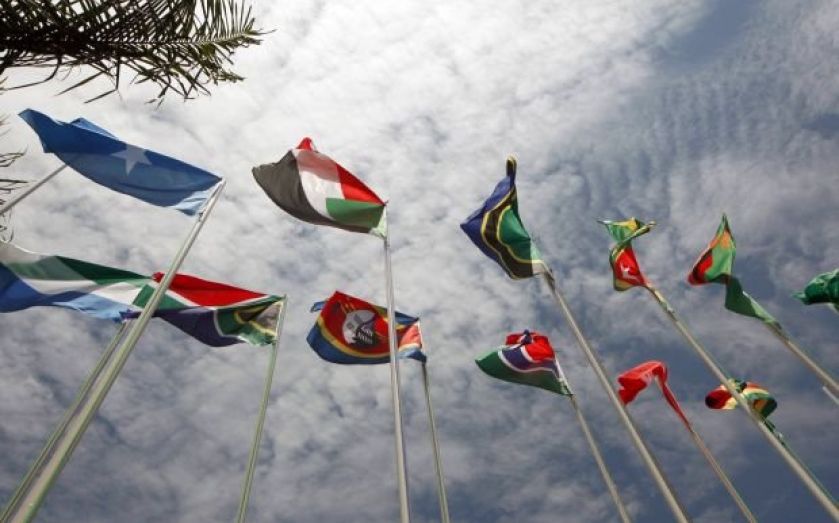
In the age of 24-hour news, local and international headlines are instantly accessible, and the “developing” label placed on many nations and regions is looking increasingly out of date.
The massive global economic growth witnessed over the last century was largely the result of increased international money flows. Foreign investment is vital for countries looking to repeat the economic expansion seen over the past few decades.
A report we launched this week, Jersey’s Value to Africa, examines Africa’s future investment needs, and considers where the funding could come from. The figures are surprising. The continent’s potential is huge, but in order to realise it, Africa’s capital stock will need to increase by an estimated six times by 2040, and its economy would need to quadruple over the same period. By 2040, Africa will require a cumulative investment of $85 trillion (£53.75 trillion), equivalent to annual global GDP.
While local businesses, foreign aid and governments all have a part to play, even together they do not have the resources required. Our research predicts an investment gap of $11.4 trillion by 2040. Despite making up 15 per cent of the world’s population, Africa accounts for just 4 per cent of the global economy, and receives only 2.7 per cent of the world’s stock of foreign investment – almost a quarter less than is invested in Latin America and the Caribbean.
Africa’s domestic private sector will struggle to finance the shortfall, and is likely to only be able to contribute $1.6 trillion of the gap. In addition, governments experiencing significant day-to-day demands on their resources (as well as limited access to debt compared to Western governments) will only be able to contribute an estimated $2.8 trillion.
At a time of austerity in Europe, foreign aid is unlikely to be able to effectively shore up the investment needed: aid amounted to only $51bn in 2012, and it’s difficult to imagine aid contributing even as much as $1 trillion towards the $11.4 trillion required. It is clear that the bulk of Africa’s investment needs will have to be met by foreign investment.
Financial crime is a major problem for the developing world. The World Bank estimates that over $1 trillion a year is paid in bribes globally, while the World Economic Forum puts the cost of corruption at more than 5 per cent of global GDP, adding roughly 25 per cent to the cost of procurement contracts in developing countries. Perhaps unsurprisingly, there is a widespread investor perception that investing in developing economies comes with a significant risk.
Robust international financial centres like Jersey have a significant role to play in helping African nations access the investment funds they need, as well as establishing environments conducive to greater entrepreneurship and job creation.
Facilitating foreign investment into the continent should encourage global investors that would otherwise be reluctant to invest directly – particularly through cross-border investment pooling. The extractive industries are a case in point, with the business model in mining typified by large up-front capital expenditure and sizeable operational risks. In Africa, these may be compounded by perceived political and systemic dangers. Few investors have an appetite for such ventures, and those assembling the finance for a mining or drilling deal must search across the globe for funders.
There are signs that this could be changing. Over the past decade, Africa’s economy has grown by an average of 5.2 per cent a year, helped by improvements in political stability and governance, the development of key infrastructure, and the expansion of the natural resources industries. However, progress remains uneven, with the continent’s five largest economies accounting for nearly two-thirds of its output.
Over the next 30 years, Africa’s working age population should double to around 1.2bn. Such growth is a step-change opportunity that increases the productive potential of economies. However, it may also be a challenge – especially to public services – if there isn’t a corresponding increase in jobs.
Six of the world’s top 10 countries for early stage entrepreneurship activity are in Africa, but this does not automatically result in significant job creation. Countries with lower GDP tend to have high entrepreneurial rates, as formal employment opportunities with larger corporations are limited.
Many of Africa’s startups also have a short lifespan. But if these smaller enterprises are given sufficient support, they should be able to harness the enormous potential to generate growth.
By working with developing countries to improve infrastructure and economic governance, both investors and the continent as a whole stand to benefit.
Geoff Cook is chief executive of Jersey Finance.