After four years, Trump has yet to master the art of the diplomatic deal

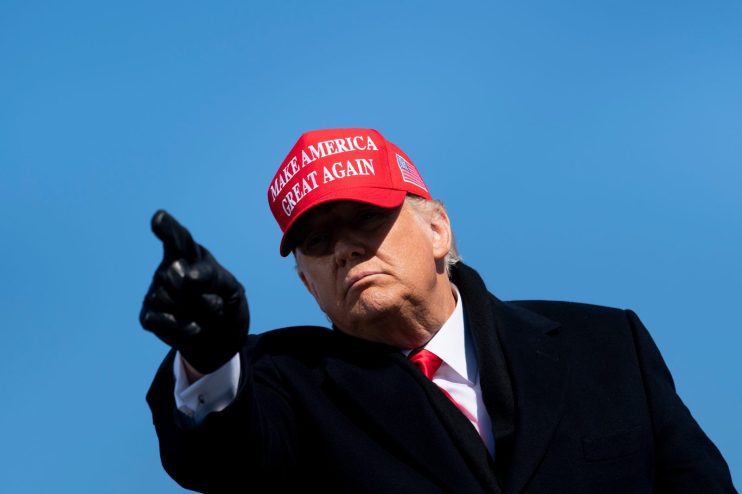
“We can’t continue to allow China to rape our country,” Donald Trump urged crowds at a campaign rally in Indiana, months before his surprise 2016 election victory.
As America once more heads to the polls today, the rest of the world can only stand by and watch. And while Joe Biden appears to be leading, the prospect of a second Trump term remains a definite possibility.
So, while the global community holds its breath, it is worth reflecting on how the maverick Republican candidate’s campaign pledges have played out over the past four years.
Getting tough on China was among a host of radical domestic and foreign policy promises that carried Trump to the White House. In fact, it was probably his signature foreign policy commitment, matched only by the vow to withdraw from the Joint Comprehensive Plan of Action (JCPOA — known as the Iran nuclear deal), Barack Obama’s signature overseas triumph.
He was true to his word. President Trump initiated a trade war with China barely a year into office, and unilaterally left the JCPOA in 2018. But these and other moves have come at a cost, often upsetting allies, sometimes escalating global tensions, and occasionally even enabling America’s enemies.
In fact, much of the President’s time in office has been characterised by his belligerent stance towards America’s long-time friends.
For a start, Trump demanded America’s NATO allies spend more money on the alliance — despite the fact members were already doing exactly that, having agreed to do so two years before he took office. The US President wanted improved terms and didn’t care whom he upstaged to get them — even Europe’s grand dame, Angela Merkel, was diplomatically dissed on several occasions.
Trump quickly established himself as an outlier with the G7 too at his first summit. High in the Sicilian hills, overlooking a sparkling Mediterranean, he dropped his climate change bombshell: American’s withdrawal from the Paris Climate Accord.
At home, too, Trump seemed intent to demolish rather than build. His first secretary of state, Rex Tillerson, set about hollowing out the diplomatic behemoth State Department to such an extent that even Russia complained they no longer knew who to call.
But deprived of the State Department’s intellectual heft, Trump was left exposed to America’s most wily opponent. Vladimir Putin, whom he never rebuked for Russia’s proven meddling in the 2016 elections, would spend four years running rings around him.
At their first presidential encounter at the 2017 Hamburg G20, Trump fell for one of Russia’s oldest military ploys: Putin’s proposal for a Syria ceasefire effectively froze the conflict, allowing Russia to finish it off bit by bit at her leisure.
Yes, Trump would later sanction Russia over Ukraine and expel 60 Russia diplomats after the Salisbury poisoning scandal, but he failed to land a blow on big foreign policy issues.
On China, too, Trump would run into trouble — despite the initial backing of allies tired of Beijing’s intellectual property theft and predatory trade policies.
At 2017’s APEC summit in Vietnam, Chinese Premier Xi Jinping was in the audience. Trump repeated his “America First” message and berated China, calling out what he termed “chronic” and “intolerable” trade abuses.
Xi was listening. What began as a trade war evolved into military escalation in the South China Sea, resulting in US arms sales to Taiwan, China’s counter sanctions, and the effective end of Hong Kong’s “one country, two systems” status. And still, there is no sign of a trade deal between Washington and Beijing on the horizon.
Elsewhere in Asia, with North Korea’s Kim Jong-Un, Trump first tried confrontation: inflating the possibility of nuclear war and calling the Hermit Kingdom’s leader “little rocket man”. He then dramatically changed his tune, exchanging “love letters” with the North Korean dictator and holding two summits with him.
The result? Kim hasn’t given up a single nuclear weapon, is likely continuing to develop more, and has just unveiled a new ballistic missile potentially capable of carrying a nuclear warhead to America’s cities.
The story in the Middle East has been more complex. Trump’s Gulf allies have liked his tough policies on Iran, albeit tempered by concern that they could spark a war on their doorsteps. He won praise in Israel for recognising Jerusalem as the state’s capital, but condemnation from Palestinians and others. Few other countries followed his lead.
Often, Trump’s apparent foreign policy successes come with baggage. Saudi Arabia was the first nation to host Trump overseas, and his relationship with Crown Prince Mohammed Bin Salman thereafter attracted scrutiny, particularly after Trump’s apparent ambivalence to the brutal murder of Washington Post columnist Jamal Khashoggi was followed by a large, lucrative arms deal.
Similarly, when the President’s son-in-law Jared Kushner conjured up diplomatic relations between Israel and the UAE, Bahrain and Sudan, Trump was criticised for the apparent transactional nature of the deals. The UAE received US F-35 fighter jets and Sudan was removed from the State Departments “state sponsors of terror” list.
Even the UK, America’s supposed “special” friend, has received mixed messages. Boris Johnson knows that he cannot count on a US trade deal, especially if Brexit comes at a cost to relations on the island of Ireland. Despite the apparent friendship between the two leaders, many in UK political circles may be crossing their fingers for the Democrats to win tonight.
In short, Trump has certainly left his mark on the world. But his belligerent, erratic first four years indicate that he has yet to master the art of the diplomatic deal.
CNN’s special Election Night in America coverage begins tonight at 9pm on CNN International.
Main image credit: Getty