After the debanking scandal, Britain needs to give up its stake in Natwest

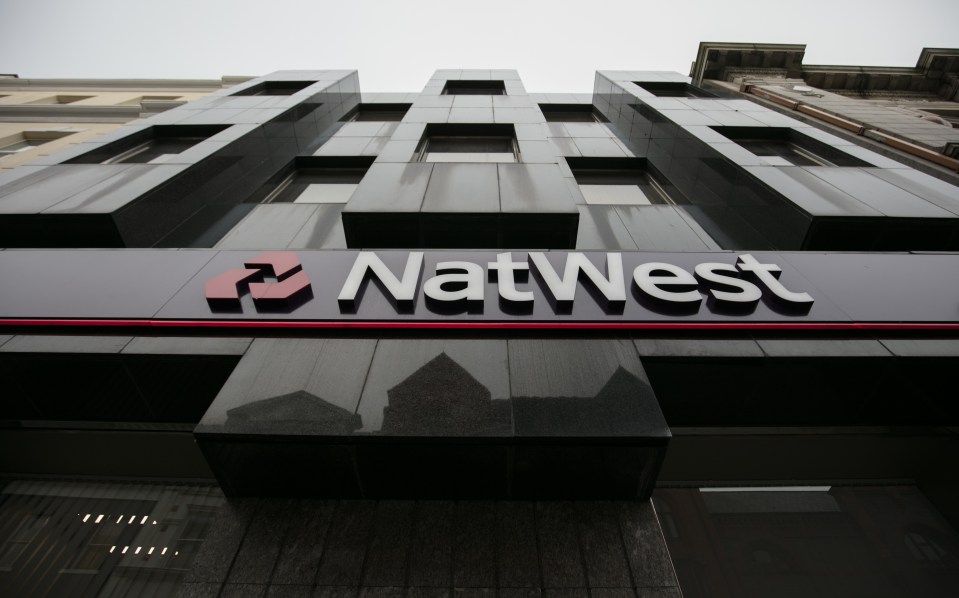
Last week, Jeremy Hunt revived a touchstone folk memory of Conservative lore. He told the House of Commons he would look to divest the government’s stake in Natwest completely and bring back “Sid”. It was a reference to the notional investor when British Gas was privatised in the 1980s; it is a brilliantly simple way of showing that the average voter could be involved in the sell-offs of state industries and become, many for the first time, share-owners.
Finally shaking off the government responsibility for Natwest is long overdue.
Readers will recall that the National Westminster Bank was bought by the Royal Bank of Scotland Group in 2000 in a £21bn hostile takeover, after Natwest’s commercially disastrous merger with Legal and General. This turned RBS, once a genteel Edinburgh-based bank—which invented the overdraft in 1728—into a commercial behemoth, the second-largest bank in the UK and the fifth-largest in the world. During the global financial crisis, the government bought a majority stake in RBS Group, spending £37bn but stressing the temporary nature of the move. Further investment brought the state’s ownership—public ownership—to 84 per cent.
The process of unwinding this stake began in 2015, when a rebranding to Natwest Group took place in 2020 and further sales reduced the government’s share to 48.1 per cent last year. Natwest took a reputational battering this summer over the “debanking” of Nigel Farage, which cost the CEO, Dame Alison Rose, her job; the chairman Sir Howard Davies, will step down next April after his catastrophically inept handling of the furore.
According to the Autumn Statement, the government intends to sell off its last shares by 2025-26, including through accelerated bookbuilds and ongoing directed buybacks with Natwest. It plans a retail offering in the next 12 months “subject to supportive market conditions and achieving value for money.”
I am a child of Thatcherism. I am no uncritical acolyte: Thatcher was putting into practice what Hayek and Friedman had conceived and Enoch Powell and Keith Joseph had preached. Nevertheless, Britain was in dire straits in the 1970s and the radical revolution she undertook was necessary.
Hunt’s tribute to privatisation caught my attention. The most fanatically loyal Conservative in 2023 would struggle to claim that the party currently has an inspiring vision for Britain: banning smoking and pedicabs, and diverting asylum seekers to Rwanda (or the Falkland Islands, or Orkney…), do not add up to a brighter tomorrow. But maybe Sid could make a difference.
Selling its remaining holdings in Natwest is obviously the right thing for the government to do: the state has no business owning a financial services conglomerate, any more than it did a travel agent (Thomas Cook) or a hospitality chain (British Transport Hotels). Moreover, spreading share ownership to the public at large could be transformational: think tank New Financial estimates there is £740bn in untapped capital among potential private investors.
It goes further than that too. It was Scottish Conservative MP Noel Skelton who first spoke of a “property-owning democracy” a century ago. He conceived of it as a bulwark against creeping socialism, but it is also a brilliantly conservative method of wealth redistribution. It simultaneously reinforces property rights and, as Tony Blair found by appropriating the rhetoric in the 1990s, encourages social cohesion and a sense of shared endeavour.
This is a long-term issue: releasing shares in Natwest to the public is not going to tip the balance at next year’s general election, in May, October or any month. Looking further into the future, however, isn’t there something energising, open and empowering about a platform which would seek to devolve capital? To take the very epitome of capitalism, a financial heavyweight with assets of three-quarters of a trillion pounds, and say to every voter, on an impeccable commercial basis: you can be part of this.