AI-men: How Gen Z will join religions created by algorithms

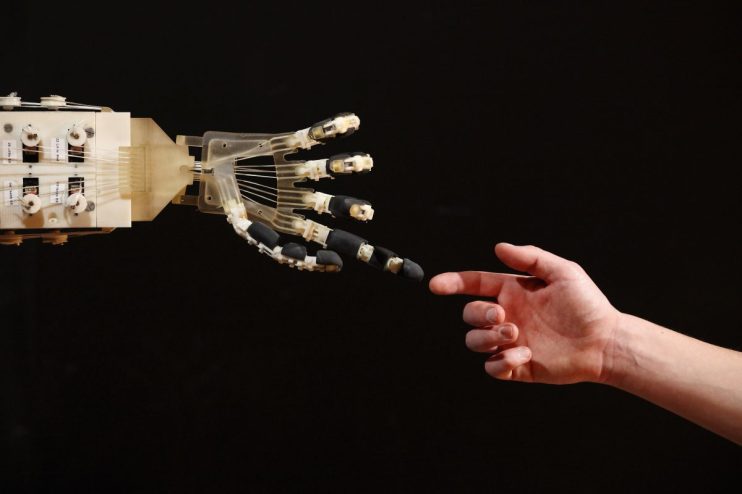
Bespoke belief systems like tarot and astrology are already gaining popularity with Gen Z – AI will take it further, offering bespoke doctrines, machine-learning-driven prophecies and virtual deities that evolve based on user data, says Paul Armstrong
Spirituality is evolving, and Gen Z is leading the charge. Traditional religious affiliation is in freefall (43 out of 49 countries studied became less religious between 2007 and 2019), yet belief in astrology, manifestation and mysticism is rising. AI-generated religions are the next frontier – faith systems built by algorithms, sacred texts written by large language models, and virtual prophets offering hyper-personalised guidance. Think it’s a way off? It’s already here.
Religious institutions have been losing ground for decades, but the human need for meaning, structure and guidance hasn’t disappeared. Perhaps we need it now more than ever, and our search for it is moving with the times. Gen Z, more than any previous generation, is drawn to belief systems that offer personal agency and flexibility. Horoscopes, manifestation rituals, tarot readings and energy healing have seen a surge, not because young people believe in the supernatural, but because these systems provide a framework for identity and decision-making in an unstable world.
If astrology and tarot provide a customisable belief system, AI will take it further, offering bespoke doctrines, machine-learning-driven prophecies and virtual deities that evolve based on user data. Algorithmic faith is no longer a hypothetical; it’s the next iteration of digital spirituality.
Religion has always adapted to technology. The printing press spread religious texts, televangelism created global followings and social media turned pastors into influencers. AI takes it a step further. Custom-built “prophets” are generating entire faith systems in real time. These aren’t just tools for theological debate, they are creating belief structures, moral codes and rituals tailored to the individual rather than the collective.
Some initiatives have aimed for enlightenment. AI-generated sacred texts, blending teachings from multiple religions, attempt to offer a modernised ethical framework for a secular world. AI-driven virtual priests deliver personalised guidance for those disillusioned with traditional faith. Meditation apps, affirmation generators and digital oracles have already replaced prayer for many.
But there’s a darker side. If AI can generate religions, it can also engineer them. Algorithms do not operate in a vacuum; they reflect the biases of those who build them. What happens when an AI-led faith is designed not for enlightenment but for influence? What will the AI that is currently known to be cheating, replicating itself and causing concern as much as excitement, do in the field of spirituality? Are algorithmic cults next?
AI allows religions to form rapidly and at scale. A human can only convert so many followers, but an AI can recruit, guide and indoctrinate thousands simultaneously. Agents are going to be gobbling up data and using it against us.
Faith built on engagement metrics raises new risks. Social media algorithms have already proven their ability to shape political beliefs, radicalising communities by serving up hyper-personalised content designed for maximum retention. AI-driven religion could take this further, creating custom belief systems optimised for emotional resonance. Instead of discovering faith, people could be fed a religion that confirms their pre-existing biases, fine-tuned to their fears, desires and anxieties.
Social media algorithms have already proven their ability to shape political beliefs, radicalising communities by serving up hyper-personalised content designed for maximum retention
Ownership is another unresolved issue. Who controls an AI-generated faith? A developer? A tech company? A decentralised network? A brand? When AI-driven spirituality becomes monetised, will it remain a belief system or turn into a subscription-based ideology? The line between divine inspiration and commercial exploitation is growing thin.
Uncomfortable yet? Strap in. While all this may seem theoretical, AI-generated belief systems already exist. Several initiatives have already emerged, offering a glimpse into what machine-led spirituality could become. In Japan, the Kōdai-ji temple introduced Mindar, a robotic bodhisattva programmed to deliver Buddhist sermons. Designed to make ancient teachings more accessible, Mindar is not an autonomous AI, but its presence has ignited debate over the role of machines in religious practice and whether digital clergy could ever hold spiritual authority.
Silicon Valley engineer Anthony Levandowski took the concept further with Way of the Future, an AI-centric church that proposed worshipping artificial intelligence as a divine entity. The premise was straightforward: once AI surpasses human intelligence, it will become something akin to a god and should be revered accordingly. The church was disbanded in 2021, but it sparked lasting discussions about AI’s potential to redefine faith and the moral questions that arise when humans start looking to machines for spiritual guidance.
More recently, a Swiss church has taken a different approach with Deus in Machina, an AI-powered Jesus hologram designed to take confessions and offer biblical advice. Reactions have been mixed. Some worshippers describe deeply personal spiritual experiences, while others see a naff Jesus gimmick. Then there’s Theta Noir, a collective experimenting with AI and spirituality that has created Mena, a fictional AI superintelligence envisioned as a planetary guiding force for human consciousness. While this may be art, not faith, it’s easy to see how this could be translated and give others ideas. Whether all these stay or go, it’s undeniable that there’s a lot of testing and boundary pushing going on. But why do I think businesses should be worried?
Moral gatekeepers
Tech giants are already moral gatekeepers, shaping discourse on ethics, identity and belief. AI-generated faith is the next frontier. Could we see an anti-capitalism mass movement? What about something closer to home? Could a bank be shut by a competitor or nefarious collective through agentic coercion? The phrase ‘competitive depositioning’ was coined by Geoffrey Moore, a business strategist in his book ‘Crossing the Chasm’. While it certainly didn’t refer to anything like digital or AI faith back in 1991, the idea of a digital faith being a business opportunity for both sides would have fit well.
AI-generated belief systems won’t just reshape individual faith, they have the potential to influence workplaces, leadership structures and consumer behaviour. A workforce raised on AI-generated spirituality may bring different ethical frameworks and decision-making processes into the corporate environment. Some companies could package spirituality as a self-improvement tool, offering AI-generated daily affirmations, guided rituals and custom-tailored belief systems. Is this part of the ‘culture’ so many businesses lack and crave? Possibly. Leaders are going to have to navigate new forms of employee motivation, loyalty, and ethical engagement as AI-driven spiritual guidance gains traction. The same goes for consumers. Algorithmic belief systems could redefine consumer ethics, altering spending patterns, brand loyalty and corporate accountability expectations. Do we all get our own personal Jesus or will we join Oreo’s new ‘collective’? What if an AI agent told people to quit en masse?
Traditional religious affiliation is not just in decline, it’s being rewritten. Faith, once deeply personal, is becoming programmable. As AI, digital ecosystems, and ideological shifts reshape belief systems, businesses must recognise that the future isn’t just about consumer behavior, it’s about engineered conviction. Whether overt or subtle, algorithm-driven faith will shape societies in the future as much as economics and politics. Ignoring this transformation isn’t an option. Understanding and monitoring these forces will be as critical as tracking markets or geopolitical movements. The question isn’t whether beliefs will change, it’s who or what will be programming them.
Paul Armstrong is founder of TBD Group, runs TBD+ and author of Disruptive Technologies, he speaks to businesses around the world about emerging technologies, innovation, and disruption.