How Alex Salmond is ignoring the real risks of Scottish independence

WHETHER it is best for Ukraine to split, or the UK to join the emerging Single European State, or Catalonia to leave Spain, or Scotland to leave the UK are not fundamentally economic questions. Rather, they are bound up with constitutional issues, issues of identity, and the question of with whom one wants to share a future.
For Scotland to leave the UK would, in my view, be a catastrophe both for the values that Britain – that great fused project of the English and Scottish Crowns – has developed and projected around the world these past 300 years, and for Scotland itself – the great flourishing of which, in philosophy and finance and invention and economic theory in the eighteenth century, and then in military adventure and colonialism in the nineteenth century, occurred as part of Britain.
But although economic considerations are not decisive for the question of whether Scotland should become independent, they are relevant.
If Scotland leaves the UK, two things immediately follow. First, it will not participate in UK economic institutions. Second, it will not automatically be part of the EU.
Whenever a sub-division of a larger country or some member of a trade agreement proposes breaking away, it is always told “you are too small to survive in today’s world”. That is no more true of Scotland than it is of anywhere else. Scotland has many businesses – in electronics, agriculture, financial services, mining, and luxury foods, to name but five – that would compete strongly at international level if Scotland were independent. And even if it had none, it would find some.
However, just because a small country could operate happily enough by itself does not mean it would be economically well-advised to do so. Furthermore, one should not underestimate the transitional costs an economy choosing to go it alone might experience.
Scotland will not have a currency union with the rest of the UK. The Scottish National Party (SNP) claims that when Cameron and Miliband and Clegg and Osborne and Balls and Alexander say there will be no currency union they are bluffing. If the SNP really believes that, they are fools. Much of the British political establishment has spent nearly 20 years, in respect of the euro, arguing that a currency union cannot work without political union. There was no chance whatever of its reversing that position once Scotland came into the picture.
Even if English politicians were willing to compromise, the SNP appears not to grasp this difficult truth: English voters do not want Scotland to leave and, if it were to do so, would be mortally offended. Alex Salmond merrily claims that Scotland would be England’s best pal in the world after independence. I can assure him that the feeling would not be mutual. In the unlikely event that Scotland were to vote for independence, English voters would be incandescent. Their view would be that the Scots had voted for independence precisely and mainly because they hated the English. Their attitude to any suggestions of political accommodation would be: “If, after all we’ve been through together, you hate us that much that you’re off, then be gone!” No English politician could stand against the rage that would follow.
Scotland might eventually find a friend in the European Union. But it would have to sign up for all the details of the Single European State to have any chance of getting in. There would be no Scottish rebate like the UK rebate. Instead, Scots voting for independence will be voting to pay money towards the residual UK rebate. (Scandalously, some Scots appear to have been told that Scotland would get a higher rebate than at present. No chance.) Scotland would have to join the Schengen Area and the euro. Perhaps there would be some special arrangement at the English border, but perhaps not. Some 2m UK citizens regularly crossing that border might be held up in future.
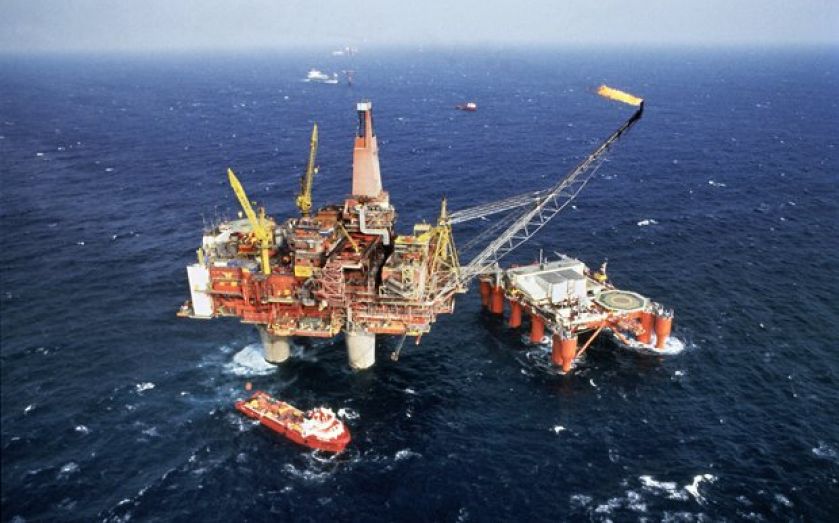
What of Scotland’s oil and gas? For a short time that might provide some buffer. But there would be no Norwegian-style sovereign wealth fund, as the SNP still implies. Instead, there would be a race to extract what they could before fracking in England (which would be accelerated by Scottish independence, to provide energy security) and elsewhere drove down oil and gas prices to a level that made the North Sea uneconomic.
None of this need be a disaster. Britain is a fantastic constitutional and cultural project. Scotland should stay in it. But if they leave, Scots should do so understanding the economic challenges. The independence debate doesn't appear to properly reflect these yet.
Andrew Lilico is chairman of Europe Economics.