Almost no one is happy with Brexit, but stronger EU ties will be in inches not miles

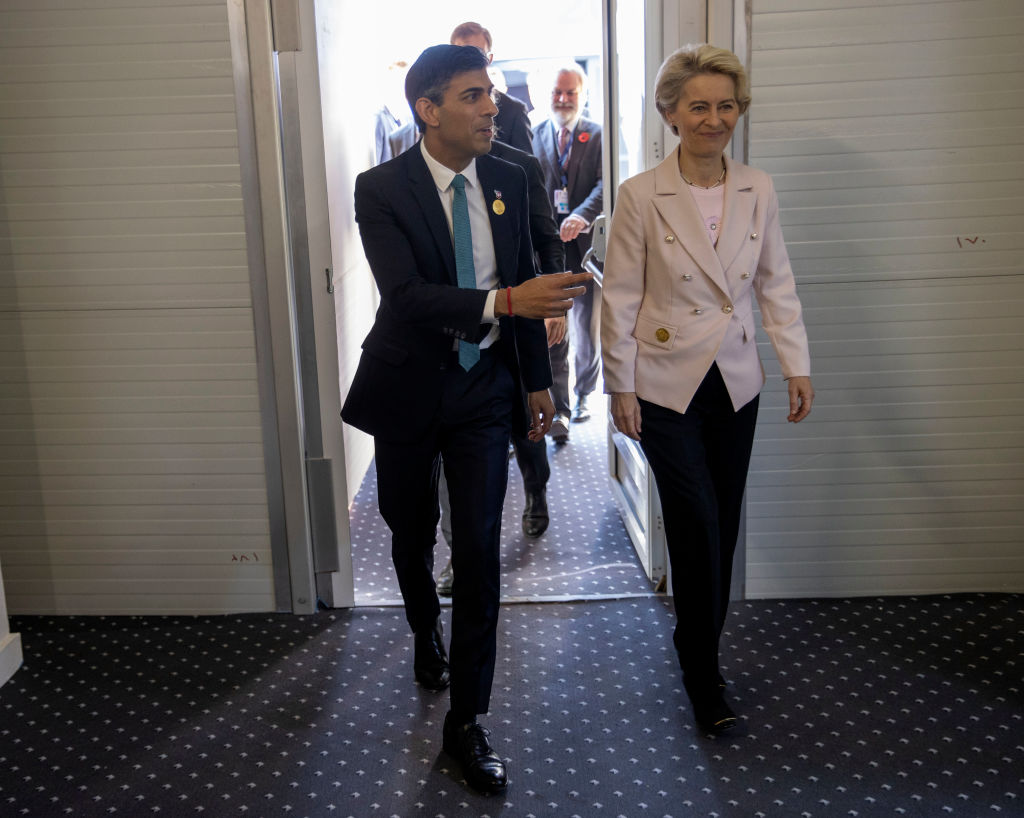
A Swiss-style relationship with the EU post-Brexit is not on the table. The government must find a smart way forward focusing on the key areas where strong cooperation is most needed, writes Joel Reland. The report, by UK in a Changing Europe, is out today.
One of the many curiosities of Brexit is voters on both sides are increasingly unhappy with the state of the UK-EU trade agreement. Yet neither Rishi Sunak or Keir Starmer plan to do much about it.
On some polls, more than half of voters would now choose to rejoin the EU in a hypothetical referendum, and there is also popular support for a closer relationship, for example via alignment on EU food and goods standards to improve trade and a return to freedom of movement.
Yet this “Swiss-style” relationship with the EU, which is code for a cherry-picked agreement, remains politically infeasible both in Westminster and Brussels. It is also far from clear the trading bloc itself wants change to the new status quo. After all, the trade and cooperation agreement provides for tariff-free trade in goods (where the EU has a surplus with the UK) but is more restrictive on trade in services (where the EU has a deficit).
The EU is hostile to any semblance of agreement which would allow the UK to pick the best bits of membership to the bloc, without the countervailing responsibilities.
Indeed, the EU dislikes its relationship with Switzerland, based on a “patchwork” of individual agreements, and is actively trying to reform it. If it were hashing out a deal with Geneva today, it is unlikely it would look similar to its current form.
In other words, the trade agreement, withdrawal agreement, and Northern Ireland Protocol are likely to govern UK-EU relations for the medium term at least.
Any change will be incremental – not radical – and any government which is serious about improving relations will need to focus on quick fixes before longer-term evolution.
In the short term, there are various deadlines and decisions which need to be managed in conjunction with the EU. There is not very much to be gained here, but there are potentially major costs if issues are poorly handled.
The EU “adequacy” decision which allows a free exchange of personal data between the UK and EU expires in 2025. Should the EU not opt to renew it, it could cost UK businesses billions in additional administration, and the simple way for the UK to ensure renewal is not to diverge from the EU’s GDPR regulation.
From 2024, an increased proportion of electric vehicle parts must originate from the UK or EU to continue qualifying for tariff-free trade under the trade deal, yet manufacturers on both sides fear they lack the resources to meet this demand. It is in both London and Brussels’s interest to find an agreement on this, as the US ramps up subsidies for its own home-grown climate friendly firms, including electric cars and batteries, and poses a real threat to the automotive industry across the Atlantic.
Fish took up a great deal of the Brexit rhetoric. In 2026, the agreement governing how many fish European trawlers can catch will have to be renegotiated. And, as a tension point in UK-EU relations, it could spark a tit-for-tat if Britain tries to increase its catch share. Energy cooperation provisions, due to expire at the same time, could be dragged into fresh fishing wars.
These examples are illustrative – there are several more one could point to – of what is at stake if the UK and EU fail to cooperate on upcoming challenges. But finding common ways through these snags, it could help restore a base of trust which has been largely absent since 2016. Both sides might finally consider how cooperation could be enhanced.
In practice, that would mean not a new trade agreement, but deepening the existing provisions, such as the EU allowing the UK into its Horizon Europe research programme. The bloc could also unfreeze cooperation on digital policy, where the UK and EU have similar ambitions to regulate big tech. Looking at where it is in everyone’s interests to have stronger relations as well as building up trust between the two, will form the foundation of a modern relationship with Europe.