Analysis: What do Starmer’s reforms actually mean – and can they work?

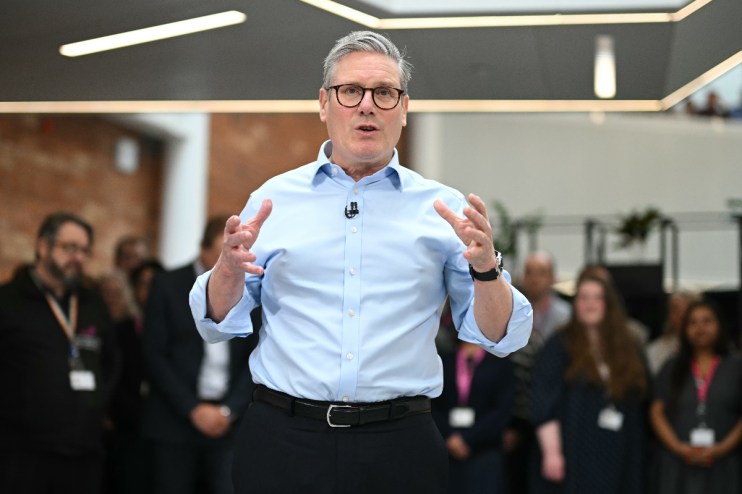
Sir Keir Starmer has announced his reform plans to make the British state more “innovative and effective”.
The Prime Minister unveiled a series of new measures on Thursday, including the headline abolition of NHS England – the arms-length body which runs the NHS in England.
But Sir Keir also spoke about his broader ambitions to reduce the number and power of so-called quangos, which he dubbed a “cottage industry of checkers and blockers slowing down delivery for working people”, including delaying the building of new homes and infrastructure projects.
He also wants to continue his government’s bid for regulatory reform, to increase the use of digital in departments, and slash compliance costs for businesses by 25 per cent.
What do these reforms mean?
One thing the Prime Minister’s speech again confirmed was that since entering government Labour have found it harder than expected to wield the levers of power.
Despite distancing himself from Elon Musk-like ‘Project Chainsaw’ rhetoric, Starmer argued “parts of the state see their job as blocking the government from doing the very things it was elected to do”. He wants his ministers to have responsibility – and be more accountable – over decision-making.
The PM has set out specific targets for the civil service modernisation he wants to see – including for one in 10 civil servants working in a digital or data role by 2030, and 2,000 new digital apprentices by the same date – but is yet to produce a clear plan to make it happen.
As the Institute for Government (IfG) noted, Starmer referenced his aim of making “government a positive force in people’s lives”, citing his belief in “an active state”.
But – if Starmer succeeds in delivering the reforms he wants – it’s worth remembering that under any democratic returning more power to your own side, also means leaving it in the hands of your opponents – whether they return or ascend to office.
What’s the reaction been?
Starmer’s move to clampdown on quangos and the growing bureaucracy of Whitehall has been welcomed in many quarters.
The IfG called his tone “striking and largely welcome”, while Joe Hill, policy director at think tank Reform, praised the PM’s observation that the state has become “bigger, but weaker”.
However, Hill stressed while “taking back control of unaccountable public bodies is a vital step in taking back the levers of power,” he emphasised that “reforming Whitehall means making tough choices, and cashing in AI savings means getting rid of people.
“Ultimately, achieving the PM’s vision means fundamental reform of the civil service model itself – cutting headcount, firing poor performers and securing and rewarding talent.”
But unions have also been quick to highlight the role of their members working within the civil service.
Fran Heathcote, general secretary at PCS, the civil service’s biggest union, noted: “Labour says it is fixing the state so that it works for working people. Civil servants are working people, so this plan must also work for them.”
She added: “The government needs to ensure their interests are taken into account by providing them with job security and good pay and conditions.”
Meanwhile, the Conservatives stressed that despite their support for “measures to streamline NHS management and the principle of taking direct control”, Labour now had “nowhere to hide or anyone else to blame on NHS performance”.
Shadow cabinet minister Alex Burghart also observed “the government clearly has no plans to reduce the bloated civil service or to address the fact that the size of the state will reach 44 per cent of GDP on their watch”.
Can they actually work?
The million dollar question, of course, is whether these plans can, or will, be put into effect.
Some specific items can be measured, in terms of new digital roles and a shift towards embracing artificial intelligence (AI) efficiencies – as some ministers are already grappling with.
While businesses, and industry groups, will be keeping a close eye on Starmer’s “new target” to “make sure compliance costs for businesses are cut by a quarter”. He insisted that would mean “less red tape, more delivery, renewing our country with growth”.
But, as the Prime Minister himself admitted, “some people are going to say ‘good luck’, we’ve heard all this before”.
His argument that the reason this is different hinged on the “chaos” and “ideology” he laid at the feet of the previous government, as well as the Westminster tendency to dodge difficult or potentially unpopular decisions, in a slow dismantling of “democratic accountability”.
His “line in the sand” – the scrapping of NHS England – was a starting point, not an end, to the “difficult decisions” yet to come. As IfG chief Dr Hannah White puts it “he believes he has no alternative”.
And there’s certain to be plenty of those ahead.