Analysis: Why dismay over the Astrazeneca vaccine is misplaced

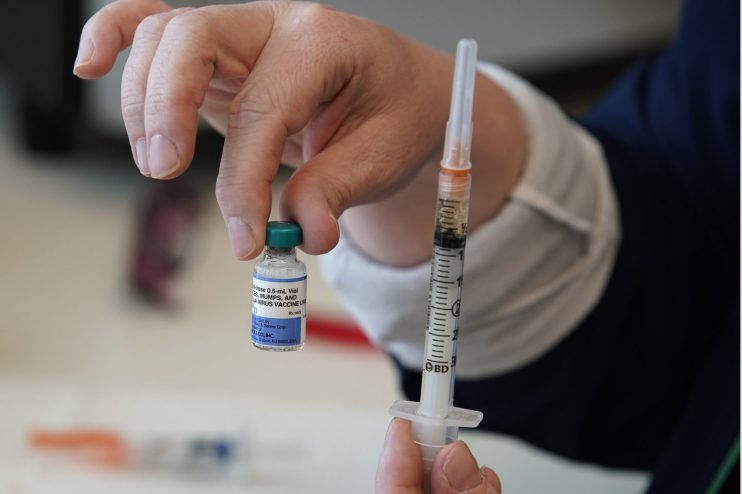
Astrazeneca and the University of Oxford’s announcement this morning that their coronavirus vaccine proved 70 per cent effective in late-stage trials would have been bombastic three weeks ago.
Alas, timing is everything — and in that time the world has seen a new US President, dozens of national lockdowns and two other (more) successful vaccine announcements from Pfizer and Moderna.
Astrazeneca shares have lingered in the red since market open, hovering around four per cent down at 7,985p — a far cry from Pfizer’s eight per cent share price catapult that sent ripples across international markets a fortnight ago.
But while Astrazeneca’s stocks may be blushing, government officials have refused to join them in the red. Matt Hancock this morning led the charge in welcoming the “fantastic news”, with the UK’s top medical advisers swiftly following suit.
Here’s why:
Cut above the average
Firstly, the 70 per cent efficacy figure is an average. In large-scale trials of more than 20,000 people in the UK and Brazil, 131 people became infected by the disease.
However, effectiveness rose to 90 per cent in a group of volunteers who were given an initial half dose followed by a full dose one month later.
That means Astrazeneca will likely focus on the latter method going forward, meaning the vaccine effectively has a 90 per cent efficacy rate.
Professor Sarah Gilbert, a University of Oxford scientist who led the research, said at a press conference this morning that more research was needed to work out why the half dose appeared to prime the body to respond better.
“It could be that by giving a small amount of the vaccine to start with and following up with a big amount, that’s a better way of kicking the biggest and most effective immune system response,” she said.
Methodological differences
Astrazeneca executives were quick to point out that there were also significant methodological differences between their results and those of Pfizer and Moderna, which cast the Oxford drug in an unfairly dim light.
Astrazeneca tested asymptomatic patients as symptomatic patients, while both Pfizer and Moderna only tested patients showing symptoms.
And in a groundbreaking development, the efficacy rate of the Astrazeneca-Oxford drug among asymptomatic patients showed signs that the vaccine could reduce overall transmission and set the UK on the right path for herd immunity.
Professor Andrew Pollard, director of the Oxford Vaccine Group and chief investigator of the trial, told BBC Radio 4’s Today programme: “There is a suggestion that it was also able to reduce asymptomatic infection. If that is right, we might be able to halt the virus in its tracks and stop transmitting between people.”

Logistics
According to market analysts, the most important bonus of the Astrazeneca vaccine lies in its logistical advantages.
“It is hugely significant from a logistics point of view that storage can be achieved at a normal refrigeration temperature of around minus three degrees,” said Michael Hewson, chief market analyst at CMC Markets.
That compares to the minus 70 degree Celsius “thermal shippers” required to store and transport the Pfizer vaccine, and minus 20 temperatures required for Moderna’s.
The difference lies in the genetic make-up of the different vaccine types. Both Pfizer and Moderna’s are based on novel messenger RNA technology, while Astrazeneca’s is made from a weakened version of a common cold virus that’s genetically changed to make it unable to grow in humans.
“This makes it much more scalable and as such easier to deliver on a global scale. While more testing is likely to be required on this vaccine candidate the early results are encouraging, and from a scalable point of view makes it much easier to deliver to a much wider demographic,” Hewson added.
Money, money, money
Lastly, the Astrazeneca-Oxford University vaccine is much cheaper than the other two.
Astrazeneca has pledged it will not make a profit on the vaccine during the pandemic, and has reached agreements with governments and international health organisations to sell the drug at a price tag of between $4 and $5, depending on local charges.
That paves the way for a feasible exit from the coronavirus crisis for developing countries, at a time when the world’s wealthiest countries have gobbled up pre-orders of vaccine supplies.
Pfizer’s vaccine, meanwhile, costs about $20 a dose, and Moderna’s comes with a price tag of around $15 to $25.
What next?
Oxford researchers and Astrazeneca today stressed that they are not in competition with other projects, and that a portfolio of multiple vaccines will be needed to stamp out the pandemic across the globe.
“We’re not thinking about vaccinations working in terms of one person at a time. We have to think about vaccinating communities, populations, reducing transmission within those populations, so that we really get on top of this pandemic,″ said Gilbert.
Either way, the drug joins the roster of coronavirus vaccines awaiting safety trials for wide-scale rollout.
Scientists will now closely scrutinise the preliminary results, with unresolved issues hinging around dosage, how long protection will last, and how easily the vaccine can be deployed across international borders.
Chief medical officer Professor Chris Whitty will this evening lead a press conference on the drug, after the health secretary last week vouched that the NHS would be ready to roll out a potential vaccine by Christmas.