Andrew Bailey’s confusion over inflation is a worrisome precedent for policy-making

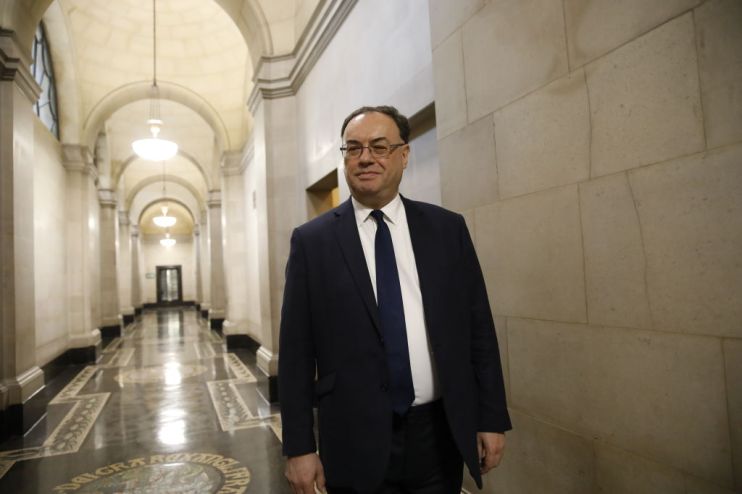
The Bank of England’s Monetary Policy Committee (MPC) will meet again next week to assess inflation. In the last two years the Bank’s inflation forecast has proven systematically wrong, showing a fundamental error in the models and rationale used. In a conference hosted by the Austrian national central bank last month, the Governor of the Bank of England insisted that the policy responses of the MPC to Covid-19 have nothing to do with the current crippling inflation in the UK. His statement is particularly significant as CPI year-on-year inflation rose to 9 per cent in April.
The Governor Andrew Bailey attributes inflation predominantly to external shocks, such as the pandemic and the war in Ukraine. His words betray an inaccurate diagnosis of the causes of inflation which may be followed by more ill-informed policy decisions.
Strikingly, Bailey didn’t even mention the policy decisions made by the Bank of England in 2020 and 2021. These resulted in an extraordinary increase in the amount of money broadly defined. This is measured by the Bank’s M4 monetary aggregate, which includes cash in circulation and the bulk of bank deposits. The Bank initiated an extraordinary asset purchase programme: the amount of money rose at an annual rate of 10-15 per cent in several quarters of 2020 and 2021.
Should we assume that according to Bailey, the rapid increase in the amount of money is totally irrelevant? If so, how high would the rate of growth of money have to reach before it became a matter of concern?
The Governor also seems to confuse the ultimate causes of inflation with its symptoms. In his statement, he mentioned the rising energy, goods and food prices. “This is by far the main cause of high inflation, and is painful, particularly for those less well off”, he said. But the rise in inflation – of the general price level – is not explained by the rise in some relative prices. Other things being equal, only when there is an increase in the amount of money broadly defined will there be an increase in inflation. The amount of money in the UK surged in 2020 and continued to grow at extraordinary rates up to the first few months of 2021. When the demand for money started to revert to pre-crisis levels following the lifting of lockdown, we saw a dramatic increase in nominal spending that, coupled up with some supply shortages, led to an inflationary cycle which started to be noticeable during the second half of 2021.
In sum, inflation is principally the result of monetary expansion in 2020 and 2021. Since March 2020, all economies have been affected by the effects of the pandemic and yet it is precisely those economies where the excess in monetary growth has been greater which have seen the most pronounced accelerations of inflation.
For example, in 2020 and 2021 the central banks in Japan and Switzerland did not ease monetary policy dramatically. The annual rate of broad money growth never rose above 8.2 per cent in Japan and only briefly touched 7 per cent in Switzerland, in contrast to the double-digit growth rates seen in the USA, the UK and the Eurozone. Consequently, the rate of inflation has remained quite moderate. Prices rose in Switzerland by only 2.4 per cent in the year to April 2022, while Japanese inflation stood at 2.5 per cent over the same period.
Central banks must understand the effects of monetary growth over the medium and long term if we want to avoid another unnecessary inflationary boom in the future – or a return to boom and bust cycles. The Bank of England must learn this lesson.