Andy Burnham should start by scrapping the £100k tax trap

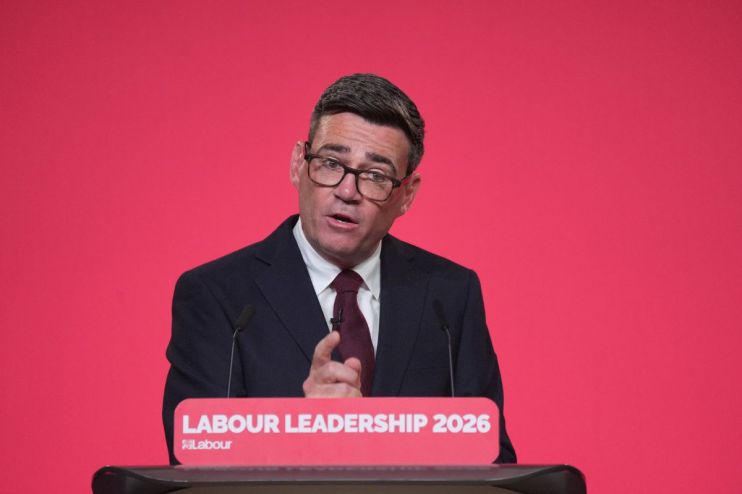
Cutting taxes is expensive, but there is a way Andy Burnham could make them simpler and fairer, says Helen Thomas
Andy Burnham’s first interview as Labour’s presumptive Prime Minister contained a somewhat unlikely observation. Speaking to the Sunday Times, he said one issue repeatedly raised on the doorstep was the frozen £12,570 personal allowance. It is difficult to imagine many voters in Makerfield quoting the income tax threshold from memory. What they were almost certainly telling him was something much simpler and felt across the country: they feel overtaxed.
After years of frozen tax thresholds, millions of workers are paying more tax despite no headline increase in income tax rates. Fiscal drag has quietly become one of the biggest tax rises in modern British history, leaving many people feeling poorer even as their wages have risen.
If Labour wants to show it understands that squeeze, lifting the personal allowance would be one obvious response. It would deliver an immediate tax cut to basic-rate taxpayers and partially reverse years of fiscal drag. It would also be easy to explain politically.
The problem, as ever, is the bill. Increasing the personal allowance by £1,000 would cost roughly £10bn annually, according to the HMRC ready reckoner. At a time when public finances remain tight and demands on government spending continue to grow, finding that sort of money is no small task.
Burnham has already hinted where he believes some of it could come from. In his recent interview with Gary Lineker, he acknowledged he “might be having to ask for a little more”. Those with the broadest shoulders who are already broadly paying more might wonder where this little bit might come from.
The UK’s income tax system already contains one of the strangest features in the developed world. Introduced during George Osborne’s time as Chancellor, the personal allowance begins to disappear once income exceeds £100,000, before vanishing altogether at around £125,140. The policy allowed successive governments to advertise generous increases in the personal allowance while quietly clawing much of it back from higher earners.
The result is a marginal income tax rate of 60 per cent over that income band once the withdrawal of the allowance is taken into account.
Economists have criticised the arrangement for years. It creates a cliff edge that encourages tax planning, salary sacrifice and reduced working hours. Doctors have turned down extra shifts, professionals have deferred bonuses, and employers have devised increasingly elaborate remuneration packages to help staff avoid the trap. Whatever one’s view on redistribution, very few people defend the taper itself as elegant tax policy.
Removing it would improve the structure of the tax system. The difficulty is that abolishing the taper would itself cost several billion pounds.
That is where more fundamental reform becomes interesting.
Imagine increasing the personal allowance for everyone, abolishing the £100,000 taper entirely, but paying for much of the package by lowering the threshold for the 45p additional rate from its current level to around £90,000. Alongside that, reintroduce a new 50p rate on incomes above £150,000.
Such a package could potentially come close to fiscal neutrality, depending on where the thresholds were ultimately set and how taxpayers responded. Behavioural effects would inevitably reduce the theoretical yield, but they already do under the current system.
Hidden complexity
More importantly, it would replace today’s hidden complexity with something people can actually understand. Instead of facing an obscure 60 per cent marginal rate buried within the tax code, higher earners would simply pay higher published rates. Taxpayers would know exactly where they stood, incentives would become clearer and tax would become more transparent.
Politically, the arithmetic is also attractive. Around 95 per cent of taxpayers earn below £90,000. They would receive a tax cut through the higher personal allowance. Only a relatively small minority would begin paying more, while the very highest earners would contribute the most through a restored 50p band.
That creates a straightforward political message: most people pay less tax, the system becomes simpler, and those with the highest incomes contribute more.
Of course, none of this is without drawbacks.
Higher top rates risk discouraging investment, entrepreneurship and additional work, particularly among internationally mobile professionals. Britain’s tax burden is already at its highest sustained level for decades, and another increase at the top would reinforce the principle that whenever governments need more money, higher earners should provide it. Many would argue that this is both economically inefficient and politically short-sighted, particularly if additional public spending fails to deliver noticeably better public services.
Nor should anyone pretend that tax reform alone solves Britain’s fiscal challenges. As the OBR, IMF and OECD have lined up recently to point out, the pressures from healthcare, pensions and defence are structural and growing. Raising one allowance while tweaking a handful of thresholds does not alter that reality.
Yet compared with the system we have today, there is at least an intellectual coherence to such an approach. It would eliminate one of the tax code’s most widely criticised distortions. It would reverse some of the effects of fiscal drag for ordinary workers and it would do so in a way that is relatively straightforward to explain.
That may ultimately be the biggest opportunity for Burnham. Tax reform rarely wins elections because most proposals descend into bewildering discussions of thresholds, tapers and marginal rates. But voters do understand fairness and simplicity. And they certainly understand if they end up with more money from their pay packet each month.
If Burnham genuinely wants to persuade the country that Labour can ease that burden, he could do worse than begin by replacing one of Britain’s most convoluted tax quirks with a system that is both simpler and more honest.
Helen Thomas is founder and CEO of BlondeMoney