
Are auto companies preparing their workforce for a more digital future?
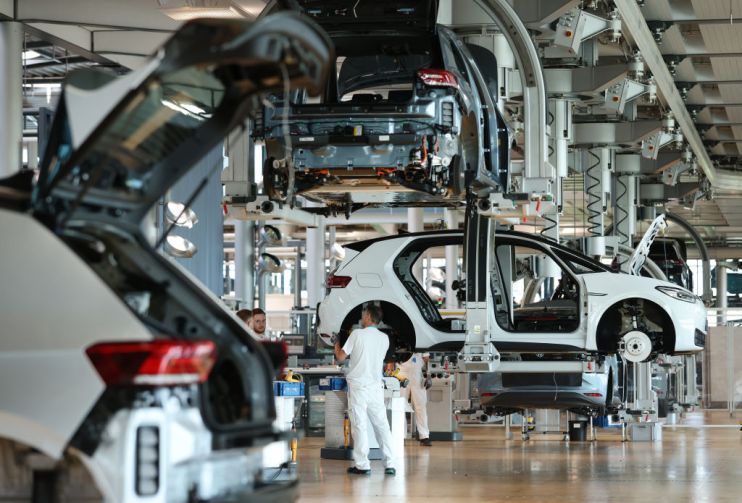
As climate change ambition ramps up across the world, emissions reduction targets in the autos sector will likely be forced to tighten further. Numerous countries – including Norway, France, the UK, Sweden, Ireland and the Netherlands – have already announced internal combustion engine (ICE) vehicle phaseouts between 2025-2040.
Companies must pursue low and zero-carbon alternatives or risk hefty fines. Their ability to meet this challenge depends critically on their ability to innovate and execute.
At the same time, technological advancements continue to transform the industry. Production processes are increasingly automated, autonomous driving technology is growing in sophistication, and consumer expectations around the digital experience of vehicles continue to increase.
The implications of the green and digital transformation on the workforce are profound and will impact on everything from workforce structure to training and hiring practices.
Discover more from Schroders:
– Are we now on the road to net-zero?
– What investors can learn from Bill Gates’ climate warning
– Why the going is about to get tougher for investing in climate change
Yet the challenge is complex. Shifting business models will require strong training programmes that enable original engine manufacturers (OEMs) and suppliers to redeploy existing staff into new areas. Autos companies must also now compete with tech companies for IT talent, forcing them to rethink their brand and attempting to appeal to a new type of employee.
We spoke to nine global OEMs and suppliers to assess how they are equipping their workforce to thrive in the coming digital and electric age. Below we highlight five key insights gained from our conversations.
- Companies taking a reactive approach to electrification risk finding themselves at a skills disadvantage in the future. A company’s training offering in electrification offers a good proxy for its level of commitment to the electrification agenda. Companies that believe electric vehicle (EV) uptake will be slow, driven by subsidies and emissions regulations, are more oriented toward hybrid vehicle production rather than developing dedicated production lines in EVs. Their training offer reflects this. This may place them at a skills disadvantage in the future as the industry decarbonises further.
- As a heavily unionised industry, companies will need to make use of natural retirement to reduce the size of their workforce. It is estimated that electric vehicles require at least 20-30% less manpower to produce. EV production also requires a different skillset. This effect will be amplified by increasing levels of automation in production processes. At the same time, high levels of unionisation make it difficult for companies to reduce the size of their workforce. Companies can make use of natural retirement and early retirement schemes, but this can only address part of the challenge – all companies must recognise the need to create flexible workforces to be able to redeploy existing employees into new roles.
- Developing effective training programmes requires sophisticated workforce planning that identifies gaps and potential in existing employees. Ensuring that the right people are given access to training programmes is crucial to success – as is ensuring that training and recruitment strategies address current and future business needs. Understanding the systems and processes that companies have in place to manage skills demand and identifying appropriate candidates are key pieces of the puzzle.
- High-level statistics on training hours can be misleading. High-level training statistics cover everything from human resource (HR) to compliance training hours. While such training is no doubt important for the day-to-day functioning of a company, it does little to equip employees with the skills needed to thrive in changing environments. It is important to drill down into in-depth training programmes and try to get a sense of the scale of these programmes.
- Companies face stiff competition from new sectors and need to be innovative in their approaches to recruitment, particularly in attracting young people and tech talent. Developing strong apprenticeships, internships and relationships with universities is important for attracting young people. Innovative strategies such as re-branding and revamping working styles are needed to appeal to tech talent. Ensuring overall employee satisfaction is also more important than ever in this highly competitive environment.
Assessing the sophistication of a company’s training and recruitment strategy is complex. High level statistics only paint part of the picture, and companies are reticent to divulge too much information given the competitive sensitivity of these topics.
While this makes it difficult to draw direct investment conclusions, insights gained from these conversations can help us to better understand companies’ preparedness for the transition. This is applicable to all industries that face transition risk.
– For more visit Schroders insights and follow Schroders on twitter.
Topics:
Important Information: This communication is marketing material. The views and opinions contained herein are those of the author(s) on this page, and may not necessarily represent views expressed or reflected in other Schroders communications, strategies or funds. This material is intended to be for information purposes only and is not intended as promotional material in any respect. The material is not intended as an offer or solicitation for the purchase or sale of any financial instrument. It is not intended to provide and should not be relied on for accounting, legal or tax advice, or investment recommendations. Reliance should not be placed on the views and information in this document when taking individual investment and/or strategic decisions. Past performance is not a reliable indicator of future results. The value of an investment can go down as well as up and is not guaranteed. All investments involve risks including the risk of possible loss of principal. Information herein is believed to be reliable but Schroders does not warrant its completeness or accuracy. Some information quoted was obtained from external sources we consider to be reliable. No responsibility can be accepted for errors of fact obtained from third parties, and this data may change with market conditions. This does not exclude any duty or liability that Schroders has to its customers under any regulatory system. Regions/ sectors shown for illustrative purposes only and should not be viewed as a recommendation to buy/sell. The opinions in this material include some forecasted views. We believe we are basing our expectations and beliefs on reasonable assumptions within the bounds of what we currently know. However, there is no guarantee than any forecasts or opinions will be realised. These views and opinions may change. To the extent that you are in North America, this content is issued by Schroder Investment Management North America Inc., an indirect wholly owned subsidiary of Schroders plc and SEC registered adviser providing asset management products and services to clients in the US and Canada. For all other users, this content is issued by Schroder Investment Management Limited, 1 London Wall Place, London EC2Y 5AU. Registered No. 1893220 England. Authorised and regulated by the Financial Conduct Authority.