Skip to content
Friday 21 August 2026London --:--Frankfurt --:--Zurich --:--
NewslettersSearchEN · DE · FR
MorningWire

European business, markets and politics

FTSE 100
10,768.83
+0.19%
DAX
26,071.95
+0.34%
CAC 40
8,465.76
+0.15%
STOXX 50
6,444.99
+0.36%
  • Europe
  • Markets
  • Business
  • Economy
  • Regulation
  • Politics
  • Opinion
More
GermanyFranceEU InstitutionsCompetitionPublic AffairsBankingTechnologyEnergy
  • Germany
  • France
  • Europe
  • Markets
  • Business
  • Economy
  • Regulation
  • Politics
  • Opinion
  • DE
Wednesday 13 July 2022 5:44 pm

‘Did you hear that?’ Astronomers stunned by strange but persistent ‘heartbeat’ from far-off galaxy

By: Michiel Willems

Add as a preferred source on Google

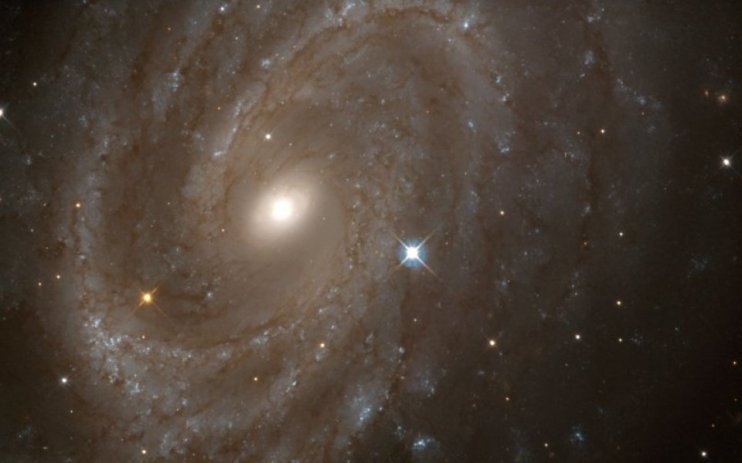
A strange and persistent radio signal from a far-off galaxy that appears to be flashing in a pattern similar to a heartbeat has been detected by astronomers.

It has been classified as a fast radio burst (FRB) – an intensely strong burst of radio waves of unknown astrophysical origin that typically lasts for a few milliseconds at most.

But this new signal lasts for up to three seconds, which researchers say is about 1,000 times longer than the average FRB.

The team detected bursts of radio waves that repeat every 0.2 seconds within this window, in a clear periodic pattern.

Daniele Michilli, a postdoc at the Massachusetts Institute of Technology (MIT) Kavli Institute for Astrophysics and Space Research, said: “There are not many things in the universe that emit strictly periodic signals.

“Examples that we know of in our own galaxy are radio pulsars and magnetars, which rotate and produce a beamed emission similar to a lighthouse.”

Daniele Michilli, a postdoc at the Massachusetts Institute of Technology (MIT)

“And we think this new signal could be a magnetar or pulsar on steroids.”

Called FRB 20191221A, the signal is currently the longest-lasting FRB, with the clearest periodic pattern, detected to date.

Its source lies in a distant galaxy, several billion light-years from Earth.

However, exactly what that source might be remains a mystery, though astronomers suspect the signal could emanate from either a radio pulsar or a magnetar.

Read more

Even Claude says AI watermarking is no ‘silver bullet’

Claude AI interface showcasing advanced features in a business setting

These are both types of neutron stars – extremely dense, rapidly spinning collapsed cores of giant stars.

The team hopes to detect more periodic signals from this source, which could then be used as an astrophysical clock.

For instance, the frequency of the bursts, and how they change as the source moves away from Earth, could be used to measure the rate at which the universe is expanding.

In December 2019, the Canadian Hydrogen Intensity Mapping Experiment (Chime) picked up a signal of a potential FRB, which immediately drew the attention of Mr Michilli, who was scanning the incoming data.

He said: “It was unusual.

“Not only was it very long, lasting about three seconds, but there were periodic peaks that were remarkably precise, emitting every fraction of a second – boom, boom, boom – like a heartbeat.

“This is the first time the signal itself is periodic.”

The discovery reported in the journal Nature is authored by members of the Chime/FRB Collaboration, including MIT researchers.

Read more

Leo Cancer Care Raises $65M Series D to Scale Its Integrated Upright Cancer Care Platform

Share this article

  • Facebook
  • X
  • LinkedIn
  • WhatsApp
  • Email

Similarly tagged content:

Sections

  • News

Categories

  • Business

Related Topics

  • Aerospace
  • Space tourism

Trending Articles

  • House prices in wealthy London boroughs fall by up to £300,000

  • As it happened: Miners fuel FTSE 100 recovery; oil jumps as Trump claims Strait of Hormuz

  • City law firm sues prominent Emirati business family

  • Amanda Blanc has worked her magic at Aviva

  • As it happened: FTSE 100 rallies after JD Sports drags on blue chips; oil jumps again

More from Morning Wire

  • Even Claude says AI watermarking is no ‘silver bullet’

    AI
    Claude AI interface showcasing advanced features in a business setting
  • Leo Cancer Care Raises $65M Series D to Scale Its Integrated Upright Cancer Care Platform

    Business Wire
  • Has The Odyssey made the classics cool now?

    Life&Style
    Christopher Nolan directing a scene from his film The Odyssey, highlighting the modern revival of ancient Greek classics.
  • ‘Phenomenal waste of time’: Burnham slammed over plans to dismantle tech department

    Tech
    Andy Burnham speaking at a press conference, expressing confidence despite challenges, highlighting leadership and resilie...
  • Bank of England may set the stage for interest rate hikes this year

    Economics
    Bank of England recession warning
  • The seven growth tests every Budget must pass

    Opinion
    Chancellor holding iconic red budget box outside Downing Street, symbolizing UKs annual budget announcement
  • Burnham accused of gutting tech department’s ‘biggest strength’

    Tech
    Andy Burnham, Mayor of Greater Manchester, smiling in glasses, dark jacket, light blue shirt, blurred green background.
  • How patient can the Bank of England be?

    AD
    Historic Royal Exchange building in London with modern skyscrapers behind, clear blue sky.
MorningWire

Independent European business, markets and political news for decision-makers.

Morning Briefing

Europe

  • Germany
  • France
  • EU Institutions
  • Europe

Business

  • Markets
  • Business
  • Economy
  • Regulation
  • Competition
  • Public Affairs

Editorial

  • Opinion
  • Editorial Policy
  • Corrections
  • Contact

Company

  • About Morning Wire
  • Privacy Policy
  • Terms of Use
  • Cookie Policy
© 2026 Morning Wire Ltd · Published by Morning Wire Media, Bahnhofstrasse 65, 8001 Zürich, Switzerland
Privacy · Terms · Cookies · Facebook