As banks refuse to pass on interest rates, they lose customers’ faith
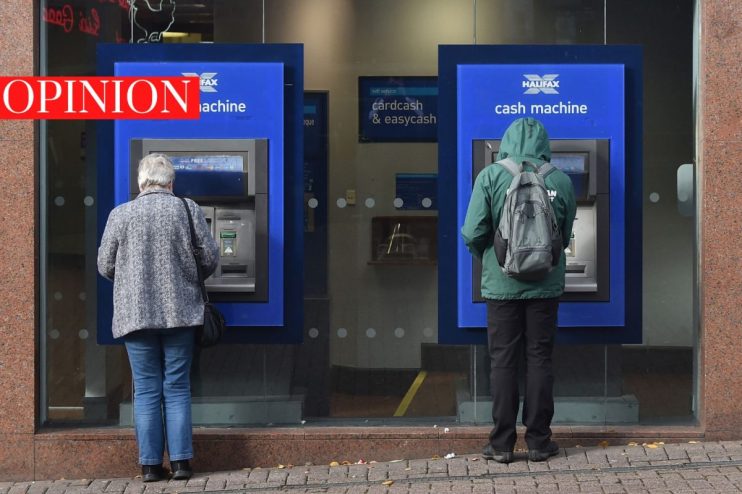
As banks refuse to pass on interest rates, their customers are deserting them, writes Victor Trokoudes.
Something interesting is happening in the world of savings right now. And it’s closely linked to people’s evolving perception of banks.
You can track this change in perception over the past 15 years, though for me there are two particular moments that led to my own epiphany about the traditional banking sector.
The first was during my second week at Morgan Stanley in September 2008. Lehman Brothers, a trusted American financial institution with a track record spanning 158 years, had just collapsed. In the following days, it felt like the entire banking system would go the same way. It was clear some banks had mismanaged people’s deposits, with devastating consequences.
Fast forward to 2012 and there was a new seismic shock, this time in my home country of Cyprus, where our second biggest bank, Laiki, was wiped out. Shocking numbers of deposits were lost and billions disappeared overnight. Lives were ruined due to bad decisions made by banks.
Now in 2023, we see a new financial norm. Persistent high inflation has pressured central banks into a programme of interest rate increases. For many people, and especially anyone under 35, this is the first time in their adult lives that they’ve seen it.
A 15-year high in base rates will increase mortgage costs and put pressure on budgets, but there’s also an opportunity here for savers. Billions of pounds of cash languishing in bank accounts, earning next to no interest. Even with the Bank of England base rate now towering at 5.25 per cent, high-street banks have been slow to raise their rates. In the UK, the situation is so bad that the FCA has issued a plan to try and ensure banks make better savings rate deals available.
These are the same banks that were bailed out with taxpayer money during the last financial crisis. And whilst they may claim to support their customers with cost of living struggles, you’re unlikely to find that banks increase their rates to anything near the base rate.
Instead, banks want to maximise the difference between the rate they lend at and their cost of deposits in order to grow their interest margin. They’re effectively incentivised to pay the lowest possible rate to their depositors to maximise profits. With shorter-term yields higher than longer-term yields, that incentive is even stronger.
This is off-putting for savers, and part of the reason why so much money sits in current accounts earning virtually no interest at all. Recent turbulence in the banking sector, particularly among US retail banks in early 2023, has shown how fragile even some banks can be. This means more people are keen to diversify their savings between different providers for security.
As a result, savers are looking beyond the traditional banking system for ways to safely and effectively secure higher returns. This can help mitigate the effects of inflation, which can erode the spending power of their savings. Over the longer-term, this could be a major, much-needed shake-up in the financial industry, where banks can’t take customers for granted.
For example, money market funds (MMFs) pool cash from various investors and invest in short-term, low-risk securities. These stable funds can offer competitive returns, closely following the base rate set by the central bank. Savers are provided with a stable and reliable income stream in the short term and can easily move their money if anything changes.
As interest rates rose, savers in the US were particularly quick to jump on the trend. The average yield for retail MMFs was equivalent to 86 per cent of the Fed’s base rate, compared to just 26 per cent for retail cash deposits at banks (according to Liberty Street Economics). And now we’re seeing this replicated in the UK too.
Accessing these types of investments would not have been easy (or particularly cost-effective) for the average person the last time interest rates were so high. But today, with fintechs making this accessible at our fingertips, we can all take advantage.
Does this mean the end of traditional saving accounts? Unlikely. But it does feel like the era of blind faith in the basic offering from banks is over.