Skip to content
Monday 10 August 2026London --:--Frankfurt --:--Zurich --:--
NewslettersSearchEN · DE
MorningWire

European business, markets and politics

FTSE 100
10,860.10
-0.38%
DAX
26,378.57
+0.22%
CAC 40
8,719.83
+0.06%
STOXX 50
6,548.79
+0.38%
  • Europe
  • Markets
  • Business
  • Economy
  • Technology
  • Politics
  • Opinion
More
GermanyFranceBankingAIEnergyFintechPropertyCapital Markets
  • Germany
  • France
  • Europe
  • Markets
  • Business
  • Economy
  • Technology
  • Politics
  • Opinion
  • DE
Tuesday 11 June 2024 10:45 am  |  Updated:  Tuesday 11 June 2024 10:46 am

August interest rate cut not a ‘slam dunk’ after ambiguous labour market data

By: Chris Dorrell

Add as a preferred source on Google
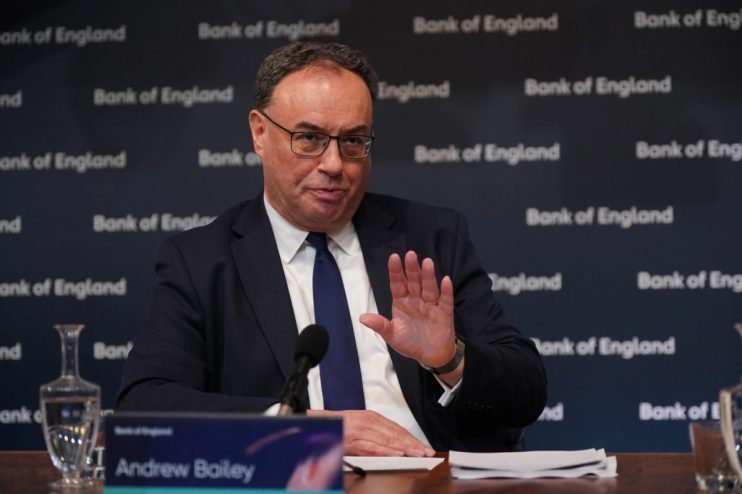
Governor of the Bank of England, Andrew Bailey
The Bank of England's Andrew Bailey is set to back holding interest rates.

The latest labour market figures are a study in ambiguity, giving no clear signs to the Bank of England on when interest rates should be cut.

There’s clear signs that the labour market is loosening.

Unemployment has increased for four consecutive months, rising from 3.8 per cent at the end of 2023 to 4.4 per cent at the moment.

That means unemployment is at its highest level since September 2021 and an extra 190,000 people are out of a job.

It also means the unemployment rate is just a touch below the Bank of England’s estimate of the natural rate of unemployment, the level of unemployment at which inflation does not increase.

Other measures also show that the labour market is cooling. Vacancies have fallen for 23 out of the past 24 months.

The fall in vacancies and the rise in unemployment means that the vacancy-to-unemployment ratio, a measure of labour market tightness, is now below the pre-Covid level.
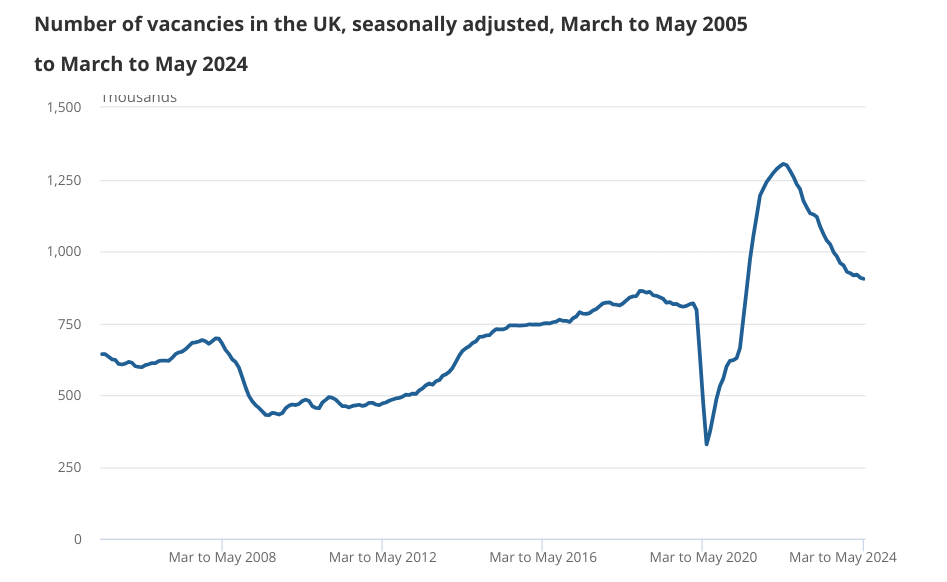
Source: ONS

In other words, its clear that sluggish economic activity – caused in part by higher interest rates – is having a meaningful impact on the labour market.

“The labour market is gradually easing,” Rob Wood, chief UK economist Pantheon Macroeconomics said.

Read more

Mahmood called for banker bonus tax to fix youth unemployment 

Shabana Mahmood wearing a stylish black jacket, embodying professional elegance in a business setting

And yet this is not translating into lower wage growth. Regular pay growth remained at 6.0 per cent between February and April. Including bonuses, pay was stuck at 5.9 per cent, unchanged after last month’s figures were revised up.

This is, by now, a familiar pattern: wage growth remains stubbornly high even though there are signs that the labour market is weakening.

Policymakers at the Bank of England will want to see more compelling movements on wage growth before starting to bring interest rates down.

However, there are some more encouraging signs on wage growth (at least as far as the Bank of England is concerned) if you look underneath the hood. Regular pay growth in the private sector, which the Bank cares more about than the overall figure, cooled to 5.8 per cent from 5.9 per cent.

The overall figures were also kept artificially high by April’s near 10 per cent increase in the minimum wage.

About half of the monthly increase in pay was likely a result of the minimum wage increase. Neil Carberry, chief executive of the Recruitment and Employment Confederation (REC), described the pay data as “noisy”.

Once the impact of the minimum wage hike has filtered through, then wages should start to trend downwards more reliably. This means an August rate cut is certainly still on the cards, even if June is firmly off the table.

As ever it depends on how the data comes in. Pantheon’s Wood pointed out that it would be “unusual” to cut rates while pay growth was so strong. An August cut is not a “slam dunk,” he said.

Ruth Gregory, deputy chief UK economist was more hopeful. “The stickiness of wage growth may not stop the Bank from cutting interest rates for the first time in August…as long as other indicators such as pay settlements data and next week’s CPI inflation release show decent progress”.

Read more

Burnham premiership begins with decline in job postings

Andy Burnham, Mayor of Greater Manchester, in a professional setting.

Share this article

  • Facebook
  • X
  • LinkedIn
  • WhatsApp
  • Email

Similarly tagged content:

Sections

  • Markets & Economics

Categories

  • Economics

People & Organisations

  • Bank of England
  • UK inflation
  • UK Interest Rates
  • wages

Related Topics

  • Bank of England
  • UK inflation
  • UK interest rates
  • UK jobs
  • UK jobs, employment and wages

Trending Articles

  • Back to basics: Sainsbury’s gradual retreat from the British high street

  • Thames Water faces fresh threat to survival after pensions regulation breach

  • Hargreaves Lansdown orders staff back to office

  • FTSE 100 Live: Stocks drop as US-Iran peace stalls; Oil climbs higher

  • PwC’s Embankment HQ to get major makeover ahead of Canary Wharf move

More from Morning Wire

  • Mahmood called for banker bonus tax to fix youth unemployment 

    Banking
    Shabana Mahmood wearing a stylish black jacket, embodying professional elegance in a business setting
  • Burnham premiership begins with decline in job postings

    Economics
    Andy Burnham, Mayor of Greater Manchester, in a professional setting.
  • Bank of England governor opens door to ‘simplifying’ financial rulebook

    Regulation
    Bank of England Governor Andrew Bailey said cited several indicators that the labour market was softening.
  • Hold interest rates but ‘sound hawkish’, Morning Wire Shadow MPC tells Bank of England

    Economics
    Andrew Bailey, Governor of the Bank of England, with the Bank of England building and Union Jack flag in the background
  • Bank of England to hold interest rates as oil price surge threatens UK economy

    Economics
    Bank of England building on Threadneedle Street, London, showcasing its historic architecture and financial significance
  • IMF warns Bank of England against cutting interest rates

    Economics
    IMF Chief Kristalina Georgieva issues caution to Bank of England amid economic concerns
  • Exclusive: Jobs lost across Labour’s ‘growth potential’ sectors in blow to Burnham

    Politics
    Jonathan Reynolds, Labour MP, in a suit and tie, holding a notebook, looking right, with a building behind him
  • 22 months of cuts: Jobs crisis deepens despite growth boost 

    Economics
    London has defied national trends as job postings in the capital rose.
MorningWire

Independent European business, markets and political news for decision-makers.

Morning Briefing

Europe

  • Germany
  • France
  • Europe
  • UK & Ireland

Business

  • Markets
  • Banking
  • Technology
  • Energy
  • Property
  • Fintech

Editorial

  • Opinion
  • Editorial Policy
  • Corrections
  • Contact

Company

  • About Morning Wire
  • Privacy Policy
  • Terms of Use
  • Cookie Policy
© 2026 Morning Wire Ltd · Published by Morning Wire Media, Bahnhofstrasse 65, 8001 Zürich, Switzerland
Privacy · Terms · Cookies · Facebook