Australia’s blocking of Qatar airways is a parable in anti-competitive intervention

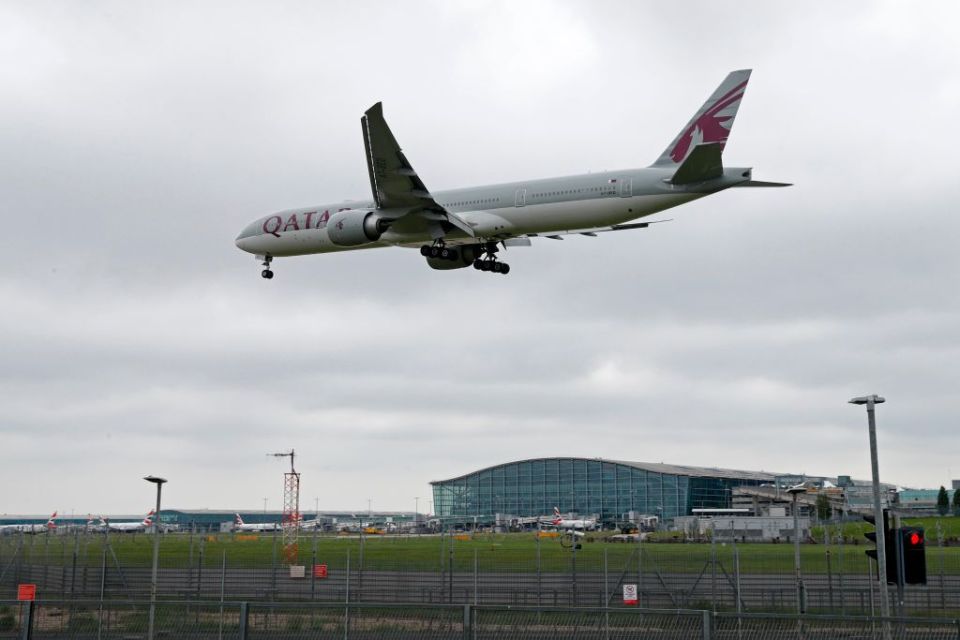
With such strong demand for travel to Australia, extra Qatar airways flights would mean more competition and a dent in Qantas’ record profits – something the Australian government wants to block, writes Matthew Lesh.
The cost of flights between Europe and Australia has skyrocketed this year. Australians seeking some sun over winter and Brits booking to see family and friends over Christmas are aghast at eye-watering fares.
Flights are over 60 per cent more expensive than pre-pandemic. It now costs around £1,500 for a return flight in economy. The immediate cause for these airfares is inescapable – with strong post-pandemic demand, and plane and pilot shortages limiting supply, high prices are inevitable.
In this context, the Australian Labor Government’s decision to reject Qatar Airways’ application for an additional 21 weekly flights to Australia has raised quite a few eyebrows. The government claimed it would be against the “national interest”. They haven’t provided any specific reasoning.
These flights would have meant cheaper airfares and hundreds of thousands more people visiting Australia, contributing over AU$500m (£253m) per year to the national economy. Travel agents, opposition politicians, state leaders, and tourism bodies have all raised concerns about the decision.
It’s particularly disparaging considering Qatar Airways – unlike most other airlines – continued operating commercial flights throughout the pandemic, providing a key link for freight and people during an excruciatingly difficult time.
Of course, Qatar is no saint of an airline. They are a state-run and subsidised enterprise. There is speculation that the Australian government’s decision was retaliation for Qatari authorities intimately examining Australian women in 2020.
The women were dragged from a Qatar flight at gunpoint, forced to remove their underwear and some had gynaecological examinations. Qatari officials ultimately apologised for this grotesque behaviour, while a security official was later charged and given a prison sentence.
Crucially, there also appears to have been an effective lobbying campaign against the expansion. Australia’s national carrier, Qantas, objected to Qatar’s application on the basis that it could lead to the loss of Australian jobs.
But considering the strong demand for air travel into Australia, it seems more likely it would have simply meant more competition and a dent in Qantas’ record profits. An industry source told The Guardian Australia that “the refusal of additional air rights is essentially a free kick to Qantas, who are profitable but aren’t expanding much right now … so this holds their competition back too”.
Brits have benefited from the immense power of competition in European aviation over recent decades. European Union rules requiring all member countries to open their airspace to flights from EU airlines enabled the development of low-cost carriers. This has meant millions more people are able to travel, with far more options at lower costs than imaginable in the past.
Australians don’t benefit from such arrangements. Governments have repeatedly opted to limit the number of flights coming into Australia and domestic airlines allowed to operate, making travel unnecessarily expensive. In another anticompetitive twist, Qantas has a partnership with Emirates that allows them to operate as a single carrier, further dampening competitive pressures. The two together make up 52 per cent of all flights between the UK and Australia.
Lack of aviation competition damages the economy – in particular, by limiting tourism and reducing opportunities to build business links. But it also means fewer Aussies can experience the world or visit family. There is a very real human cost to these policies.
Markets only function effectively when there are minimal barriers to entry so that when prices start increasing, more players can enter the market. There have always been high fixed costs in aviation that make this more difficult than other industries – there are never likely to be hundreds of airlines vying for passengers. But more than anything else, it has been the choice of governments to limit competition.
One prime example is the allocation of landing and take-off slots at congested airports. These were given away at zero cost many years ago, on a practically indefinite basis, to legacy carriers.
IAG — the parent company behind British Airways — controls more than half the slots at Heathrow. This limits the likes of Virgin from effectively competing. It has also led to weird anomalies, like airlines running empty ‘ghost’ flights to maintain their slots (they have to be used 80 per cent of the time or are lost). This phenomenon, which was repeated during Covid, is hardly good for the environment, and the U.K. has the opportunity to diverge from these rules post-Brexit.
In the 1960s, influential historian Geoffrey Blainey wrote about how the “tyranny of distance” has shaped Australian society. Perhaps a little more competition in aviation could help alleviate at least some of this tyranny.