Bank of England avoids interest rate cut as Mark Carney bows out

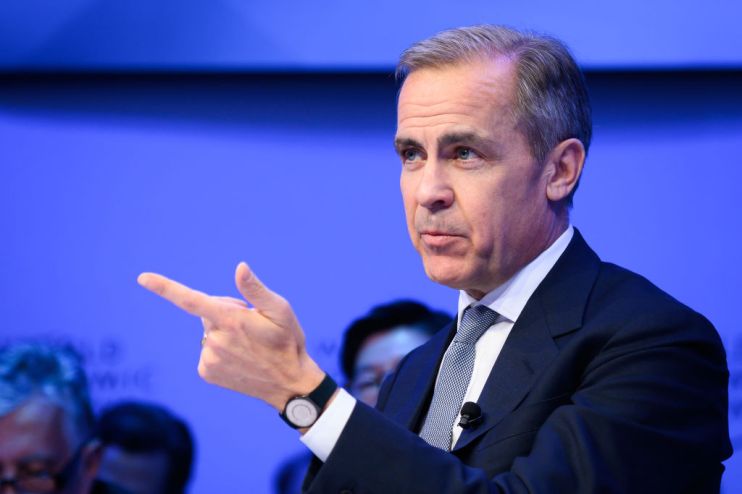
The Bank of England has held off from an interest rate cut despite a surge in expectations that it would reduce rates for the first time in four years.
Today’s decision came even as the Bank slashed its long-term growth forecasts for the UK economy to account for Brexit disruption and Britain’s productivity crisis.
Read more: City economists urge Mark Carney to opt against interest rate cut
Sterling extended gains to stand 0.6 per cent up against the dollar at $1.3095 after the decision.
In Mark Carney’s last rates decision as Bank governor, the monetary policy committee (MPC) voted 7-2 to keep the main rate at 0.75 per cent.
Going into the meeting, traders reckoned there was a 45 per cent chance of an interest rate cut.
The Bank said that “a further decline in Brexit uncertainties and the government’s announced spending measures” would support short-term growth, reducing the case for lowering rates.
It also said: “The most recent indicators suggest that global growth has stabilised, reflecting the partial easing of trade tensions.”
However, the Bank slashed its longer-term growth predictions in its report into the health of the economy. The move reflected Britain’s adjustment to life outside the EU and the long-running productivity crisis catching up with GDP.
Carney warns of UK economic slowdown
Threadneedle Street now thinks the economy will grow just 0.75 per cent in 2020, down from an initial estimate of 1.25 per cent. And the Bank foresees 1.5 per cent growth in 2021, down from 1.75 per cent.
Britain officially leaves the EU tomorrow at 11pm, but will keep its current trading arrangements until the end of 2020. The Bank said that at the end of this year, as the UK exits the single market, there will be disruption to the economy from higher trade tariffs.
It expects growth to pick-up to 1.75 per cent in 2022, although this is lower than a previous two per cent estimate.
Britain’s lost decade of growth in productivity – output per hour worked – will also dent long-term growth, the BoE said.
Productivity is vital to the continued expansion of the economy, but has increased at just 0.5 per cent on average since the financial crisis, compared to a pre-crisis trend of 2.5 per cent.
The Bank said interest rate policy in the short term “may need to reinforce the expected recovery of UK GDP growth, should the more positive signals from recent indicators… not be sustained”.
Read more: Brexit Day celebrations: How the UK is marking 31 January
External members Jonathan Haskel and Michael Saunders voted for an interest rate cut again.
Every other member voted to hold. That is despite recent dovish comments from Carney and committee members Gertjan Vlieghe, Silvana Tenreyro.
Carney will leave his post in March after seven years at the helm, to be replaced by Financial Conduct Authority (FCA) chief Andrew Bailey.
The Treasury said it would like to express its appreciation of “Mark Carney’s contribution to monetary policy and his wider stewardship of the Bank of England”.
Bank ‘correct’ to hold off on interest rate cut
John Hawksworth, chief economist at PwC, called today’s vote against an interest rate cut a “sensible” one.
“More data is needed to see if the economy has indeed enjoyed a sustainable ‘Boris bounce’ since the election,” he added.
Read more: UK house prices enjoy two per cent ‘Boris bounce’ to start 2020 on a high
“Most recent business and consumer surveys do show a pick-up in confidence and the housing market also seems to have perked up in January. But we don’t yet have any official data confirming an upturn in actual consumer spending or business investment.
“There are also many global uncertainties to consider, including the extent of the further spread and economic impact of the new coronavirus.”
Yael Selfin, chief economist at KPMG, added that holding rates was “a wise move”.
“With recent months characterised with unusual volatility, it is hard to read the full strength of the economy,” she said.
“Moreover, the continued uncertainty until a trade agreement with the EU is agreed means businesses are likely to remain reluctant to invest. A cut in rates now may therefore not stimulate the economy much, while leave the MPC with even less fire power for later when it could be more effective.”
Read more: UK inflation falls to its lowest level in three years in December
The UK posted a low inflation rate for December, but Selfin said this was more likely to be a temporary blip than reflecting low prices.
Meanwhile Boris Johnson’s government is likely to unveil a spending Budget on 11 March, she added.
“[Therefore] the MPC will be right to worry about rising inflationary pressures to come. But savers will need to wait for a long time before the committee considers rate rises again.”
Economy must prove Bank decision right
Kay Daniel Neufeld, head of macroeconomics, at Cebr, also praised the decision.
“However, whether or not the improvement in sentiment will carry over into hard economic data will depend on the government identifying economically sensible initiatives to boost growth,” he argued.
Businesses must also start spending on investment and the world economy surviving 2020 without any major shocks, Neufeld warned.
Read more: The world’s biggest banks are pushing for £4bn in post-Brexit tax cuts
The Share Centre’s investment analyst, Joe Healey, believes the Bank is ready to slash rates if it needs to.
“On the other hand, if the momentum was to continue, I believe the focus will tilt to more of a hawkish outlook towards the end of the year particularly if inflation does start to pick up,” he added.
“The bounce-back in PMI activity alongside the increased confidence of manufacturers post-election as indicated by the CBI survey, to me indicates an economy which is picking itself back up. I’m not ruling out a rate cut in 2020 but I think with growth set to accelerate this year and positive early signs, holding some firepower back is the best decision for the longer-term.”