Skip to content
Friday 21 August 2026London --:--Frankfurt --:--Zurich --:--
NewslettersSearchEN · DE · FR
MorningWire

European business, markets and politics

FTSE 100
10,748.16
+0.04%
DAX
25,983.04
0.00%
CAC 40
8,453.09
0.00%
STOXX 50
6,422.06
0.00%
  • Europe
  • Markets
  • Business
  • Economy
  • Regulation
  • Politics
  • Opinion
More
GermanyFranceEU InstitutionsCompetitionPublic AffairsBankingTechnologyEnergy
  • Germany
  • France
  • Europe
  • Markets
  • Business
  • Economy
  • Regulation
  • Politics
  • Opinion
  • DE
Monday 17 July 2023 6:00 am  |  Updated:  Monday 17 July 2023 7:08 am

Bank of England interest rate hikes trigger record £2.1 trillion UK wealth collapse, report claims
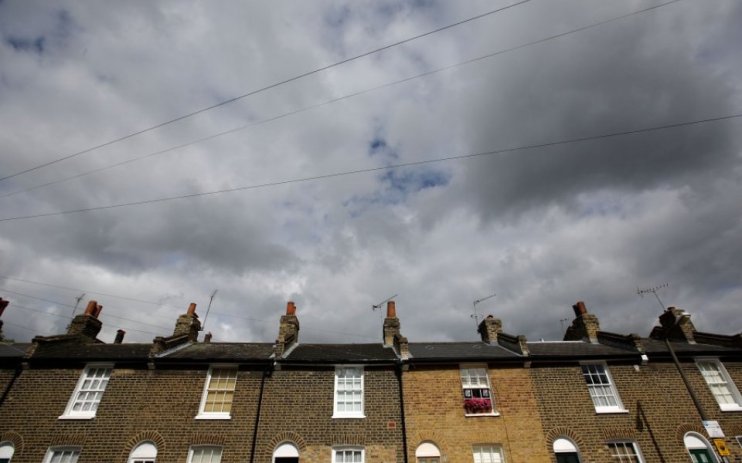
uk house prices
Asset values have collapsed by £2.1 trillion since early 2021, mainly driven by a sharp fall in bond prices in response to UK borrowing costs rising quickly, according to the economic think tank the Resolution Foundation (the Foundation)

The Bank of England has engineered the largest contraction in UK household wealth on record by jacking up interest rates in response to scorching inflation, a new report out today has claimed.

Asset values have collapsed by £2.1 trillion since early 2021, mainly driven by a sharp fall in bond prices in response to UK borrowing costs rising quickly, according to the economic think tank the Resolution Foundation (the Foundation).

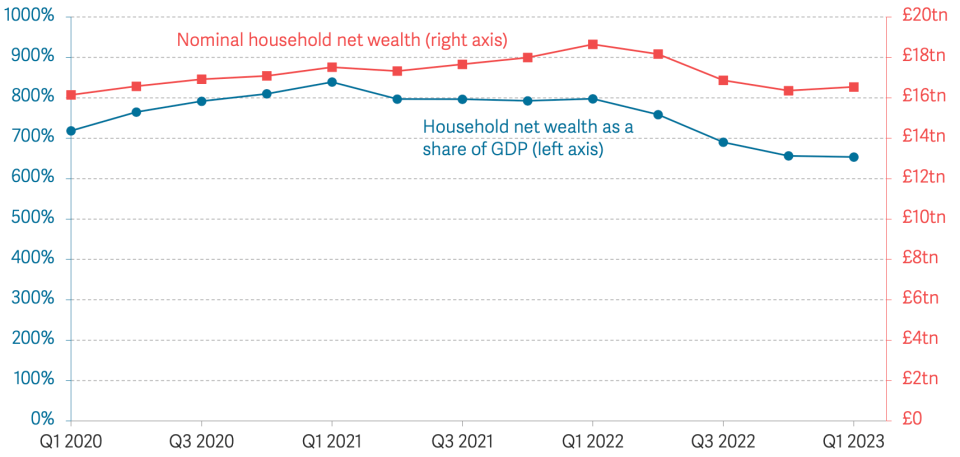
UK household wealth as a share of the economy has plummeted 185 percentage points since the start of 2021, a record drop.

Wealth as a share of the entire economy is now down to 650 per cent, the Foundation said, a huge reversal from the over decade long boom in property, debt and equity values.

In the years after the 2008 financial crisis and amid the teeth of the pandemic before the inflation surge took off, central banks slashed interest rates to rock bottom levels, lighting a fuse under asset prices. That environment lifted UK wealth to a peak of 840 per cent of gross domestic product, or £17.5 trillion.

Household wealth in cash terms and as a share of the UK economy
Source: Resolution Foundation

Those economic dynamics have now reversed, with the Bank of England and monetary authorities globally tightening monetary policy to bring down inflation.

As a result, traders have been selling bonds at much lower prices to account for higher official interest rates. Bond yields and prices move inversely.

“Holders of UK government debt have seen around a 30 per cent loss in the value of their investments since the Bank of England started raising interest rates [in December 2021], and holders of sterling corporate bonds have lost 20 per cent,” the report said.

“House prices have also started to weaken, with inflation-adjusted prices already down by seven per cent from their peak in mid-2022,” the think tank added.

Read more

Andy Burnham is on course to rack up the second highest debt interest bill on record

UK National Debt Clock showing £3 trillion, with Big Ben and the Union Jack in the background.

Ian Mulheirn, research associate at the Foundation, said: “Over the past four decades wealth has soared across Britain, even when wages and incomes have stagnated. But rapid interest-rate rises have ended this boom and brought about the biggest fall in wealth since the war, of £2.1 trillion.”

When central banks raise interest rates, traders have to cut the price of bonds to bring the yield closer to the rate investors could gain elsewhere. House prices also tend to fall due to homeowners having to drop prices to find buyers amid higher mortgage rates.

Bank Governor Andrew Bailey and co have lifted borrowing costs 13 times in a row to a near 15 year high of five per cent. They are expected to hoist them to a peak of 6.25 per cent.

That upward shift has been sparked by inflation bursting to levels not seen in four decades. Tightening financial conditions in theory tackles price rises by making it more expensive to borrow and more attractive to save, sucking demand out of an economy.

Numbers on Wednesday are expected to show UK inflation fell to 8.2 per cent in June from 8.7 per cent in May. It peaked at 11.1 per cent in October.

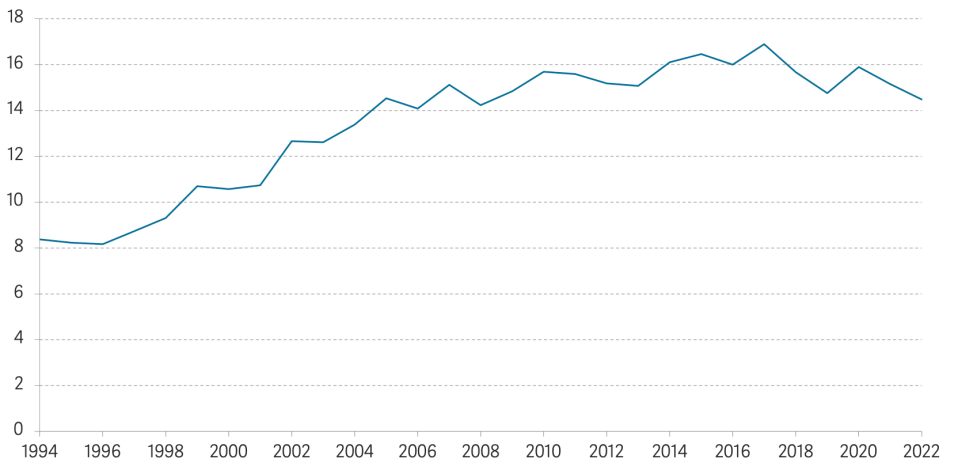
Barriers to getting on to the property ladder could be deconstructed if interest rates stay higher than their post-financial crisis levels.

Number of years required to save for FTB house deposit
Source: Resolution Foundation

Mortgage lenders only provide potential home buyers with a loan if their income is below a certain ratio to house prices. The Foundation said a drop in home prices amid a higher rate environment could bring the price-to-earnings ratio down to 5.6, a level not seen in over 20 years and down from a peak of 8.9 a couple years ago.

Affordability would tighten sharply if central banks revert to a low interest rate regime after inflation is defeated. The report estimated in such a scenario, average house prices would hit £350,000 in current prices, lifting the price-to-earnings ratio to 11. Those condition would amplify wealth inequality between young and old people in the UK.

The Foundation said higher interest rates would make it much easier for younger people to save for retirement by boosting saving rates. In the lower rate pre-pandemic world, a typical worker would have to save £5,000 a year to achieve a decent standard of living after work.Now, that amount is £3,000, “making it easier for younger cohorts to save sufficiently to enjoy decent living standards in old age,” the report noted.

Read more

Revolut founder’s wealth set to balloon amid talks of share award at $500bn valuation

Revolut CEO Nik Storonsky speaking at a business conference, wearing a suit and tie, addressing financial innovation.

Share this article

  • Facebook
  • X
  • LinkedIn
  • WhatsApp
  • Email

Similarly tagged content:

Sections

  • Markets & Economics
  • News

Categories

  • Morning Wire Content
  • Economics
  • Money
  • Property

Related Topics

  • Bank of England
  • UK inflation
  • UK interest rates

Trending Articles

  • House prices in wealthy London boroughs fall by up to £300,000

  • As it happened: Miners fuel FTSE 100 recovery; oil jumps as Trump claims Strait of Hormuz

  • City law firm sues prominent Emirati business family

  • Amanda Blanc has worked her magic at Aviva

  • As it happened: FTSE 100 rallies after JD Sports drags on blue chips; oil jumps again

More from Morning Wire

  • Andy Burnham is on course to rack up the second highest debt interest bill on record

    Opinion
    UK National Debt Clock showing £3 trillion, with Big Ben and the Union Jack in the background.
  • Revolut founder’s wealth set to balloon amid talks of share award at $500bn valuation

    Fintech
    Revolut CEO Nik Storonsky speaking at a business conference, wearing a suit and tie, addressing financial innovation.
  • UK debt ‘hits £3 trillion’ milestone

    Economics
    Houses of Parliament in Westminster showcasing historic architecture under a clear sky, central to UK government and politics
  • Quilter toasts record inflows as financial advice push pays off

    Investing
    Business professionals in formal attire engaged in a lively discussion at a corporate meeting in a modern office setting.
  • Number of British millionaires sinks to lowest level since financial crisis

    Wealth
    Canada skyline with modern skyscrapers under a clear blue sky, showcasing iconic financial district architecture
  • Surely Gary Stevenson is smart enough to know a wealth tax won’t work?

    Opinion
    Gary Stevenson speaking at a Patriotic Millionaires event, addressing wealth inequality and economic reform proposals.
  • We should all get behind this wealth tax

    Opinion
    LONDON, ENGLAND - JUNE 01: A general view of a house along Kensington Palace Gardens, which has been named as Britain's most expensive street on June 1, 2011 in London, England. Many of the mansions are occupied by billionaire businessmen, embassies and ambassadorial residences. (Photo by Oli Scarff/Getty Images)
  • Barclays profit surges as equity traders cash in on volatility

    Banking
    Barclays bank exterior with logo as it announces mortgage rate cuts amidst upcoming interest rate decision.
MorningWire

Independent European business, markets and political news for decision-makers.

Morning Briefing

Europe

  • Germany
  • France
  • EU Institutions
  • Europe

Business

  • Markets
  • Business
  • Economy
  • Regulation
  • Competition
  • Public Affairs

Editorial

  • Opinion
  • Editorial Policy
  • Corrections
  • Contact

Company

  • About Morning Wire
  • Privacy Policy
  • Terms of Use
  • Cookie Policy
© 2026 Morning Wire Ltd · Published by Morning Wire Media, Bahnhofstrasse 65, 8001 Zürich, Switzerland
Privacy · Terms · Cookies · Facebook