Skip to content
Friday 7 August 2026London --:--Frankfurt --:--Zurich --:--
NewslettersSearchEN · DE
MorningWire

European business, markets and politics

FTSE 100
10,934.42
+0.61%
DAX
26,342.66
+0.77%
CAC 40
8,731.38
+0.36%
STOXX 50
6,541.51
+0.60%
  • Europe
  • Markets
  • Business
  • Economy
  • Technology
  • Politics
  • Opinion
More
GermanyFranceBankingAIEnergyFintechPropertyCapital Markets
  • Germany
  • France
  • Europe
  • Markets
  • Business
  • Economy
  • Technology
  • Politics
  • Opinion
  • DE
Wednesday 06 May 2026 5:00 am  |  Updated:  Tuesday 05 May 2026 5:32 pm

Bank of England says quantitative easing programme to cost taxpayer £125bn

By: Ali Lyon

Add as a preferred source on Google
The Bank of England is expected to hold interest rates at four per cent due to stubbornly high inflation.
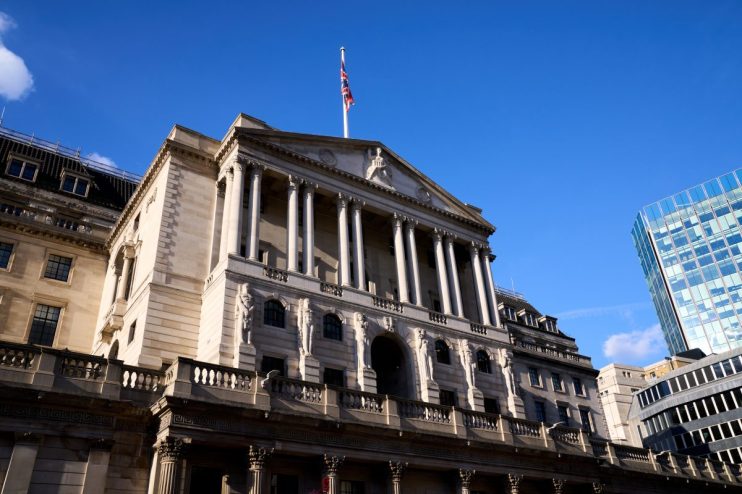
The Bank of England faces a challenge in managing inflation.

The Bank of England’s historic quantitative easing programme is poised to cost the taxpayer £125bn when it is complete, according to updated central bank estimates, prompting calls for the central bank to pause its costly attempt to unwind the policy.

In an update on its ‘asset purchase facility’ – the tool the Bank of England uses to buy and sell bonds – officials raised their forecast for the total cost of QE by £10bn to £125bn, meaning the overall cost of the programme could have funded two years of defence spending.

Under terms agreed by the Bank of England and George Osborne’s Treasury in 2009, the taxpayer is currently responsible for covering losses incurred from the enormous quantitative easing programme launched in the wake of the global financial crisis.

QE – the act of central banks buying up government bonds to push investors into riskier assets – was one of the main tools deployed by Britain’s central bank to revive the UK economy after the crash of 2008. As part of the programme, which lasted until the end of the pandemic, the Bank of England bought some £875bn of UK sovereign coupons, known as gilts, in conjunction with keeping interest rates close to zero for nearly 14 years.

Since 2022, it has been offloading its portfolio of gilts onto the market in a process known as quantitative tightening (QT). But unlike other major central banks, which have agreed to keep losses from the programme on their own balance sheets, the cost of the UK’s QE and QT programmes has been passed on to the Treasury to be ultimately borne by taxpayers.

Bank of England slows QT programme

Last year, the programme cost the Exchequer some £18bn, according to the Office for Budget Responsibility, enough to wipe out the lion’s share of revenue from the fateful employer national insurance contributions hike in the 2024 Autumn Budget.

The costs associated with the policy have spawned a wave of scrutiny from economists and City analysts, who argue the programme’s current framework is piling unnecessary pressure on the UK’s fragile public finances.

Read more

Mexico breaks ranks and dents Uefa-led bid to oust embattled Fifa kingpin Infantino

Gianni Infantino, FIFA President, smiling as golden confetti falls around him

“The large taxpayer losses from the bungled implementation of quantitative easing might now be even larger than the previously expected £22 billion per year,” Carsten Jung, a director at the IPPR think tank, told Morning Wire. “No other major economy imposes such large costs on its taxpayers as a result of monetary policy.”

The Bank of England has also drawn criticism for its decision actively to sell government bonds onto the market, which has made its QT programme even more of an international outlier. Most major central banks have chosen to take a ‘passive’ approach to shrinking their balance sheet, letting their holdings mature without replacing them.

But in a bid to shorten the duration of the programme, the Bank has been selling billions of pounds of bonds a year, stoking fears the glut of supply has been pushing the government’s borrowing costs up even higher. In response to concerns the Bank’s active QT was putting upward pressure bond yields, the Bank’s Monetary Policy voted to slow the pace of bond disposals from £100bn a year to £70bn when it met in September 2025. But rate-setters also opted to raise the amount of active sales – as opposed to passive maturities – from £13bn to £21bn.

Jung added: “Actively selling government bonds is adding unnecessary pressure to the gilt market. It should stop — just as every other major central bank has.”

The Bank of England said in the paper that its initial QE programme had “sustained employment and growth and reduced the tail risks of severe economic downturns”.

“This macroeconomic support was the most significant effect of QE and generated fiscal benefits,” it added.

Read more

Family feud: London estate agent Winkworth sues chair over plot with wife to oust son from board

Winkworth estate agent For Sale sign in front of a brick building, indicating property prices and availability.

Share this article

  • Facebook
  • X
  • LinkedIn
  • WhatsApp
  • Email

Similarly tagged content:

Sections

  • News

Categories

  • Business

Trending Articles

  • Revolut founder’s wealth set to balloon amid talks of share award at $500bn valuation

  • Rupert Lowe axes pensions triple lock and pledges tax cuts in economic plan

  • As it happened: Stocks rise as oil fluctuates after Red Sea attack; US-Iran deal ‘being circulated’

  • Liverpool owners tipped to sell – but not to Amazon boss Bezos – by former CEO

  • WPP slashes jobs as revenue continues to fall

More from Morning Wire

  • Rupert Lowe axes pensions triple lock and pledges tax cuts in economic plan

    Politics
    Rupert Lowe, former Southampton FC chairman, smiles while holding files on a city street, wearing a suit and pink tie
  • Will Britain follow Japan’s great growth gamble?

    Opinion
    Japan Prime Minister Sanae Takaichi speaking at a press conference, highlighting her leadership and political agenda
  • Oil prices return to crisis levels

    Markets
    Close-up of a petrol pump nozzle dispensing fuel at a gas station, highlighting rising fuel costs and economic impact.
  • Kemi Badenoch’s economic revolution could set the City free

    Opinion
    Kemi Badenoch will push to restore the Tories' economic credibility in the eyes of the public in a key speech.
  • Burnham’s plea to City chiefs: let a young person shadow you at work

    Politics
    Andy Burnham, Mayor of Greater Manchester, smiling and wearing glasses outdoors.
  • London Sports Festival’s 3×3 Basketball Court Scores Early Success with Basketball England Takeover

    Partner
    Kids playing basketball at a pop-up court in London, with the Monument to the Great Fire visible.
  • London doesn’t need more social housing, it needs more housing full stop

    Opinion
    Luxurious mansions surrounded by manicured gardens in an upscale residential neighborhood, highlighting opulent housing tr...
  • I’m a 21-year-old grad, why does the government want me to go on the dole to get a job?

    Opinion
    Young man in front of a Jobcentre Plus building, standing on a pedestrian crossing.
MorningWire

Independent European business, markets and political news for decision-makers.

Morning Briefing

Europe

  • Germany
  • France
  • Europe
  • UK & Ireland

Business

  • Markets
  • Banking
  • Technology
  • Energy
  • Property
  • Fintech

Editorial

  • Opinion
  • Editorial Policy
  • Corrections
  • Contact

Company

  • About Morning Wire
  • Privacy Policy
  • Terms of Use
  • Cookie Policy
© 2026 Morning Wire Ltd · Published by Morning Wire Media, Bahnhofstrasse 65, 8001 Zürich, Switzerland
Privacy · Terms · Cookies · Facebook