Skip to content
Monday 17 August 2026London --:--Frankfurt --:--Zurich --:--
NewslettersSearchEN · DE · FR
MorningWire

European business, markets and politics

FTSE 100
10,720.30
-0.28%
DAX
26,338.61
-0.38%
CAC 40
8,579.60
-0.66%
STOXX 50
6,530.45
-0.14%
  • Europe
  • Markets
  • Business
  • Economy
  • Regulation
  • Politics
  • Opinion
More
GermanyFranceEU InstitutionsCompetitionPublic AffairsBankingTechnologyEnergy
  • Germany
  • France
  • Europe
  • Markets
  • Business
  • Economy
  • Regulation
  • Politics
  • Opinion
  • DE
Tuesday 30 April 2024 4:27 pm  |  Updated:  Wednesday 01 May 2024 6:54 am

Bank of England’s bond purchases could cost taxpayers £85bn

By: Chris Dorrell

Add as a preferred source on Google
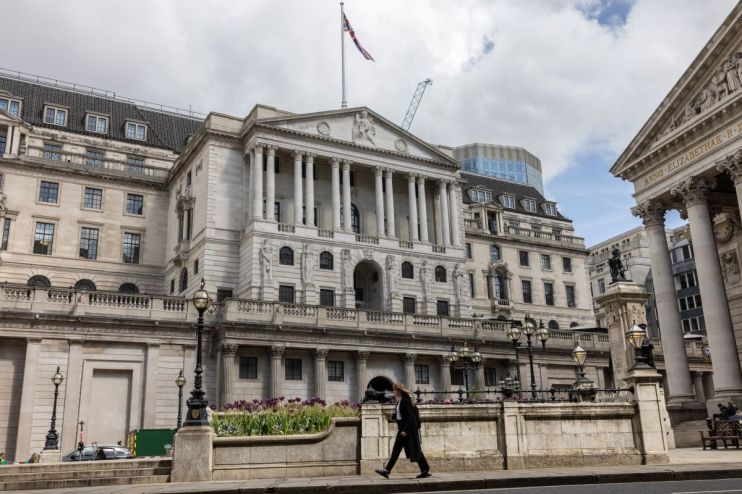
The Bank of England is set to hold interest rates at its decision next week.
High inflation is set to worry Bank of England officials.

The government might have to foot a bill worth £85bn as the Bank of England unwinds its programme of quantitative easing, new forecasts suggest.

The latest estimate, released today in a quarterly update, is a slight increase on the Bank’s previous upper estimate of £80bn. It demonstrates the cost to the taxpayer of the Bank’s attempts to reinvigorate the economy after the financial crisis.

Following the banking collapse of 2008, the Bank started hoovering up government bonds on the secondary market. The hope was this would lower borrowing costs and stimulate economic activity.

Policymakers approved another small round of quantitative easing following the Brexit vote and embarked on a much bigger round at the onset of the Covid-19 pandemic.

To buy the bonds from other financial institutions, the Bank created new commercial bank deposits on which it had to pay interest. When interest rates were low, the yield the Bank received from government bonds exceeded the interest it had to pay on new commercial bank deposits.

Between 2009 and September 2022, these benefits – which amounted to £123.8bn – were transferred to the Treasury.

However, as interest rates have risen, the costs of the programme now comfortably exceed the return from gilt yields. The Treasury is on the hook for the difference.

The Bank has managed to offload over £100bn from its balance sheet, having started selling in November 2022, but it still holds around £728.1bn of bonds which it expects to be selling back into the market until the 2030s.

The Bank noted that future flows from the Asset Purchase Facility, the vehicle created to buy up the bonds, are “highly uncertain” and depend on a range of factors, including how interest rates change.

In a recent report, the influential Treasury Committee drew attention to the costs of the scheme, suggesting it was “highly anomalous” that huge sums of public money were spent without normal value-for-money considerations.

Read more

UK borrowing costs soar as Iran ceasefire collapses

Rising borrowing costs depicted amid escalating tensions following the Iran war, illustrating economic impact on global ma...

Share this article

  • Facebook
  • X
  • LinkedIn
  • WhatsApp
  • Email

Similarly tagged content:

Sections

  • Markets & Economics

Categories

  • Economics

People & Organisations

  • Bank of England
  • quantitative easing
  • Treasury
  • UK Interest Rates

Related Topics

  • Bank of England
  • Quantitative easing
  • UK interest rates

Trending Articles

  • As it happened: FTSE 100 drops as oil prices rise after Trump makes Hormuz threat

  • US bond market jitters spark UK economy recession warning

  • Is the Zeekr 9X Super Hybrid the new luxury SUV to beat?

  • Grandparents fund university degrees to avoid inheritance tax net

  • Aldi boss wades into supermarket ‘price-gouging’ row

More from Morning Wire

  • UK borrowing costs soar as Iran ceasefire collapses

    Markets
    Rising borrowing costs depicted amid escalating tensions following the Iran war, illustrating economic impact on global ma...
  • Will Britain follow Japan’s great growth gamble?

    Opinion
    Japan Prime Minister Sanae Takaichi speaking at a press conference, highlighting her leadership and political agenda
  • Four charts revealing scale of Andy Burnham’s economic challenge

    Economics
    Due to the lack of article title, content, categories, and tags, its impossible to create a specific, keyword-rich alt tex...
  • US bond market jitters spark UK economy recession warning

    Economics
    Donald Trump delivering a speech at a podium during a formal event, emphasizing key points to an attentive audience.
  • Investors ‘may be less than impressed’ by John Healey’s £9bn borrowing plans 

    Economics
    Man in suit and red tie speaking at a podium to an audience in a modern building.
  • Lloyds beats profit target as bank sets sights on more cost-cutting

    Banking
    Lloyds Bank logo and sign on the exterior glass facade of a modern building in Manchester
  • Bank regulation, not austerity, explains why Britain is poorer than America 

    Opinion
    Aerial view of a residential cul-de-sac with houses, green lawns, trees, and a swimming pool
  • ‘It’s going to impact work’: Lloyds to cut £2bn in costs with AI

    Banking
    Hand holding a smartphone displaying the Lloyds Bank mobile app logo on a green screen.
MorningWire

Independent European business, markets and political news for decision-makers.

Morning Briefing

Europe

  • Germany
  • France
  • EU Institutions
  • Europe

Business

  • Markets
  • Business
  • Economy
  • Regulation
  • Competition
  • Public Affairs

Editorial

  • Opinion
  • Editorial Policy
  • Corrections
  • Contact

Company

  • About Morning Wire
  • Privacy Policy
  • Terms of Use
  • Cookie Policy
© 2026 Morning Wire Ltd · Published by Morning Wire Media, Bahnhofstrasse 65, 8001 Zürich, Switzerland
Privacy · Terms · Cookies · Facebook