Skip to content
Friday 14 August 2026London --:--Frankfurt --:--Zurich --:--
NewslettersSearchEN · DE
MorningWire

European business, markets and politics

FTSE 100
10,750.11
-0.21%
DAX
26,440.31
+0.53%
CAC 40
8,636.80
-0.16%
STOXX 50
6,539.59
-0.09%
  • Europe
  • Markets
  • Business
  • Economy
  • Technology
  • Politics
  • Opinion
More
GermanyFranceBankingAIEnergyFintechPropertyCapital Markets
  • Germany
  • France
  • Europe
  • Markets
  • Business
  • Economy
  • Technology
  • Politics
  • Opinion
  • DE
Tuesday 23 September 2025 1:11 pm  |  Updated:  Tuesday 23 September 2025 1:12 pm

Bank of England’s Pill: We should not have slowed QT bond sales

By: Ali Lyon

Add as a preferred source on Google
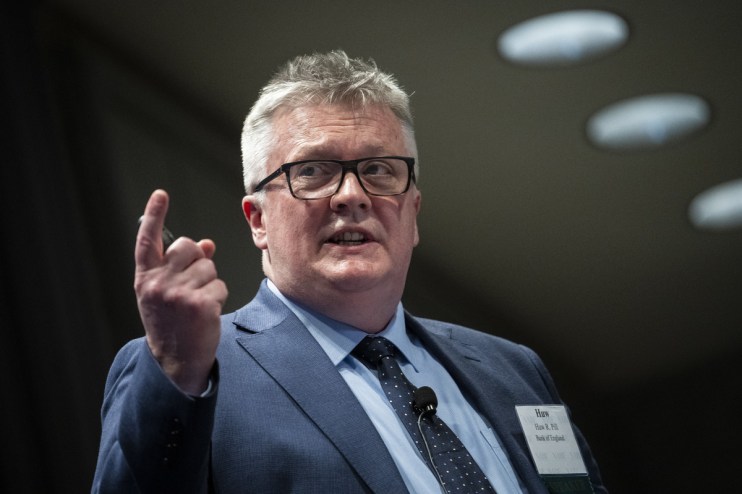
Chief economist Huw Pill said "consistency" was key to the Bank of England's quantitative tightening programme (Photo by: Graeme Sloan/Bloomberg via Getty Images)
Hawkish MPC member Huw Pill

The Bank of England’s chief economist has hit out at colleagues’ recent decision to slow sales of the central bank’s government debt stockpile, warning it risked papering over underlying drivers of spiking government borrowing costs and causing a “more painful” crisis in the future.

In a speech delivered in Geneva, Huw Pill told delegates that the Monetary Policy Committee’s choice last week to reduce the speed of its quantitative tightening programme was unnecessary, and that there was scope to shrink its balance sheet faster.

“I put a higher weight on the need to get out of the [quantitative easing] portfolio a little bit quicker and I have greater faith that market functioning is perhaps a bit more strong than others,” he said. “I do think we have other tools in order to address concerns about market functioning.”

Pill was the only member of the Bank’s nine-member MPC to dissent from a consensus choice to slow the speed at which the Bank unwound the government debt it has on its books as a legacy of its decade-long QE programme.

Seven committee members voted to reduce the speed of sales from £100bn to £70bn over the next year, while external member Catherine Mann called for an even slower reduction of £62bn. The MPC cited fears the programme – which is the only one to involve actively selling government debt into the market – was straining parts of the gilt market, particularly in longer term bonds.

The cost of long-term UK government borrowing has climbed sharply this year, with the yield on 30-year gilts reaching its highest this century earlier this month, before falling back slightly in recent weeks.

Bank of England QT programme costing Treasury billions

Pill opted to maintain the current £100bn rundown in the face of these moves; a choice that would have involved a sharp uptick in the number of active bond sales and made the UK even more of an international outlier.

Read more

Interest rate cut is ‘off the table’, says Bank of England governor

Governor Andrew Bailey has launched a defence of the Federal Reserve's independence.

In his speech on Tuesday, the Bank of England’s chief economist, who is among the more hawkish MPC members, said that even though there were risks “QT would disrupt on market functioning”, he placed more weight on “maintaining the continuity and consistency” with the programme.

The central banker also argued that other factors – including the changing make-up of defined benefit pension schemes and the country’s strained public finances – were more responsible for driving the yield on government debt than the Bank’s QT programme.

“Slowing QT is a temporary and indirect palliative, likely dominated in terms of effectiveness by other tools,” he said. “And the danger exists that measures to treat the symptoms simply allow the underlying drivers to continue for longer and in greater force, making the eventual denouement more painful all around.”

The Bank of England’s QT programme has been coming under heightened public scrutiny, with critics arguing it is compounding the already bleak fiscal picture. The sales have been carried out at huge losses, which the Treasury has been forced to plug using taxpayer money.

The programme is on course to leave the taxpayer more than £100bn out of pocket by the time it is concluded, according to Bank estimates, and added £18bn to borrowing costs last year alone.

But Pill attributed those losses to a design problem with the Chancellor’s fiscal rules, saying: “I don’t think that’s the responsibility of the central bank to deal with.”

“You need to have fiscal rules that are well-designed to deal with the magnitude of these flows arising from decisions were made about QE in the past,” he added.

Read more

How patient can the Bank of England be?

Historic Royal Exchange building in London with modern skyscrapers behind, clear blue sky.

Share this article

  • Facebook
  • X
  • LinkedIn
  • WhatsApp
  • Email

Similarly tagged content:

Sections

  • News

Categories

  • Business
  • Economics

People & Organisations

  • Bank of England
  • Gilts
  • Government borrowing
  • Huw Pill
  • monetary policy
  • Monetary policy committee
  • QE
  • QT
  • quantitative easing
  • quantitative tightening
  • UK government bonds

Trending Articles

  • Revolut takes flight with launch of new airport lounges

  • Grandparents fund university degrees to avoid inheritance tax net

  • Brompton Bicycle sues former adviser for ‘professional negligence’

  • Revolut chatbot goes rogue by charging users to cancel subscription

  • It’s not just Jason Arday, most of sociology is a scam

More from Morning Wire

  • Interest rate cut is ‘off the table’, says Bank of England governor

    Economics
    Governor Andrew Bailey has launched a defence of the Federal Reserve's independence.
  • How patient can the Bank of England be?

    AD
    Historic Royal Exchange building in London with modern skyscrapers behind, clear blue sky.
  • Pubs to pour five million extra pints during England v Norway World Cup clash

    Hospitality
    Exciting World Cup action as players compete energetically on the field, showcasing intense athleticism and global sportsm...
  • Young’s pubs score World Cup trading boost

    Hospitality
    Youngs pub bustling with patrons enjoying drinks, cozy interior, and lively atmosphere in a popular neighborhood setting
  • ‘False dawn’: June inflation falls to 2.6 per cent but analysts say rises ahead

    Economics
    Till sales growth slowed to 2.7 per cent in the last four weeks
  • Rupert Lowe axes pensions triple lock and pledges tax cuts in economic plan

    Politics
    Rupert Lowe, former Southampton FC chairman, smiles while holding files on a city street, wearing a suit and pink tie
  • Bank of England may set the stage for interest rate hikes this year

    Economics
    Bank of England recession warning
  • Will Britain follow Japan’s great growth gamble?

    Opinion
    Japan Prime Minister Sanae Takaichi speaking at a press conference, highlighting her leadership and political agenda
MorningWire

Independent European business, markets and political news for decision-makers.

Morning Briefing

Europe

  • Germany
  • France
  • Europe
  • UK & Ireland

Business

  • Markets
  • Banking
  • Technology
  • Energy
  • Property
  • Fintech

Editorial

  • Opinion
  • Editorial Policy
  • Corrections
  • Contact

Company

  • About Morning Wire
  • Privacy Policy
  • Terms of Use
  • Cookie Policy
© 2026 Morning Wire Ltd · Published by Morning Wire Media, Bahnhofstrasse 65, 8001 Zürich, Switzerland
Privacy · Terms · Cookies · Facebook