Skip to content
Saturday 15 August 2026London --:--Frankfurt --:--Zurich --:--
NewslettersSearchEN · DE
MorningWire

European business, markets and politics

FTSE 100
10,750.11
-0.21%
DAX
26,440.31
+0.53%
CAC 40
8,636.80
-0.16%
STOXX 50
6,539.59
-0.09%
  • Europe
  • Markets
  • Business
  • Economy
  • Technology
  • Politics
  • Opinion
More
GermanyFranceBankingAIEnergyFintechPropertyCapital Markets
  • Germany
  • France
  • Europe
  • Markets
  • Business
  • Economy
  • Technology
  • Politics
  • Opinion
  • DE
Wednesday 24 March 2021 4:01 am  |  Updated:  Wednesday 24 March 2021 9:56 am

Banking giants pour $3.8 trillion into fossil fuels since Paris agreement

By: Edward Thicknesse

Add as a preferred source on Google
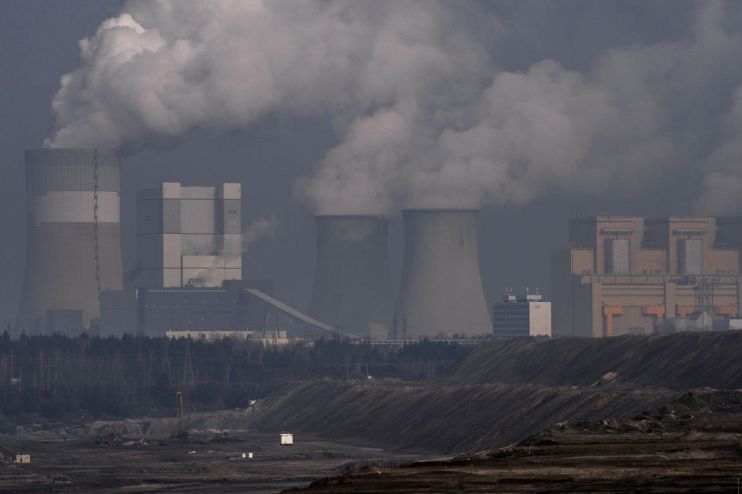
Since 2016, the world's 60 largest banks have poured more than $3.8 trillion into the fossil fuel industry, a new report released today has shown.
According to an annual report from the Rainforest Action Network, the FTSE 100’s five banking giants invested $35.7bn into fossil fuel companies in 2022, down from $51.6bn in 2021.

Since 2016, the world’s 60 largest banks have poured more than $3.8 trillion into the fossil fuel industry, a new report released today has shown.

Despite the signing of the Paris climate accords in 2015, lenders have continued to provide hundreds of billions in financing for polluting industries such as tar sands oil, coal, and fracking.

Nearly half of the total funding – $1.5 trillion – went to just 100 firms. Despite a general fall in fossil fuel financing amid the pandemic, banks increased their funding to this group by 10 per cent in 2020 alone.

As a result, fossil fuel financing on a yearly basis was higher in 2020 than it was in 2016, despite the raft of climate pledges made over that period.

The report, which was co-authored by NGOs Rainforest Action Network, BankTrack, Indigenous
Environmental Network, Oil Change International, Reclaim Finance, and Sierra Club, finds that America’s biggest lenders are the worst culprits.

Top of the pile is JP Morgan Chase, which has loaned and underwritten a total of $317bn for such industries over the period.

That’s a third more than fellow Wall Street behemoth Citi committed in the same five years.

In Europe, the number one financier of fossil fuels was Barclays, which contributed $144.9bn towards industries including fracked oil and gas, and coal since 2016.

The bank has set out ambitions to be net zero for 2050. On its website, it states: “We’re already net zero emissions from our own operations; our focus now is on reducing the client emissions that we finance. That starts with aligning our financing with the Paris Agreement, across not just lending but our capital markets activity as well.”

Read more

Revolut will become $1 trillion company by 2035, says early VC backer

Revolut London office glass facade with prominent R logo reflecting cityscape, highlighting modern fintech design

Over the last five years, it has spent on average between $25bn and $30bn each year on fossil fuels. In 2020, the figure was $27.7bn.

A Barclays spokesperson said: “We have made a commitment to align our entire financing portfolio to the goals of the Paris Agreement, with specific targets and transparent reporting, on the way to achieving our ambition to be a net zero bank by 2050.

“We believe that Barclays can make a real contribution to tackling climate change and help accelerate the transition to a low-carbon economy.”

The next biggest European offenders were BNP Paribas and HSBC, which committed $120bn and $110bn respectively over the half-decade, putting them at 10th and 13th on the global list.

In a statement, HSBC said: “HSBC has announced it will propose a special resolution on climate change at its AGM in May which will set out the next phase of HSBC’s strategy to support its customers on the transition to net zero carbon emissions. 

“This includes to publish and implement a policy to phase out the financing of coal-fired power and thermal coal mining by 2030 in markets in the European Union / OECD, and by 2040 in other markets.”

The report’s authors said that the figures showed the “hollowness” of bank’s climate pledges in another vital year for the fight against climate change.

Johan Frijns, director of sustainability lobby group BankTrack, said: “As the date of the crucial Glasgow Climate Summit approaches, we witness one bank after another making solemn promises to become ‘net zero by 2050’.

“There exists no pathway towards this laudable goal of a generation away that does not require dealing with bank finance for the fossil fuel industry right here and now, yet too many current promises lack precisely that; a firm commitment to start severing ties with all coal, oil and gas companies that plan on continuing their climate wrecking activities in the years to come.”

Read more

Europe has made a ‘major mistake’ on slow electrification, IEA chief warns 

UK industrial electricity prices are the highest in the G7 and 46 per cent above the average of the International Energy Agency.

Share this article

  • Facebook
  • X
  • LinkedIn
  • WhatsApp
  • Email

Similarly tagged content:

Sections

  • News

Categories

  • Banking
  • Business

Related Topics

  • Climate change
  • COP26

Trending Articles

  • Revolut takes flight with launch of new airport lounges

  • Grandparents fund university degrees to avoid inheritance tax net

  • Revolut chatbot goes rogue by charging users to cancel subscription

  • Brompton Bicycle sues former adviser for ‘professional negligence’

  • As It Happened: Stocks dip as oil’s ‘slowing demand’ in focus; Iran threatens to extend war

More from Morning Wire

  • Revolut will become $1 trillion company by 2035, says early VC backer

    Fintech
    Revolut London office glass facade with prominent R logo reflecting cityscape, highlighting modern fintech design
  • Europe has made a ‘major mistake’ on slow electrification, IEA chief warns 

    Energy
    UK industrial electricity prices are the highest in the G7 and 46 per cent above the average of the International Energy Agency.
  • UK debt ‘hits £3 trillion’ milestone

    Economics
    Houses of Parliament in Westminster showcasing historic architecture under a clear sky, central to UK government and politics
  • Invested as One: Northern Trust Grants Employees Company Stock

    Business Wire
  • Andy Burnham is on course to rack up the second highest debt interest bill on record

    Opinion
    UK National Debt Clock showing £3 trillion, with Big Ben and the Union Jack in the background.
  • PwC’s Embankment HQ to get major makeover ahead of Canary Wharf move

    Property
    Architectural rendering of a modern building with a curved roof, balconies, and a landscaped terrace with city skyline views.
  • Revolut lands fresh banking licence after wrestling with Europe friction

    Fintech
    Revolut Banque Française ad on a Morris column in Paris, with the July Column and blurred traffic in the background.
  • Tritax Big Box taps investors for £350m London data centre splurge

    Tech
    AI data center with rows of servers and cooling systems, showcasing advanced technology and infrastructure innovation
MorningWire

Independent European business, markets and political news for decision-makers.

Morning Briefing

Europe

  • Germany
  • France
  • Europe
  • UK & Ireland

Business

  • Markets
  • Banking
  • Technology
  • Energy
  • Property
  • Fintech

Editorial

  • Opinion
  • Editorial Policy
  • Corrections
  • Contact

Company

  • About Morning Wire
  • Privacy Policy
  • Terms of Use
  • Cookie Policy
© 2026 Morning Wire Ltd · Published by Morning Wire Media, Bahnhofstrasse 65, 8001 Zürich, Switzerland
Privacy · Terms · Cookies · Facebook